

Developing Financing Initiatives for the ASEAN Power Grid
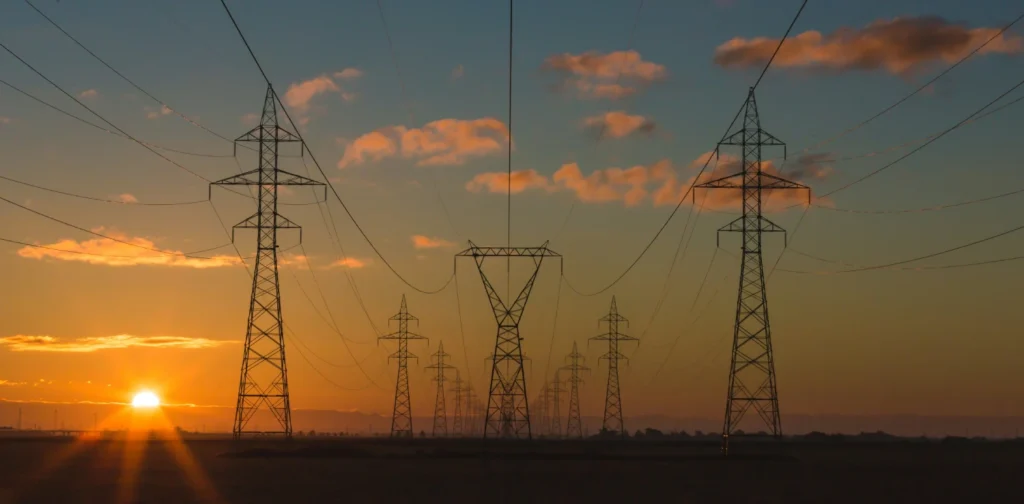
Photo: Matthew Henry on Unsplash.
Access to affordable electricity and a clean energy transition are essential to long-term energy security. In Southeast Asia, the ASEAN Power Grid (APG) is seen as a key enabler to support energy access, economic growth, and sustainable development in the region.
Bridging Connectivity in ASEAN
Rapid population growth means increasing energy demand. ASEAN’s population has been growing at an unprecedented rate, collectively reaching almost 680 million people in 2022 and representing 8.7% of the global population. The 8th ASEAN Energy Outlook states that the region’s overall electricity consumption grew by 5.4% in 2022 compared to the previous year. The growing use of air conditioning due to frequent heatwaves is a significant driver of increased electricity consumption.
However, not all ASEAN Member States are on the same boat regarding this growth. The energy outlook report further states that Myanmar and Brunei Darussalam experienced a decline in electricity consumption and demand due to blackouts. Hence, across the region, issues surrounding energy security persist, including uneven access in remote areas and high prices. The ASEAN Power Grid (APG) aims to address these issues.
The APG was first mentioned under the ASEAN Vision 2020 in 1997, with the aim of integrating the power infrastructure across different countries to achieve collective energy security. Constructing cross-border power interconnections is one part of this initiative, with several established projects to date including the Lao PDR-Thailand-Malaysia-Singapore Power Integration Project (LTMS-PIP) and the Brunei-Indonesia-Malaysia-Philippines Power Integration Project (BIMP-PIP).
Furthermore, the initiative is also expected to meet rising electricity demand and enhance cross-border electricity trade. It also seeks to face climate change challenges by promoting the use of renewable energy sources within the region.
Financing the ASEAN Power Grid
However, the APG’s development has several challenges. Financing poses a significant challenge as substantial funding is required for such a large-scale project involving many countries. Therefore, strong and strategic partnerships at all levels between governments, the private sector, and development partners are crucial.
In this light, countries have noted the potential of a collaborative financing mechanism to support the APG. In the virtual Ministerial Interface Meeting on Financial Mechanisms for the ASEAN Power Grid on 14 August 2025, representatives of ASEAN Member States discussed the development of the ASEAN Power Grid Financing Initiative (APGF) with the support of the Asian Development Bank (ADB) and the World Bank. Both organizations have stated their intentions to invest in the APG, amounting to 10 billion USD from the ADB and 2.5 billion USD from the World Bank.
Furthermore, the Meeting also welcomed the proposal by the ADB, World Bank, ASEAN Secretariat, and the ASEAN Centre for Energy (ACE) to jointly lead the APGF. These financial institutions will provide technical assistance and various financial instruments, as well as advise on public-private partnerships.
Setting Up Priorities
To fully obtain the ASEAN Power Grid’s potential, countries must respond to the APGF with enabling policies, coherent regulatory frameworks, and robust project pipelines. Strengthening coordination between key stakeholders, especially governments and financial institutions, is central to this effort.
At the same time, relevant stakeholders must also ensure that the infrastructure development does not happen at the expense of people and the planet. Advancing the use of renewable energy with the just transition principle must be placed at the core of this initiative to create a better future for all.
Editor: Nazalea Kusuma
Kresentia Madina
Madina is the Assistant Manager of Stakeholder Engagement at Green Network Asia. She holds a bachelor’s degree in English Studies from Universitas Indonesia. As part of the GNA In-House Team, she supports the organization's multi-stakeholder engagement across international organizations, governments, businesses, civil society, and grassroots communities through digital publications, events, capacity building, and research.
 The Widespread Impacts of Severe Drought in Somalia
  Ensuring Access to Justice for Women and Girls
  The Invisible Infrastructure: What ASEAN’s Carbon Market Needs Most
  Indonesia Ruled to Recognize Chronic Illness as a Disability
  Clean Cooking as a Developmental Multiplier in Africa
  Congo Basin Peatlands Are Releasing Ancient Carbon