

EU Adopts Right to Repair Law to Support Circular Economy
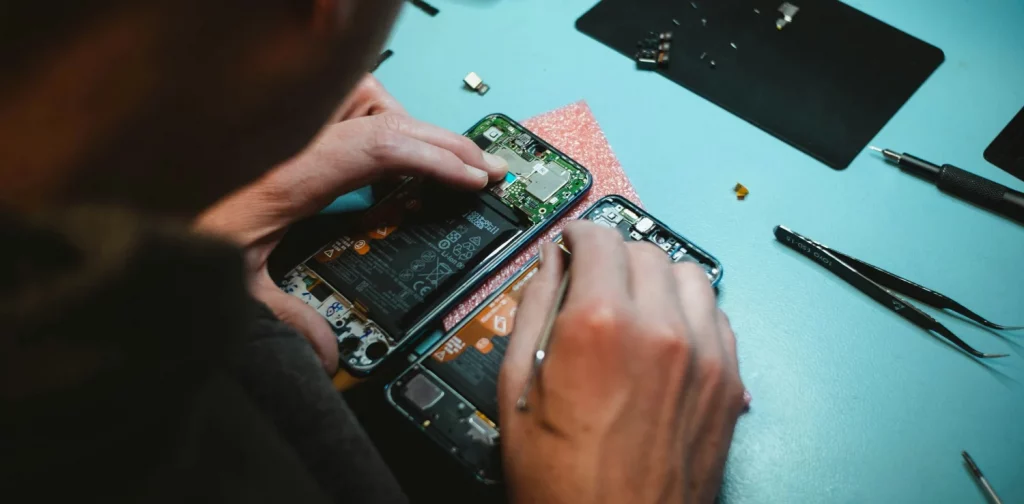
Photo: Kilian Seiler on Unsplash.
What do you do with broken devices? Our first instinct is often to replace our broken belongings instead of repairing them. This is partly due to the lack of trusted repair services offered by consumer goods companies. However, this is about to change in Europe. The Parliament had adopted a regulation to promote the right to repair to consumers.
Encouraging people’s right to repair can help reduce waste and support the circular economy. The European Commission stated that premature disposal of consumer goods generates 35 million tonnes of waste in the EU annually. Furthermore, it also significantly contributes to greenhouse gas emissions and is resource-extensive. From consumers’ perspective, replacing instead of repairing can cost them up to €12 billion (USD 12.8 billion) annually.
Right to Repair
Under the new regulations, consumer goods manufacturers are responsible for providing timely and cost-effective repair services for consumers. Additionally, they are also obliged to inform consumers about their right to repair.
The overall goal is to encourage people further to repair instead of replace. Consumers who repair their goods under the warranty will get a one-year extension of the legal guarantee. When this legal guarantee expires, manufacturers must fix repairable household items like washing machines and smartphones. Consumers can also ask for substitute devices while theirs are being repaired.
“Consumers’ right to repair products will now become a reality. It will be easier and cheaper to repair instead of purchasing new, expensive items,” said Rapporteur René Repasi. “The new legislation extends legal guarantees by 12 months when opting for repair, gives better access to spare parts, and ensures easier, cheaper, and faster repair.”
Improvements Needed
The European Parliament adopted this new rule on April 23, 2024, with 584 votes in favor, 3 against, and 14 abstentions. This move gained support and criticism from the Right to Repair Europe coalition. While it supports the points about reasonable spare part pricing and independent repair, the coalition noticed several missed opportunities.
“We regret that the scope of products covered remains very narrow and that many loopholes were introduced. We call for a swift implementation of these rules, including Commission guidelines on the definition of ‘reasonable’ prices for spare parts, a solid execution of the ban on anti-repair practices, and the introduction of national financial incentives for repair by EU Member States,” wrote João Antonucci Rezende.
Therefore, once formally approved, EU Member States must strive to create comprehensive national laws that represent their commitment to supporting the circular economy, protecting the environment, and safeguarding consumers’ right to repair.

Kresentia Madina
Madina is the Assistant Manager of Stakeholder Engagement at Green Network Asia. She holds a bachelor’s degree in English Studies from Universitas Indonesia. As part of the GNA In-House Team, she supports the organization's multi-stakeholder engagement across international organizations, governments, businesses, civil society, and grassroots communities through digital publications, events, capacity building, and research.
 The Widespread Impacts of Severe Drought in Somalia
  Ensuring Access to Justice for Women and Girls
  The Invisible Infrastructure: What ASEAN’s Carbon Market Needs Most
  Indonesia Ruled to Recognize Chronic Illness as a Disability
  Clean Cooking as a Developmental Multiplier in Africa
  Congo Basin Peatlands Are Releasing Ancient Carbon