

Fostering Youth-led Initiatives for Ocean Sustainability
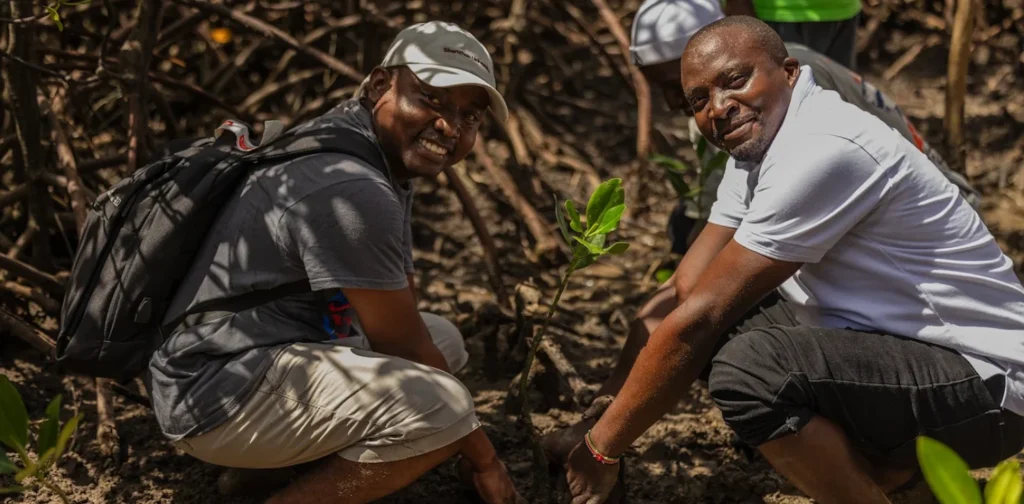
The ocean is facing unprecedented threats from plastic pollution, overfishing, and the worsening climate crisis. These challenges not only endanger marine biodiversity but also undermine the livelihoods of millions of people worldwide. While it affects everyone, young people feel a strong urgency to address the crisis because they will inherit the long-term consequences of today’s decisions. In this light, youth-led initiatives are gaining momentum worldwide, as young people channel their creativity, digital fluency, and determination into shaping a sustainable future for the ocean.
Ocean Crisis
The ocean is facing mounting pressures from human activities; plastic pollution is among the most severe.. An estimated 19-23 million tons of plastic enter the seas every year, equivalent to 2,000 garbage trucks dumping waste into marine waters daily. This not only harms biodiversity but also disrupts food chains and affects human health, one of which is through microplastics that end up in our bodies.
Overfishing further exacerbates the crisis. According to the Food and Agriculture Organization (FAO), 35.5% of global fish stocks are already overexploited, while only 64.5% remain within biologically sustainable levels. This shows a significant drop from the 90% proportion of sustainable fish stocks in 1974.
At the same time, ocean warming due to the climate crisis has caused ocean oxygen levels to drop by around 2% since the 1950s. According to OceanOPS, oxygen concentrations could fall by 3-4% by the end of the 21st century if emissions remain high. This decline threatens marine biodiversity by depriving it of an adequate oxygen supply, expanding low-oxygen areas, and disrupting ecosystems. Eventually, this can reduce ocean productivity and endanger human food security and livelihoods that depend on healthy oceans.
Meanwhile, coastal areas are not faring well either. Global Mangrove Watch data reveal a 3.4% global mangrove loss, equivalent to 5,245 km² between 1996 and 2020. The loss of mangroves threatens biodiversity and coastal resilience while undermining the ocean’s vital role as a natural carbon sink.
Youth-led Initiatives for Ocean Sustainability
This worsening crisis is one of the reasons that ignite young people to be increasingly vocal about ocean protection. According to the People’s Climate Vote 2024, the world’s largest public survey on climate change, 80% of respondents want stronger climate action from their governments, and 69% say climate change influences major life decisions such as where to live or work. Notably, youth aged 14–18 are the most likely to view climate change as a global emergency, highlighting their potential to drive transformative action.
In response, young people around the world are taking action as changemakers, addressing ocean challenges from policy advocacy to grassroots initiatives. For instance, Heirs to Our Ocean (H2OO) empowers youth globally through its Youth Action Councils, enabling them to shape strategies under the UN Ocean Decade while amplifying underrepresented voices in ocean policy and advocacy.
In the Pacific Islands, youth are leading community-driven conservation efforts, from mangrove replanting in Tuvalu to coral reef restoration in Fiji, combining Indigenous knowledge with modern science to strengthen resilience against climate change. These youth-led initiatives are especially crucial as the Pacific Islands and other Small Island Developing Countries (SIDS) are highly vulnerable to climate risks.
Meanwhile, in Southeast Asia, young people in the Philippines are tackling plastic pollution through the Youth for Oceans initiative in Parañaque City. This grassroots movement mobilizes youth councils for data-driven cleanups and promotes circular economy solutions to build waste-free coastal communities.
Barriers and Challenges
Despite these contributions, systemic barriers still limit the potential of youth-led initiatives. A major issue lies in the lack of dedicated funding and resources, whether in core funding or ad hoc support, which often reduces youth involvement to symbolic roles rather than meaningful engagement.
Structural inequalities also play a role, particularly for youth in the Global South and Indigenous communities. Governance frameworks, such as marine spatial planning, often overlook Indigenous and Local Knowledge (ILK), which weakens both cultural preservation and the effectiveness of ocean management.
Additionally, complex governance systems create fragmented decision-making, power and resource imbalances, and insufficient stakeholder engagement, slowing collective progress. Beyond these systemic issues, practical hurdles such as visa restrictions, limited institutional support, and ageism further hinder youth participation in regional and global dialogues.
Pathways Forward
To build a sustainable future for the ocean, youth participation must be based on meaningful engagement rather than merely symbolic involvement. This requires resources, access, and opportunities for young people to participate in and contribute to decision-making processes.
One important step is fostering multi-stakeholder partnerships where youth, local communities, and policymakers work together. The UN Ocean Decade emphasizes that such collaboration is crucial for developing inclusive and science-based solutions.
Furthermore, investing in ocean literacy is crucial to bridge science, policy, and community action. UNESCO’s Ocean Literacy for All program demonstrates how education plays a central role in shaping collective action. Financial support mechanisms, such as micro-grants, are also crucial. Initiatives like Blue Ventures and the Global Fund for Coral Reefs show how targeted funding can accelerate community-based conservation efforts.
Finally, strengthening cross-border networks ensures that youth-led initiatives remain connected, share knowledge, and build solidarity despite political or geographical barriers. With stronger structural support, youth can become key catalysts in shaping fair, resilient, and inclusive ocean governance for the future.
Editor: Nazalea Kusuma & Kresentia Madina
 India’s Supreme Court Declared Menstrual Health and Hygiene as Fundamental Rights
  Impacts of E-waste Pollution on Animals and Human Health
  Africa’s Solar Energy Surge: Why 2025 Was a Breakthrough Year
  Agrihoods: Integrating Farms and Urban Neighborhoods into Sustainable Communities
  Women in Waste Management: Asia’s Circularity Runs on Women. Its Policies Still Don’t
  Embracing the Business Value of Sustainability