

Hong Kong Launches a Taxonomy for Sustainable Finance
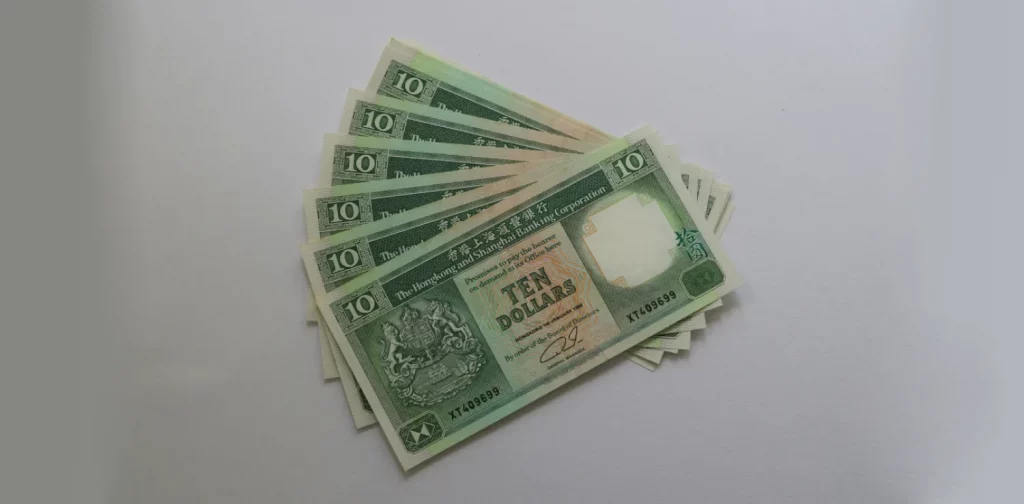
Photo: Clayton Robbins on Unsplash.
The financial sector has a key role to play in the pursuit of sustainability. Banks, investment companies, and other financial institutions can mobilize capital for sustainability efforts and halt funding for high-emitting industries. To support this, the government of Hong Kong published the Hong Kong Taxonomy for Sustainable Finance (Hong Kong Taxonomy).
Taxonomy for Sustainable Finance
Taxonomy for sustainable finance refers to systems for classifying financial products and investments based on environmental sustainability. These systems intend to distinguish which products and investments positively impact the environment and which do not.
When designed and implemented well, the taxonomy can provide clarity to the market, investors, and other actors in the financial sector. It can also streamline the tracking and measuring sustainable finance progress, make finance-related policymaking easier, and unlock new investment opportunities for green technologies and sustainable projects.
Globally, several countries and regions have their taxonomies for sustainable finance set in place, including Indonesia, ASEAN, and the European Union. On May 3, 2024, the Hong Kong Monetary Authority (HKMA) published the Hong Kong Taxonomy for Sustainable Finance (Hong Kong Taxonomy) to enable informed decision-making on sustainable finance and facilitate relevant finance flows.
The Hong Kong Taxonomy
The Hong Kong Taxonomy is established in alignment with the Paris Agreement, interoperability with taxonomies from other countries and regions, and science-based criteria and thresholds. While it was developed mainly to address environmental issues, the taxonomy also recognizes its interconnectedness to other sustainability issues.
Eddie Yue, Chief Executive of the HKMA, said, “The release of the Hong Kong Taxonomy for Sustainable Finance marks a key milestone for Hong Kong’s sustainable finance landscape. By providing a common language and framework for sustainable finance, we are equipping market participants with an important tool to make informed decisions, drive impactful cross-border investments, and contribute to global efforts in combating climate change.”
During the development process, the HKMA launched a discussion paper in May 2023 to gather stakeholders’ feedback and thoughts on the system. Representatives from banks, industry professionals, asset managers, and other key stakeholders welcomed the taxonomy in hopes of strengthening Hong Kong’s reputation in sustainable finance. They saw the taxonomy as a tool to reduce greenwashing.
At the moment of release, the taxonomy includes 12 economic activities under four sectors: power generation, transportation, construction, and water and waste management. The HKMA plans to expand the coverage to include more sectors and activities and continue collaborating with relevant stakeholders to implement the taxonomy.
Read the full document here.
Editor: Nazalea Kusuma

Kresentia Madina
Madina is the Assistant Manager of Stakeholder Engagement at Green Network Asia. She holds a bachelor’s degree in English Studies from Universitas Indonesia. As part of the GNA In-House Team, she supports the organization's multi-stakeholder engagement across international organizations, governments, businesses, civil society, and grassroots communities through digital publications, events, capacity building, and research.
 The Widespread Impacts of Severe Drought in Somalia
  Ensuring Access to Justice for Women and Girls
  The Invisible Infrastructure: What ASEAN’s Carbon Market Needs Most
  Indonesia Ruled to Recognize Chronic Illness as a Disability
  Clean Cooking as a Developmental Multiplier in Africa
  Congo Basin Peatlands Are Releasing Ancient Carbon