

In the Great Barrier Reef, Corals Suffer Under Cumulative Pressure
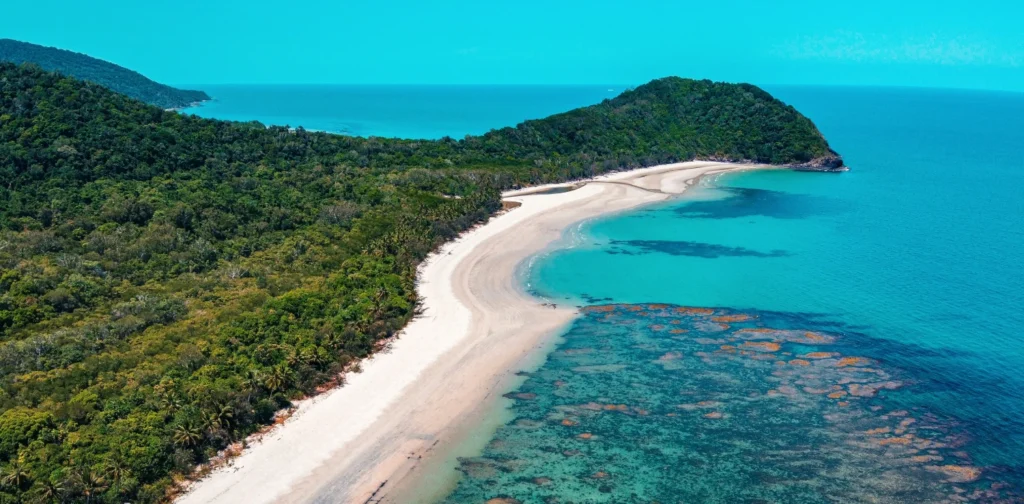
Photo: Manny Moreno on Unsplash.
Excessive greenhouse gas emissions have led to a global rise in temperatures. More greenhouse gases are trapped in the oceans, causing the water to warm up. In the Great Barrier Reef, marine ecosystems are under pressure from warming oceans and predator species, reversing the previous progress.
Rich Marine Ecosystems
Around 25% of marine species depend on coral reefs to survive. Dubbed the underwater architect, coral reefs have crucial roles as the habitat, breeding ground, and protective shield for algae, small fishes, and other marine species. While the skeletons are originally plain white, this ecosystem gains its colors from the thousands of species living in it.
In Australia, the Great Barrier Reef (GBR) holds one of the most extensive coral reef ecosystems globally. Spanning 348,000 square kilometers, the area was designated as a UNESCO World Heritage site in 1981. Around 2,500 individual reefs of various sizes and shapes live in the GBR, with over 1,500 species of fish, 4,000 species of mollusks, and various sponges, anemones, marine worms, and crustacean species.
Multiple Pressures on the Great Barrier Reef
Unfortunately, the GBR is not immune to climate pressure. The Australian Institute of Marine Science’s (AIMS) annual survey report of the Great Barrier Reef reveals that the area has experienced the largest annual decline in coral cover in 39 years. The area suffers from multiple stressors during the summer of 2024, including mass coral bleaching and crown-of-thorns starfish predation.
Climate change-induced heat triggers mass coral bleaching events globally. In the GBR, the events now occur more frequently while recovery periods are slowing down. In March 2025, the GBR experienced its sixth mass coral bleaching event since 2016 due to above-average temperature anomalies of +1°C to +2.5°C.
At the same time, crown-of-thorns starfish predation adds to the pressure. Native to the GBR area, the starfish feeds on corals as adults, consuming up to 10 m2 of coral a year. In 2025, the starfish were detected on 27 surveyed reefs, with a severe outbreak found in one reef in the Southern GBR. Meanwhile, three additional reefs in the Southern GBR and two in the Northern GBR have established outbreaks. The lack of fishes as the starfish’s predators, which might be due to overfishing, is suspected to be one of the reasons for this outbreak.
Supporting Coral Restoration
Previously, progress has been made to restore coral reefs on the Great Barrier Reef. In 2022, for instance, a coral spawning event began at the Fitzroy Island coral nursery. However, the cumulative pressure due to heat stress, predatory species, and weather cycles over the summer of 2024 has reversed the progress made so far.
Beyond the GBR, coral reefs are suffering from similar pressure globally. This calls for immediate attention from governments, international organizations, and civil society to work together in addressing this issue. Identifying adaptive mitigation strategies, funding and facilitating research into the solutions, engaging local communities and key stakeholders, and developing periodic monitoring plans to assess progress are key strategies to advance coral reef restoration. At the same time, decarbonization efforts must also continue to prevent further climate change-induced damage before it becomes irreversible.
Editor: Nazalea Kusuma

Co-create positive impact for people and the planet.
Amidst today’s increasingly complex global challenges, equipping yourself, team, and communities with interdisciplinary and cross-sectoral insights on sustainability-related issues and sustainable development is no longer optional — it is a strategic necessity to stay ahead and stay relevant.

Kresentia Madina
Madina is the Assistant Manager of Stakeholder Engagement at Green Network Asia. She holds a bachelor’s degree in English Studies from Universitas Indonesia. As part of the GNA In-House Team, she supports the organization's multi-stakeholder engagement across international organizations, governments, businesses, civil society, and grassroots communities through digital publications, events, capacity building, and research.
 The Widespread Impacts of Severe Drought in Somalia
  Ensuring Access to Justice for Women and Girls
  The Invisible Infrastructure: What ASEAN’s Carbon Market Needs Most
  Indonesia Ruled to Recognize Chronic Illness as a Disability
  Clean Cooking as a Developmental Multiplier in Africa
  Congo Basin Peatlands Are Releasing Ancient Carbon