

Launching a High-Level Commitment to Protect Climate-Resilient Coral Reefs
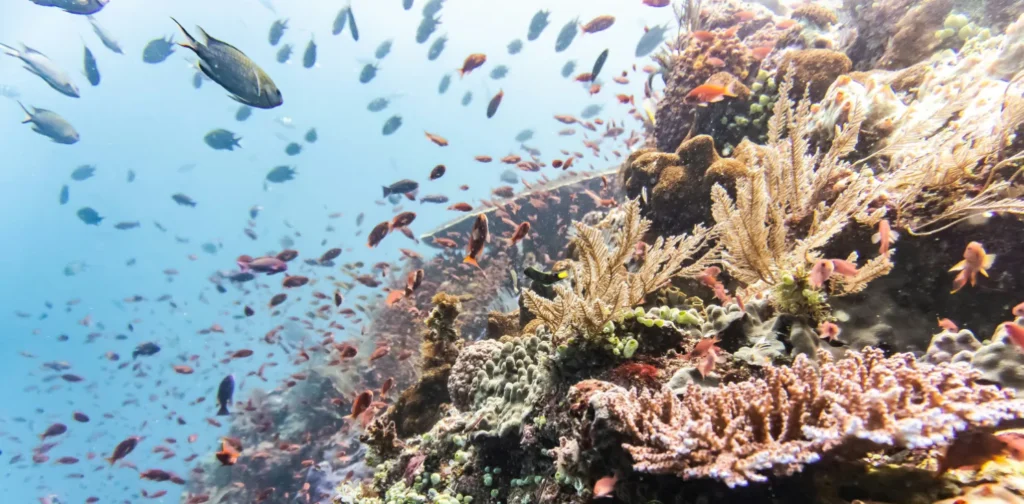
Photo: Johnny Africa on Unsplash.
Coral reefs are a vital component of marine life. They serve as a habitat for many ocean species, supporting the overall balance of marine ecosystems and the nearby coastal communities. However, climate change and various destructive human activities have threatened the existence of coral reefs worldwide. In this light, eleven state governments have signed a high-level commitment to protect climate-resilient coral reefs and prevent further damage.
Coral Reefs vs. Climate Change
Coral reefs exist in over 100 countries and territories. They are made up of millions of tiny coral polyps that support over 25% of marine species’ lives. One of them is the zooxanthellae, a type of microscopic algae that, in turn, provide coral reefs with sustenance and give them colors.
Unfortunately, climate change threatens this symbiosis. Coral reefs can become stressed due to rising temperatures and ocean acidification. As a stress response, they expel the zooxanthellae that live in them, losing their food source and their colors. This phenomenon is called coral bleaching. Moreover, besides climate change, the stress can also come from human activities such as fishing bombs, pollution, and mining.
Earth’s first major case of mass coral bleaching happened in 1998, destroying around 6,500 km2 of the world’s coral. Afterward, coral bleaching keeps occurring as climate change worsens. Most recently, scientists documented mass coral bleaching occurred across the tropics in 2023–2024.
Protecting Climate-Resilient Coral Reefs
At the Third United Nations Ocean Conference (UNOC3) in France in June 2025, a high-level global commitment to protect climate-resilient coral reefs was launched. It is a voluntary commitment that “prioritizes coral reefs with the greatest potential to survive climate change” as a key strategy for global coral reef recovery.
The high-level commitment includes pledges to:
- Integrate coral reef conservation into National Biodiversity Strategies and Action Plans (NBSAPs), Nationally Determined Contributions (NDCs), and other development plans.
- Identify and prioritize climate-resilient reefs to implement the 30×30 commitments.
- Implement and strengthen national coral reef monitoring systems and action plans.
- Enact and enforce policies to reduce human pressures, such as destructive fishing methods, pollution, and harmful coastal development.
- Ensure solutions that center community leadership, equity, and inclusivity by partnering with Indigenous peoples and local communities, such as through financing and capacity building that emphasize place-based stewardship, Indigenous and traditional knowledge, and technology transfer.
Eleven countries signed the document at UNOC3: the Bahamas, Belize, France, Indonesia, Madagascar, Palau, Panama, Papua New Guinea, Solomon Islands, Tanzania, and Vanuatu. The high-level commitment will be registered on the UN Voluntary Commitments Platform, and additional countries and organizations are welcome to join.
Sustainable Conservation
The protection and recovery of the world’s coral reefs require cross-sectoral and multi-stakeholder partnerships. This includes scientists, conservation practitioners, governments, and local communities. Governments’ commitments to conservation must not stop at signing documents—regulations and actions that limit environmental pressure from human activities are crucial.
Furthermore, the active participation of local communities is especially important to ensure the conservation aligns with local needs and contexts. They are also essential in long-term, sustainable implementation of conservation efforts that go beyond initial recovery, for the future of both marine life and coastal communities.
Translator: Nazalea Kusuma
Editor: Abul Muamar
The original version of this article is published in Indonesian at Green Network Asia – Indonesia.

Seftyana Khairunisa
Nisa is a Reporter & Research Assistant at Green Network Asia. She holds a bachelor's degree in International Relations from Gadjah Mada University. She has particular interest in research and journalism on social and environmental issues surrounding human rights.

Nazalea Kusuma
Naz is the Manager of International Digital Publications at Green Network Asia. She is an experienced and passionate writer, editor, proofreader, translator, and creative designer with over a decade of portfolio. Her history of living in multiple areas across Southeast Asia and studying Urban and Regional Planning exposed her to diverse peoples and cultures, enriching her perspectives and sharpening her intersectionality mindset in her storytelling and advocacy on sustainability-related issues and sustainable development.
 The Invisible Infrastructure: What ASEAN’s Carbon Market Needs Most
  Indonesia Ruled to Recognize Chronic Illness as a Disability
  Clean Cooking as a Developmental Multiplier in Africa
  Congo Basin Peatlands Are Releasing Ancient Carbon
  From Anxiety to Action: How Youth Climate Activism Is Evolving
  India’s Supreme Court Declared Menstrual Health and Hygiene as Fundamental Rights