

Mission 300 Aims to Connect 300 Million People in Africa to Electricity
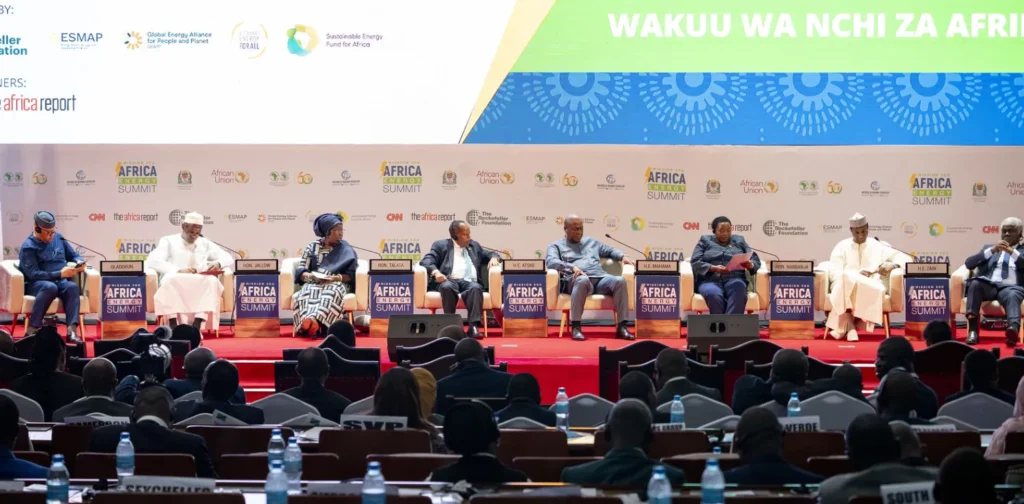
Photo: African Development Bank.
Electricity powers every aspect of our lives, from lightbulbs and batteries to healthcare and agricultural appliances. Yet, millions of people still lack access to electricity, with the majority residing in least-developed countries. Mission 300 aims to bridge this gap by connecting 300 million people in Sub-Saharan to electricity by 2030.
Population without Electricity
The world has made significant progress in achieving universal access to electricity. According to the International Energy Agency (IEA), 91% of the global population had obtained electricity access in 2022, compared with 73% in 2000. However, this still leaves 9% of the population in the dark.
Over 80% (600 million) of people without access to electricity reside in Sub-Saharan Africa. The increasing risks of blackouts and difficulties in financing utilities hinder economic and development activities in the area, therefore exacerbating extreme poverty. To address this, the World Bank Group and the African Development Bank launched the Mission 300 project in partnership with multiple stakeholders.
Mission 300 & Energy Summit
The overarching goal of Mission 300 is to lift people out of energy poverty while unlocking economic opportunities and driving growth. The project mainly focuses on two actions:
- Expanding the electricity grid and increasing connections in underserved areas.
- Deploying mini-grids and standalone solar solutions to bring power to remote, off-grid communities.
In 2025, Mission 300 held its first Africa Energy Summit hosted by the Republic of Tanzania. The summit gathered country leaders, private sector leaders, development partners, and civil society to formulate action plans to address the energy gap in Africa.
One notable agenda is the announcement of the Dar es Salaam Energy Declaration, which pledged to deliver electricity to 300 million people in Africa by 2030. Mission 300 partners, including the World Bank Group and the African Development Bank, also stated financial commitments of over USD 50 billion to support this project.
Furthermore, 12 countries presented their National Energy Compacts, which identified policy measures and targets to address issues across the energy sectors. The plans aim to expand energy infrastructure, integrate renewable energy and clean cooking solutions, and invite private sector participation, among others.
Partnership and Collaboration
Achieving universal access to energy requires everyone to participate, from governments to businesses to civil society. The Mission 300 Africa Energy Summit highlights the central role of multi-stakeholder partnership and collaboration, particularly the private sector’s role in investment.
“To succeed, we must embrace a simple truth: no one can do it alone. Governments, businesses, philanthropies, and development banks each have a role—and only through collaboration can we achieve our goal,” said Ajay Banga, President of the World Bank Group.
Kresentia Madina
Madina is the Assistant Manager of Stakeholder Engagement at Green Network Asia. She holds a bachelor’s degree in English Studies from Universitas Indonesia. As part of the GNA In-House Team, she supports the organization's multi-stakeholder engagement across international organizations, governments, businesses, civil society, and grassroots communities through digital publications, events, capacity building, and research.
 The Invisible Infrastructure: What ASEAN’s Carbon Market Needs Most
  Indonesia Ruled to Recognize Chronic Illness as a Disability
  Clean Cooking as a Developmental Multiplier in Africa
  Congo Basin Peatlands Are Releasing Ancient Carbon
  From Anxiety to Action: How Youth Climate Activism Is Evolving
  India’s Supreme Court Declared Menstrual Health and Hygiene as Fundamental Rights