

Pakistan’s Marine Protected Areas to Support Marine Conservation
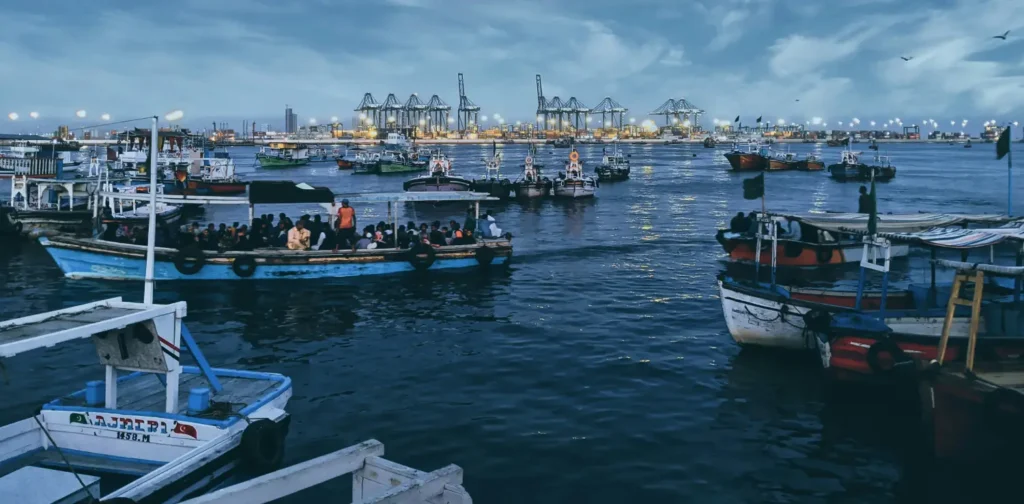
Photo: Ali Abdullah on Unsplash.
Oceans and seas are vital for the lives on Earth. They balance the world’s ecosystems and can significantly contribute to a country’s economy. However, excessive pollution and other irresponsible human activities has threatened marine ecosystems everywhere, including in Pakistan. To ramp up conservation efforts, Pakistan has designated two islands as Marine Protected Areas throughout the years.
Pakistan’s Marine Issues
Pakistan has a 990 km long coastline with hundreds of marine species. The country’s marine ecosystems can produce over 590,000 metric tons of fish and 250,000 tons of shrimp. The estimated export value is worth 7,272 billion Pakistani Rupees (roughly 26 million USD).
Unfortunately, the ecosystems suffer from multiple environmental issues. Pollution is one of the most severe, with hazardous industrial waste and occasional oil spills contaminating the sea. WWF Pakistan stated that there are roughly 250 million tons of plastic bags, bottles, and food scraps in Pakistan. A staggering 65% of the waste in the coastal areas consists of plastic bottles, wrappers, bags, disposable utensils, and other untreated waste.
The Marine Protected Areas
In 2004, the Conference of Parties to Convention on Biological Diversity (CBD) agreed that marine and coastal protected areas are essential to marine conservation efforts. In turn, each party in the CBD, including Pakistan, must declare at least 10% of its coastal and marine areas as Marine Protected Areas (MPA).
Pakistan designated Astola Island as its first Marine Protected Area in 2017. Located 25 km off the coast of Balochistan province, Astola Island’s roles are crucial to providing a nesting ground for turtles, supporting migratory birds, and creating breeding grounds for marine species with its corals.
Seven years after Astola’s designation, Churna Island was approved as Pakistan’s second Marine Protected Area. The island is a significant marine hotspot with a rich ecosystem of over 250 species. The MPA designation of both islands aims to provide legal protection to the surrounding water and regulate human activities such as fishing, tourism, and rampant marine pollution that has been threatening Pakistan’s marine ecosystems.
Urgent Actions Needed
The designation of two islands in Pakistan as Marine Protected Areas was led by the Forest and Wildlife Department, the Government of Balochistan, and assisted by IUCN Pakistan. Ultimately, commitment and actions to protect the oceans and its inhabitants have never been more urgent, especially in the wake of climate change. Furthermore, apart from protecting the ecosystem, governments, businesses, and civil society must also work on reducing consumption and improving waste management to cap pollution.
Editor: Nazalea Kusuma

Kresentia Madina
Madina is the Assistant Manager of Stakeholder Engagement at Green Network Asia. She holds a bachelor’s degree in English Studies from Universitas Indonesia. As part of the GNA In-House Team, she supports the organization's multi-stakeholder engagement across international organizations, governments, businesses, civil society, and grassroots communities through digital publications, events, capacity building, and research.
 The Widespread Impacts of Severe Drought in Somalia
  Ensuring Access to Justice for Women and Girls
  The Invisible Infrastructure: What ASEAN’s Carbon Market Needs Most
  Indonesia Ruled to Recognize Chronic Illness as a Disability
  Clean Cooking as a Developmental Multiplier in Africa
  Congo Basin Peatlands Are Releasing Ancient Carbon