

Shifting into Sustainable Supply Chains for Fashion and Construction in Developing Countries
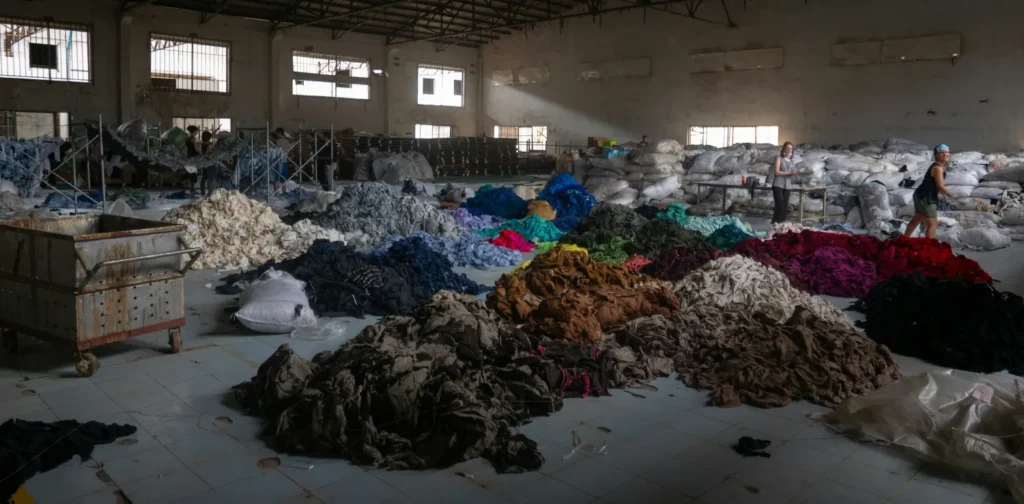
Photo by Francois Le Nguyen on Unsplash
Fashion and construction are ever-evolving sectors that shape our culture and create spaces to live and work. Yet, these sectors leave massive environmental footprints and often rely on harmful practices. This is even more noticeable in developing countries where factories are often located: environmental rules are weaker and workers face unsafe conditions. In light of this, a six-year initiative has been launched to assist developing countries lessen the harm of these sectors and shift into sustainable supply chains.
Fashion, Construction, and Developing Countries
The fashion and construction industries are among the key sectors that significantly impact the global environment. The fashion industry contributes about 4% of total global emissions, equivalent to the annual emissions of countries like France, Germany, and the United Kingdom.
Around 70% of these emissions come from upstream activities, such as raw material production and other energy-intensive processes. Meanwhile, downstream activities, such as transportation, retail, and product usage, account for the remainder.
On the other hand, the emissions from the building and construction sector reached around 10 gigatons. The sector accounts for 34% of the total energy demand for essential appliances, such as heating, cooling, and lighting. Furthermore, core construction materials like cement, concrete, and steel are highly resource-intensive to produce. Even with significant investments in energy efficiency, the global expansion of building areas continues to outpace the efficiency efforts being implemented.
These industries also have a significant impact on developing countries. Many of these nations serve as manufacturing hubs for fashion products, like clothing and footwear. Workers often endure poor, and sometimes unsafe, working conditions with low wages. Additionally, developing countries become increasingly vulnerable in the face of climate change due to heavy reliance on carbon-intensive materials like cement and steel for construction projects.
Shifting into Sustainable Supply Chains for Fashion and Construction
To address these problems, governments participating in the Integrated Programme on Eliminating Hazardous Chemicals from Supply Chains have launched a six-year initiative worth $45 million. This program aims to transform the supply chains in the fashion and construction sectors, making them more sustainable. Participating countries include Cambodia, Costa Rica, Ecuador, India, Mongolia, Pakistan, Peru, and Trinidad and Tobago.
The initiative focuses on promoting regenerative design, replacing non-renewable materials, enabling more resource- and energy-efficient production, encouraging responsible consumer purchasing habits, and improving systems for post-use collection and recycling.
For instance, the program’s actions include redesigning carnival costumes in Trinidad and Tobago, creating traditional brick ovens in Ecuador, testing green building certification and eco-fashion labeling schemes in Cambodia, and transforming banana stem waste into economically valuable fibers in Pakistan.
The initiative shows how important it is for governments to take part and prioritize their obligation to shift harmful practices towards more sustainable ones to prevent further environmental, social, and economic damage.
Lasting Change for Sustainable Industries
Creating lasting change in both the fashion and construction industries is crucial. To achieve this, governments must implement stronger policies that encourage sustainable practices, such as offering tax incentives for energy-efficient construction and subsidies for using sustainable materials. Additionally, businesses should be transparent about their supply chains to allow consumers to make informed, ethical purchasing decisions. Ultimately, mainstreaming low-carbon construction and prioritizing sustainable products for individuals will increase demand for more eco-friendly options, therefore supporting the progress towards a better, more sustainable industry and overall wellbeing for all
Editor: Kresentia Madina & Nazalea Kusuma

Dinda Rahmania
Dinda is an Assistant of International Partnerships at Green Network Asia. She holds a bachelor’s degree in International Relations from President University. As part of the GNA In-House Team, she supports the organization’s partnerships with international organizations, governments, businesses, and civil society worldwide through digital publications, events, capacity building, and research.
 Ensuring Access to Justice for Women and Girls
  The Invisible Infrastructure: What ASEAN’s Carbon Market Needs Most
  Indonesia Ruled to Recognize Chronic Illness as a Disability
  Clean Cooking as a Developmental Multiplier in Africa
  Congo Basin Peatlands Are Releasing Ancient Carbon
  From Anxiety to Action: How Youth Climate Activism Is Evolving