

South Korea’s Mandate on Obligatory Use of Sustainable Aviation Fuel (SAF)
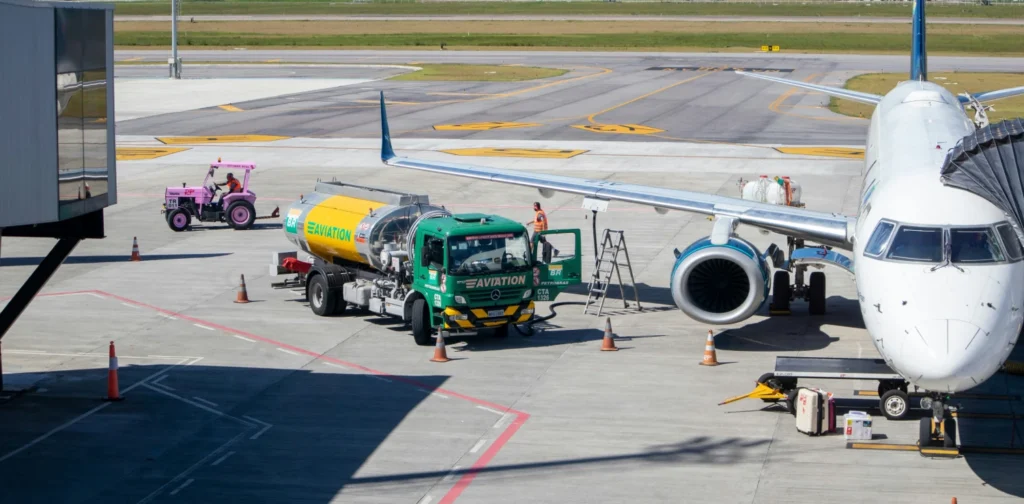
Photo: Vitor Paladini on Unsplash.
Climate change and the aviation industry have a cause-and-effect relationship with each other, and it goes both ways. On one hand, unprecedented and extreme weather events disturb airport operations, causing flight delays and cancellations. On the other, the aviation sector contributes significantly to global warming due to its massive fossil fuel use, accounting for around 2.5% of global CO2 emissions. In an effort to decarbonize, countries and industry actors are turning to Sustainable Aviation Fuel (SAF), including South Korea.
Decarbonizing the Aviation Industry
Sustainable Aviation Fuel, or SAF, refers to renewable or waste-derived aviation fuels that meet strict sustainability criteria. It can be produced from agricultural waste, used cooking oil, green hydrogen, and other materials. According to the International Civil Aviation Organization (ICAO) 2016 trends assessment, a 100% substitution of coal-based jet fuel with SAF could reduce up to 63% of the baseline CO2 emissions from international flights in 2050.
Thus, the world is slowly turning to SAF to decarbonize the aviation industry. In 2023, the ICAO and its member states adopted a framework to “clean” the aviation sector, including by the use of SAF. Countries and regions are also making moves—the USA, the EU, and beyond. In the Asia Pacific, for example, Japan targets a 10% SAF blending by 2030. Indonesia, Malaysia, and Thailand have also introduced SAF blending roadmaps beginning around 2027. Meanwhile, Singapore has confirmed a 1% SAF target by 2026.
Sustainable Aviation Fuel (SAF) Mandate in South Korea
In September 2025, South Korea joined the fray with “Sustainable Aviation Fuel (SAF) Blending Mandate Roadmap”. The document introduces the mandatory use of SAF for international departing flights from its airports, beginning in 2027.
The new mandates require all international flights to use jet fuel with 1% SAF blend from 2027. The rate will increase to 3–5% in 2030 and 7–10% in 2035. The specific ranges will be further finalized in 2026 and 2029 based on global market conditions, domestic production capacity, and international obligations.
The SAF blending obligations will be imposed on fuel suppliers, specifically oil refiners and importers/exporters. If companies fail to comply, they will be fined up to 150% of the average SAF market price for the year. The industry will have one year to adjust before the penalty comes into effect. Additionally, the ministries also introduced some incentives, such as direct subsidy support to airlines that use SAF-blended fuel.
Global Challenges for SAF
Global SAF implementation is not easy. The International Air Transport Association (IATA) reports that even though SAF production volumes are increasing, its growth is “disappointingly slow”. In 2024, SAF production reached 1.3 billion liters, yet accounting for only 0.3% of global jet fuel production. This is mainly due to the slow pace of SAF production technology rollout. SAF is also far more expensive; it can cost two to five times more than conventional jet fuel.
Moreover, scaling up SAF production poses environmental concerns. Many feedstocks used in SAF, like soybean and corn grain, are still associated with high levels of emissions. Crop production for biofuels often runs the risk of deforestation and resource depletion. In fact, emissions in SAF production that use virgin vegetable oil are either only slightly better or even worse than the petroleum baseline.
Therefore, the development and implementation of sustainable aviation fuel must be watched closely with strict international sustainability standards. Financial, policy, and technical support for SAF research and development is prudent to ensure transparency and sustainability in its entire supply chain. Furthermore, cross-sectoral and multi-stakeholder collaborations between governments and the private sector are crucial to building the best pathways to decarbonize the aviation sector beyond the use of SAF, such as through exploring airplane designs and improving the management of airports and air travel demand.
Editor: Nazalea Kusuma
 Trends and Gaps for Women in STEM
  Addressing the Harsh Reality of Temporary Labor Migration Programs
  Mapping Conservation Needs for Sharks and Rays Globally
  Hamdan bin Zayed Initiative: Abu Dhabi’s Path to Achieve the World’s Richest Seas
  How Human Behaviour Becomes the Real Engine of Sustainability Action
  Germany to Improve Protection Measures for Critical Infrastructures