

The Controversial Wildlife Culling in Namibia as a Drought-Relief Program
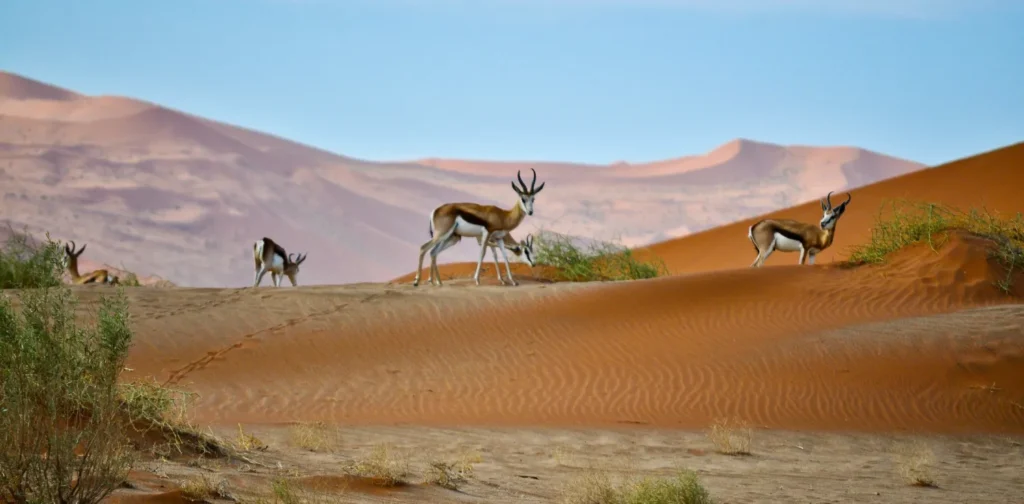
Photo: Arne Smith on Unsplash.
Drought leaves devastating impacts on the people and the planet. Without intervention, the lack of water and fertile soil for agriculture can lead to severe hunger and food insecurity. In Namibia, the government implements wildlife culling as one of the drought-relief programs.
Drought in Namibia
In May 2024, the Government of Namibia declared a State of Emergency due to the persisting drought across the country. The Namibia Meteorological Services’ Climate Watch recorded below-normal rainfall throughout the 2023–2024 rainy season. This is also topped by the El Niño-induced drought experienced in several Southern African countries.
This condition has left devastating impacts on Namibia’s population, who primarily depend on rain-fed agriculture. The latest analysis showed that from July to September 2024, 1.15 million people in Namibia experienced high levels of acute food insecurity. These people are those who are considered marginalized in society, including women and children, and often do not possess legal documents to benefit from social assistance.
Wildlife Culling
The Government of Namibia has implemented drought interventions through food assistance, livestock support, and water provision programs. The Namibia President has also called for assistance from the Southern African Development Communities and international stakeholders to bridge the funding gap for the social assistance programs.
In a desperate measure, at the end of August 2024, the government announced the wildlife culling plan as one of the latest drought relief programs at the end of August 2024. Culling refers to reducing the wildlife population through selective slaughter. With how the drought has exacerbated water scarcity, the culling aims to alleviate pressure on water supplies and grazing and provide meat for people experiencing food insecurity.
In a statement by the Ministry of Environment, Forestry, and Tourism, the government planned to contribute a total of 723 animals, comprising 30 hippos, 60 buffalos, 50 impalas, 100 blue wildebeest, 300 zebras, 83 elephants, and 100 elands. These animals are taken from national parks and communal areas with sustainable game numbers.
As of 26 August 2024, 56,875 kilograms of meat from 157 animals have been gathered through wildlife culling.
A Mixed Response
The wildlife culling plan has received mixed responses, mainly from international conservationists and animal organizations, who express concern over the possible detrimental effects on Namibia’s biodiversity and ecosystems. On the other hand, the government of Namibia and local organizations see culling as an appropriate drought relief measure, given that it has commenced with proper procedures.
The Global South is at the frontline of the climate crisis, and the gaps keep widening without proper support from the Global North. Now more than ever, the world must come together to ensure, at the very least, the survival of people and nature without having to sacrifice one for the other.
Editor: Nazalea Kusuma
Co-create positive impact for people and the planet.
Amidst today’s increasingly complex global challenges, equipping yourself, team, and communities with interdisciplinary and cross-sectoral insights on sustainability-related issues and sustainable development is no longer optional — it is a strategic necessity to stay ahead and stay relevant.

Kresentia Madina
Madina is the Assistant Manager of Stakeholder Engagement at Green Network Asia. She holds a bachelor’s degree in English Studies from Universitas Indonesia. As part of the GNA In-House Team, she supports the organization's multi-stakeholder engagement across international organizations, governments, businesses, civil society, and grassroots communities through digital publications, events, capacity building, and research.
 The Invisible Infrastructure: What ASEAN’s Carbon Market Needs Most
  Indonesia Ruled to Recognize Chronic Illness as a Disability
  Clean Cooking as a Developmental Multiplier in Africa
  Congo Basin Peatlands Are Releasing Ancient Carbon
  From Anxiety to Action: How Youth Climate Activism Is Evolving
  India’s Supreme Court Declared Menstrual Health and Hygiene as Fundamental Rights