

Risks and Opportunities of Submarine Communication Cables for Sustainable Development
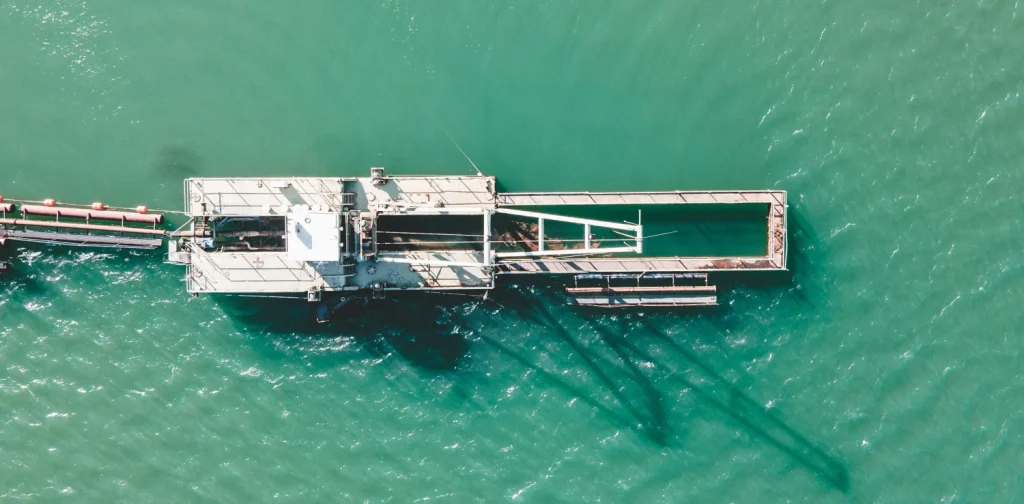
Photo: Pascal Scholl on Unsplash
Global telecommunication is currently the most advanced it’s ever been. Such digital accessibility is possible due to submarine communication cables. These cables sprawl all over the ocean floor, spanning over 1.7 million kilometers in length. Inside the hose-sized cables, optical filaments provide pathways for more than 95% of international data to be processed rapidly. Undoubtedly, they carry risks and opportunities.
Submarine Communication Cables and Marine Life
However, the installation of these cables requires an advanced process. It comprises route preparation, obstacle removal, slope and depth adjustment, and cable stabilization. This intricate process raises concerns regarding the effects of undersea cables’ massive expansion to marine life.
During the installation stage, the process of reworking the seabed can alter its structure. That kind of disruption may affect sensitive habitats such as coral reefs and seagrasses. The most tangible example is the removal and replanting of Posidonia, a seagrass species endemic to the Mediterranean Sea, during project installations.
Furthermore, the operational phase itself presents another challenge. The production of electromagnetic fields influences benthic marine ecosystems. Bastien Taormina, a marine ecology researcher at the Institute Marine Research, argues that the electromagnetic fields might disturb the navigation of electrosensitive marine species, namely sharks and eels.
Amidst rising concerns, though, a study suggests that the biological impacts of cable installation is minor at most. Another study reveals that the effects of the electromagnetic fields on marine habitat heavily depend on the species. Crab and mollusk show different reactions from anemones and fish, not all of them are negative. Moreover, the study on electromagnetic fields emitted by submarine communication cables still needs to be expanded.
Upgrading Undersea Cables’ Functionality
In the meantime, to further improve the functionality of these intricately installed undersea cables, a EU-funded research initiative is looking into a technology that could incorporate undersea cables as a global sensing network. This research aims to repurpose undersea cables as an early warning system for natural disasters, such as earthquakes and tsunamis. Thus far, the findings imply that these cables can also monitor climate change by tracking changes in ocean temperature.
However, many of these submarine communication cables are privately owned. Thus, the implementation of this sensor technology could be quite challenging as it involves bargaining with the consortia of internet and telecom companies that operate these cables.
Toward Responsible and Efficient Tech Advancement
Considering the importance of submarine communication cables, improvement is crucial. There needs to be more technical and financial support toward more research and development on optimizing the functions of undersea cables while taking care of marine ecosystems throughout the process.
Governments have a crucial role in bridging the gap between scientists and investors. The transboundary nature of undersea cables should encourage the governments to promote and support sustainable technological inventions. With proper systems, countries involved could enjoy the benefits of enhanced digital connectivity, marine conservation, and disaster preparedness.
Editor: Nazalea Kusuma

Co-create positive impact for people and the planet.
Amidst today’s increasingly complex global challenges, equipping yourself, team, and communities with interdisciplinary and cross-sectoral insights on sustainability-related issues and sustainable development is no longer optional — it is a strategic necessity to stay ahead and stay relevant.
 From Anxiety to Action: How Youth Climate Activism Is Evolving
  India’s Supreme Court Declared Menstrual Health and Hygiene as Fundamental Rights
  Impacts of E-waste Pollution on Animals and Human Health
  Africa’s Solar Energy Surge: Why 2025 Was a Breakthrough Year
  Agrihoods: Integrating Farms and Urban Neighborhoods into Sustainable Communities
  Women in Waste Management: Asia’s Circularity Runs on Women. Its Policies Still Don’t