

Children’s Education Crisis in Conflict-Ridden Yemen
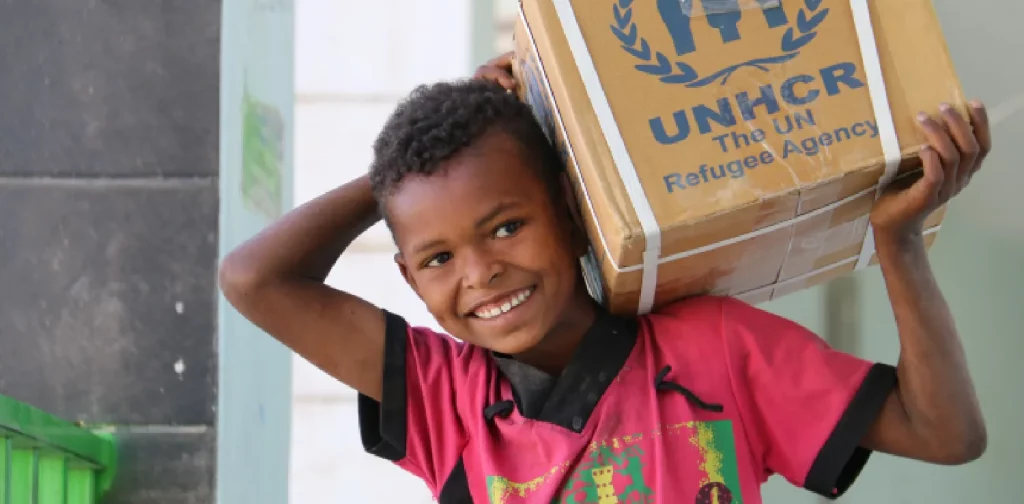
Photo: World Humanitarian Summit on Flickr.
War and conflicts bring out casualties socially, economically, and environmentally. They lead to displacement and poor living conditions, especially for the most vulnerable groups, such as women, children, and people with disabilities. In Yemen, the prolonged civil war has severely impacted children’s education and wellbeing.
Yemen’s Conflict
Yemen is a country in West Asia with approximately 33.7 million population. The country has been experiencing a civil war due to political conflicts since 2014, leading to a severe humanitarian crisis. In 2023, there were around 4.5 million internally displaced persons in Yemen.
The United Nations announced a nationwide truce in Yemen in April 2022, which lasted through October 2022. Although the six-month truce had brought improvements in many aspects, including humanitarian aid relief, economic opportunities, and reduction of violence and casualties, many Yemenis still struggle with poor living conditions to this day. Children and adolescents, for instance, grapple with deteriorating education systems in the country.
The year 2024 marked two years since the truce was announced. In a new report, the non-profit organization Save the Children examined Yemeni children’s struggle to attain inclusive and quality education. The report combined surveys, in-depth interviews, and focus group discussions to better understand the state of children’s education in the country.
Children’s Education in Yemen
The truce has not improved access to quality and inclusive education in Yemen, as 58% of caregivers suggested. For instance, school dropouts remain a prominent challenge. The report noted that at least one child in 34% of Yemeni families has had to drop out of school over the past two years. Furthermore, displaced children have a higher dropout rate (58%) compared to those in the host community (27%).
Child labor is the reason behind 44% of school dropout cases. Overall, the prolonged conflict has severely impacted the country’s economy, eventually impacting children’s education. Children often have to balance studying and helping their families economically, reducing their focus on learning and increasing the risks of dropping out.
“Lots of kids here work early in the morning. If you don’t start early, you miss out, and you don’t get paid,” said Khalid, a 14-year-old boy who helps his family by collecting material scraps. This job has caused Khalid to miss many school days.
Unaffordability also contributes to 22% of school dropouts in Yemen. While primary education is free in the country, families still have to pay other fees, including textbooks, transportation, stationery, and uniforms. Additionally, 14% of students who dropped out of school cited a lack of security due to conflict as the reason for not coming back to school.
Teachers, Too
Beyond impacting children’s education, Yemem’s conflict and economic crisis have also influenced teachers’ wellbeing. Many have to take up side jobs to keep their families afloat. Some even consider retiring and joining the military, where the salary is more guaranteed.
“We often have to leave early to get to our other jobs, which means fewer school hours for children, which limits their learning time. We never have time to adequately prepare our lessons, if we prepare at all as we used to, which also affects the quality of teaching and student engagement in the classroom,” said Majed, a 51-year-old teacher. He earns 89,000 Yemeni riyals, equivalent to 55 USD, per month.
Education Amidst Conflicts
Education is a fundamental human right. Children and adolescents have the right to attain inclusive and quality education regardless of their conditions. Therefore, safeguarding access to education in the middle of conflict is crucial to ensuring education for all. The report concludes with several recommendations to improve children’s education in Yemen, some of them are:
- Authorities must fully commit to a renewed and inclusive peace process to alleviate the impacts of conflicts, resume critical economic activities, and provide adequate salaries for teachers.
- Donor states and institutions must increase and sustain support for educational interventions and ensure children receive quality and protective education in schools across Yemen.
- Humanitarian actors should scale up and strengthen integrated and multi-sectorial child protection interventions to reach more students and teachers in need.
Read the report here.

Co-create positive impact for people and the planet.
Amidst today’s increasingly complex global challenges, equipping yourself, team, and communities with interdisciplinary and cross-sectoral insights on sustainability-related issues and sustainable development is no longer optional — it is a strategic necessity to stay ahead and stay relevant.

Kresentia Madina
Madina is the Assistant Manager of Stakeholder Engagement at Green Network Asia. She holds a bachelor’s degree in English Studies from Universitas Indonesia. As part of the GNA In-House Team, she supports the organization's multi-stakeholder engagement across international organizations, governments, businesses, civil society, and grassroots communities through digital publications, events, capacity building, and research.
 Addressing the Hidden Risk of Microplastics from Offshore Infrastructures
  Addressing Antimicrobial Resistance as More Than a Medical Issue
  Holding Harmful Industries Liable for Harm to Human Life and the Environment
  Clearing the Air of Despair Surrounding the Climate Crisis with Data
  How Do Wild Animals Survive Wildfires?
  How Losing Sleep Is a Climate and Equality Issue