

Global Coalition for Social Justice for Transformative Social Progress
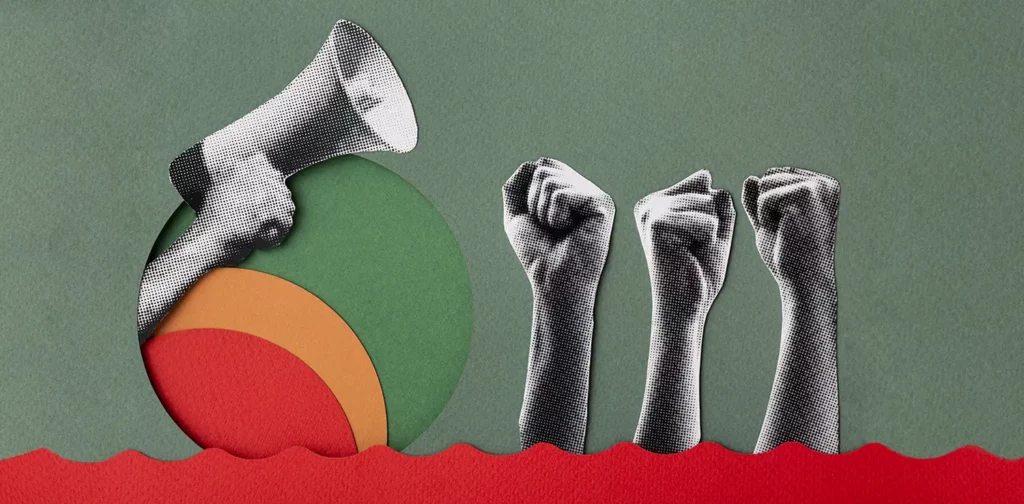
Photo: Freepik.
Inequality remains the world’s most pressing yet complex problem. It is exacerbated by multiple ongoing crises like poverty, mass unemployment, rising inflation, and the cost-of-living crisis. The International Labour Organization (ILO) established the Global Coalition for Social Justice in an effort to create transformative progress for social justice.
Challenges to Social Justice
We are currently facing multiple challenges to social justice. In the early 2024, the ILO predicted that an additional two million workers would be looking for jobs. This would raise the global unemployment rate from 5.1% in 2023 to 5.2%.
At the same time, around 700 million people still live in poverty globally. To bridge this income gap, many people would eventually resort to alternative low-paying jobs that are detrimental to their welfare and wellbeing, such as child labor and other informal jobs.
In June 2024, the Global Coalition for Social Justice was inaugurated as the initiative of the ILO Director-General Houngbo. The Coalition is welcomed by global leaders in governments, including the UN Secretary-General.
“At its heart, this effort is about rebuilding the social contract through people-centered policies grounded and guided by social justice,” said António Guterres, the Secretary-General of the United Nations.
The Global Coalition for Social Justice
In essence, the Coalition strives to advance progress to social justice and decent work for all. It identified several areas of immediate action to achieve the goal:
- Addressing inequality, discrimination, and exclusion.
- Realizing labor rights as human rights, ensuring human dignity, and meeting basic needs.
- Expanding access to and capabilities for productive and freely chosen employment and sustainable enterprises.
- Providing protection and building resilience.
- Strengthening just transitions and the social dimension of sustainable development, trade, and investment.
- Reinforcing institutions of social dialogue.
Achieving social justice requires a multi-stakeholder approach involving governments, businesses, and civil society. The Global Coalition of Social Justice engages with diverse institutions and actors, including national and regional governments, workers’ organizations, and enterprises, to foster multilateral cooperation and partnerships.
Collaborations & Partnerships
Social justice is essential to sustainable development. Realizing a better world that leaves no one behind means closing the inequality gap across all aspects of life through large-scale and systemic approaches. The Global Coalition of Social Justice is hoped to be a platform that serves partnerships and collaborations to build political commitments, investments, and concrete actions to reduce poverty and any forms of social injustice. Governments, businesses, and civil society must actively collaborate and engage in the efforts to build a better world for all.
Editor: Nazalea Kusuma

Kresentia Madina
Madina is the Assistant Manager of Stakeholder Engagement at Green Network Asia. She holds a bachelor’s degree in English Studies from Universitas Indonesia. As part of the GNA In-House Team, she supports the organization's multi-stakeholder engagement across international organizations, governments, businesses, civil society, and grassroots communities through digital publications, events, capacity building, and research.
 Addressing Antimicrobial Resistance as More Than a Medical Issue
  Holding Harmful Industries Liable for Harm to Human Life and the Environment
  Clearing the Air of Despair Surrounding the Climate Crisis with Data
  How Do Wild Animals Survive Wildfires?
  How Losing Sleep Is a Climate and Equality Issue
  How the Cost of Living Crisis Is Pushing People Away from Sustainable Choices