

How the Agri-PV System Can Maximize Land-Use Efficiency in Central Europe
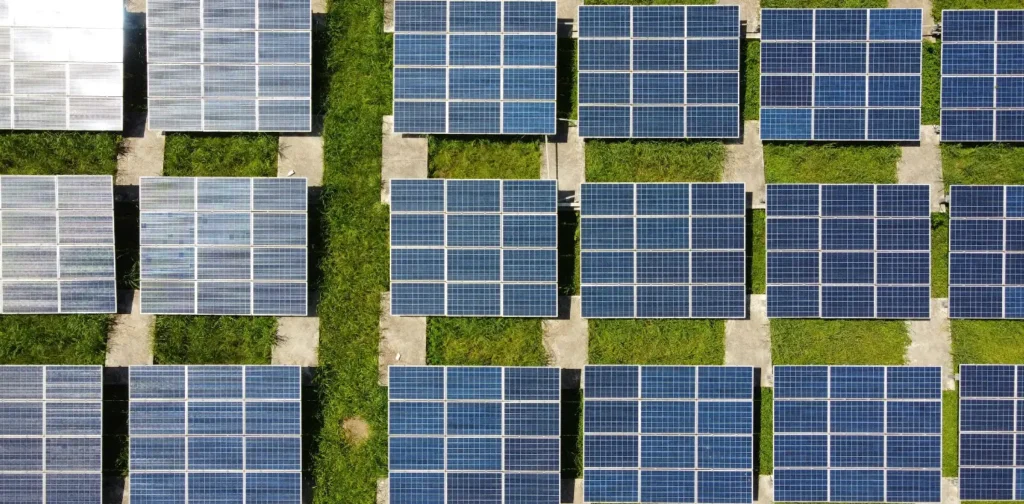
Photo: Anders J on Unsplash
Lands are critical in supporting sustainable development progress, particularly in agriculture and renewable energy. The growing demand for food and clean energy means expansion is needed, but a gap exists between demand and land availability. In this light, research by energy think tank Ember reveals how the agri-PV system can benefit both sectors and maximize land-use efficiency in Central Europe.
The Agri-PV System
The “Empowering farmers in Central Europe: the case for agri-PV” report explores the potential and benefits of agri-PV in four Central European countries: Czechia, Hungary, Poland, and Slovakia. Roughly 19% of the EU’s arable lands with substantial volumes of crops are located in these countries. However, volatile fertilizer prices, a declining economy, and climate change have posed risks to these lands’ productivity.
“Far from reducing food production, agri-PV actually increases yields for some crops,” said Dr Paweł Czyżak, Regional Lead of the CEE, Ember. The system refers to the simultaneous use of lands for crop cultivation and solar generation. One way to do this is by placing solar panels above the crops to provide shade. Other types of agri-PV system implementation can range from solar greenhouses to industrial-scale interspaced solar between crops like wheat or oats.
The report lists some of the benefits of utilizing the agri-PV system: It can help modify the microclimate under the solar panels to support crops, shield crops from excessive solar radiation and extreme water conditions, and stabilize crop conditions throughout the years.
Potential in Central Europe
Ember’s analysis notes that Central Europe has substantial untapped agri-PV potential. The four countries examined in the report could deploy 180 GW of electricity from agri-PV, contributing to 191 TWh of clean electricity annually. This is equivalent to 68% of the current electricity demand in Czechia, Hungary, Poland, and Slovakia.
Furthermore, implementing the system can reportedly increase crop yields by up to 16% for fruits or berries. Agri-PV can also limit the yield loss below 20% for crops like wheat by placing the solar panel vertically with wide row spacing.
Ultimately, combining agriculture and renewable energy through agri-PV can boost land use efficiency. According to the report, the potential land-use efficiency of implementing the agri-PV system could reach 178% compared to using separate land for agriculture and solar generation.
Legislation Needed
United Nations noted that at least 100 million hectares of healthy and productive land was lost annually between 2015 and 2019. With the increasing demand for food production and clean energy generation, the agri-PV system can provide a potential solution to maximize land efficiency globally.
The report suggests that legislation is a crucial instrument to enable the implementation of agri-PV in Central Europe and beyond. It highlights several recommendations:
- Prioritizing benefits for farmers in the implementation, including raising awareness and providing monetary assistance.
- Including all types of agri-PV need to be included in the legislation to harness maximum potential while preserving agricultural land functions to produce food.
- Supporting research and development programs.
- Setting specific capacity targets and financial support for agri-PV.
- Including farmers in the investment subsidies for the energy transition.
Editor: Nazalea Kusuma

Kresentia Madina
Madina is the Assistant Manager of Stakeholder Engagement at Green Network Asia. She holds a bachelor’s degree in English Studies from Universitas Indonesia. As part of the GNA In-House Team, she supports the organization's multi-stakeholder engagement across international organizations, governments, businesses, civil society, and grassroots communities through digital publications, events, capacity building, and research.
 Whimsymaxxing and Beyond: Rethinking the Waste Behind Viral Trends
  Seeking Guidance from Karl Marx to Face the Climate Catastrophe
  Indonesia’s Greenwashing Diplomacy at COP31 and Beyond
  The Textile Industry Is Growing, and So Is Textile Wastewater
  EESG: We Need a New Economic Narrative for Sustainability in the Age of AI, Energy Crisis, and Geopolitical Divide
  The Continued Struggle for Equality and Dignity in Women’s Sportswear