

Nature-based Solutions Are Proven Effective in Mitigating Climate-Related Disasters
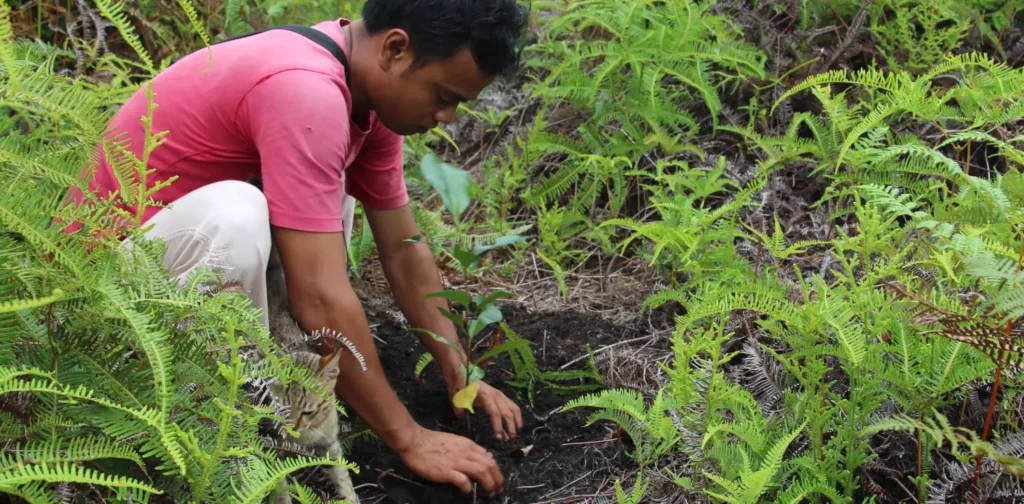
Photo by World Resources Institute on Flickr
As the planet gets hotter, the climate crisis becomes increasingly evident. This leads to more severe natural hazards and unpredictable extreme weather. To address the risk of climate-related disasters, finding effective solutions is urgent. In this context, a new global assessment shows that nature-based solutions are proven to be effective in mitigating and reducing the risk of natural hazards.
Climate-Related Disasters
Droughts, storms, wildfires, and heat waves are not new occurrences. However, the rising temperature of the Earth affects global climate cycles and ultimately worsening natural disasters by making them more severe, longer, or frequent.
For example, extreme changes in rainfall patterns in some regions are linked to rising temperatures, which allow the atmosphere to hold more water through increased evaporation. This can lead to heavy precipitation in some areas, raising the risk of floods, while other regions may experience droughts.
In 2024 alone, floods have caused major damage in many regions around the world, such as in Oman, Brazil, and Kenya. Driven by intense periods of rain, these floods have claimed hundreds of lives, impacted thousands, and left major damage to infrastructure. Moreover, natural hazards like these can trigger other disasters, like landslides, which heightened the risks for surrounding communities.
An Effective Solution
Nature has the potential to be the key to climate action and sustainable practices, including reducing climate-related disaster risks. So, putting nature as the foundation of our approach is essential. Moreover, the approach is also proven to be economically sound.
Researchers at the University of Massachusetts Amherst conducted a global assessment of scientific literature and concluded that nature-based solutions (NbS) are the more cost-effective and efficient options for mitigating climate-induced disasters. Nature-based solutions refer to the preservation or sustainable management of nature to restore the function of the ecosystem. From coastal area conservation to agricultural water management, NbS is a viable option alongside engineered solutions.
This global assessment reviewed more than 20,000 scientific articles evaluating the economic aspects of NbS for disaster risk reduction and climate change adaptation. According to the assessment, over 70% of the articles reviewed indicate that nature-based solutions are cost-effective.
Furthermore, the assessment compared nature-based solutions with engineering-based solutions and found that NbS were just as effective and efficient. NbS even showed an advantage, with 65% of the scientific articles assessed indicating NbS as more effective than engineered solutions.
Uncounted Benefits
Despite studies showing that NbS are effective in combating natural hazards, many of these studies do not account for the additional benefits of such solutions, including their socioeconomic or environmental advantages.
In Burundi for example, thousands of hectares of hillside terraces were built to control soil erosion and moisture in areas prone to landslides. As a result, farmers are boosting land productivity by planting tree crops, soil-stabilizing grass, and fodder crops.
Similarly, in Sri Lanka, urban wetlands are preserved by integrating green (nature-based) and gray (hard-engineering) infrastructure to reduce flood risks. These preserved wetlands also help absorb carbon and protect local biodiversity.
This shows that NbS benefits extend beyond disaster reduction alone. Vulnerable communities are protected, biodiversity is preserved, and climate change impacts are under control.
Scaling Up Nature-based Solutions
The assessment reveals that most nature-based solutions (NbS) are funded by the public sector, with only limited support from the private sector. Since NbS benefits everyone in the surrounding area, collaborations from all stakeholders is vital to scaling up these initiatives. Research, funding, data-collecting, executing, and other aspects of NbS implementation worldwide will benefit from the joint effort to maximize its impact.
Ultimately, amidst a triple planetary crisis that exacerbates climate related disasters, it is critical to seek sustainable, holistic, efficient, and cost-effective solutions. Nature-based Solutions are proven to be among the viable options to be upscaled and adopted by all sectors to safeguard the wellbeing of people and the planet.
Editor: Kresentia Madina & Nazalea Kusuma
 Seeking Guidance from Karl Marx to Face the Climate Catastrophe
  Indonesia’s Greenwashing Diplomacy at COP31 and Beyond
  The Textile Industry Is Growing, and So Is Textile Wastewater
  EESG: We Need a New Economic Narrative for Sustainability in the Age of AI, Energy Crisis, and Geopolitical Divide
  The Continued Struggle for Equality and Dignity in Women’s Sportswear
  Behavior Change for the Planet: Is composting worth it?