

Understanding and Addressing Multiple Dimensions of Child Deprivation
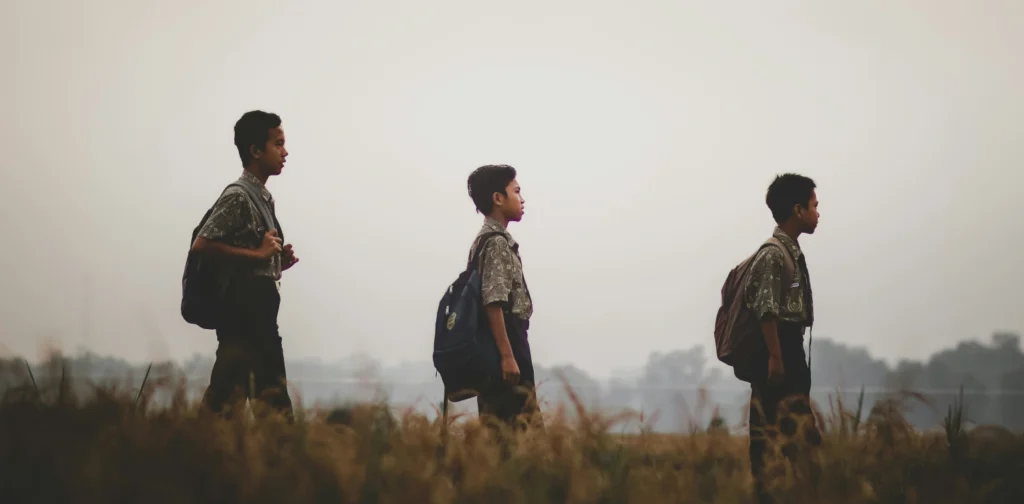
Photo: Dzulfahmi Fauzan on Unsplash.
We live in a time of crisis, and vulnerable groups bear the brunt of multiple risks and deprivation. Children, with their limited autonomy and adults’ lack of acknowledgement, are one of them. How can we understand child deprivation to provide better policies and interventions for their wellbeing?
Understanding Child Deprivation
Children continue to face deprivation globally, and it is not just about money. The Convention on the Rights of the Child enshrines the rights to education, to a standard of living adequate for the child’s health and wellbeing, and to the highest attainable standard of health, among others.
Poverty violates all these rights. Almost 412 million children live in households in extreme monetary poverty (less than $3.00 a day) globally. The number represents 19.2% of the world’s children in 2024, down from 24.3% in 2014. However, we must see child deprivation from a multidimensional perspective to fully grasp and overcome the dire situations.
Multidimensional deprivation means children face hardships in more than one aspect of their wellbeing. UNICEF’s analysis shows that in low- and middle-income countries, 417 million children experience two or more deprivations, 118 million experience three or more, and 17 million face four or more. Sub-Saharan Africa and South Asia have the highest rate of multidimensional severe child deprivation.
UNICEF’s analysis further reveals the impact of conflict on child poverty. From 2014 to 2024, the extreme poverty rates among children in fragile and conflict-affected states increased by 4.2 percentage points. In contrast, the rates fell by 8.5 percentage points in countries not considered fragile and conflict-affected.
Children and Youth’s Perspectives
Understanding the full extent of child deprivation also means listening and creating spaces for children to share their lived experiences amid crises.
In its State of the World’s Children 2025 report, UNICEF presents a glimpse of the voices of children and youth who participated in a youth foresight workshop in July 2025. Unanimously, the participants describe poverty as something that is built and shaped by decisions that exclude some children’s needs, rather than an accidental occurrence.
In the face of poverty, these young people are forced to give up their dreams. They also experience structural and lasting challenges that they will carry throughout their lives.
For instance, education is among the first things they lose. “Many children dropped out of school permanently because their families needed them to work, and now they can’t catch up,” said one of the participants as quoted in the report.
Meanwhile, the pivot to online education during the pandemic did not help bridge the gap. If anything, this exposed the deep inequalities and lack of access to technologies to support children’s education.
At the same time, food systems are crumbling under the climate change pressure, prolonging hunger and perpetuating malnutrition among children. Girls are forced to marry young or take the role of caregivers, while boys may also be pushed into exploitative labor markets in the face of economic shocks.
Young People’s Involvement and Key Policy Actions
The complexity of poverty and the escalating social, political, and environmental crises call for immediate actions to address child deprivation. Implementing grounded interventions can begin by involving youth in decision-making and providing funding and guidance for their solutions and initiatives.
At national levels, UNICEF identifies several core policy areas to address multiple causes of child poverty and create lasting impacts, which are:
- Make ending child poverty a national priority to drive political commitment, mobilize resources, and improve cross-sectoral coordination.
- Establish supportive macroeconomic policies to deliver better responsive measures against economic shocks.
- Expand inclusive social protection, including universal and targeted cash transfers for families with children.
- Expand access to quality public services, including schools, healthcare, housing, sanitation, and other measures that can support their learning, development, and wellbeing.
- Promote decent work for parents and caregivers.
Editor: Nazalea Kusuma
 Indonesia’s Greenwashing Diplomacy at COP31 and Beyond
  The Textile Industry Is Growing, and So Is Textile Wastewater
  EESG: We Need a New Economic Narrative for Sustainability in the Age of AI, Energy Crisis, and Geopolitical Divide
  The Continued Struggle for Equality and Dignity in Women’s Sportswear
  Behavior Change for the Planet: Is composting worth it?
  Building Bridges Between Environmental Policy and Mental Health