

Strengthening Societal Resilience in the Age of Disruptions

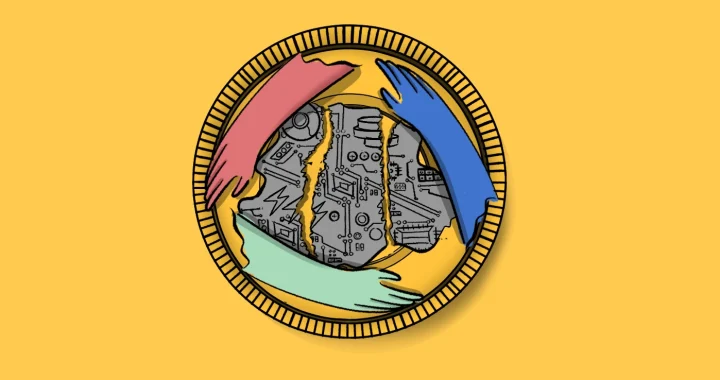
Photo: Modified from the cover of the Global Talent Competitiveness Index 2025.
The world has always been about change, but the past decade has demonstrated just how fast changes can occur. We have been grappling with continuous and sometimes overlapping problems, such as the COVID-19 pandemic, accelerating climate change, geopolitical and economic instability, and worsening social justice. These disruptions impact our lives so thoroughly, at all levels. Against this backdrop, strengthening key factors that determine our collective survival and prosperity is crucial. One of them is societal resilience.
Fostering Resilience Thinking
We are living in an age of disruption. In recent years, resilience has become a buzzword that underlines many development plans. Governments, organizations, and communities around the world echo the word in the context of survival today and hope for the future. But what does it mean?
Resilience can be defined as the capacity to anticipate, cope with, and recover from shocks. However, the Global Talent Competitiveness Index (GTCI) 2025 reveals, “Much of the vast and important resilience industry and literature is built on the premise that resilience is simply about bouncing back. In reality, resilient systems often prove brittle when confronted with profound or cumulative shocks.”
The GTCI assessed 135 countries, representing over 97% of global GDP and 93% of the world’s population, on their national capacities to develop, attract, and empower talent and human capital for productivity and prosperity. It also explores what resilience means today.
The report highlights the adaptive aspect of resilience. It considers resilience as “not just to the ability to recover from specific shocks as they occur, but also to adapt to changes in the risk landscape to make shocks less likely or less harmful in the future.”
Thus, the report argues that what we need is resilience thinking. Beyond withstanding shocks, Resilience Thinking emphasizes the capacity to adapt, reimagine, and transform in the face of change. Therefore, instead of merely about bouncing back, resilience is about bouncing forward. It is about using adversity as a springboard for innovation and capacity development.
What Societal Resilience Means
The report looks into resilience at three interconnected levels: individual/household, organizational, and societal. At the societal level, resilience depends on the capacity of institutions and governments to effectively maintain cohesion and adapt under stress. With different historical, cultural, socioeconomic and geopolitical contexts, societal resilience varies greatly across the globe.
According to the GTCI, the Nordic countries—Sweden, Norway, Denmark, Finland, and Iceland—along with Singapore and Switzerland are the top performers in societal resilience. That is due to their strong institutional trust, inclusive governance, and comprehensive welfare systems.
Ultimately, societal resilience is not just about having resources. It is also about the people’s trust and confidence in how institutions manage those resources as well as their responsiveness and fairness.
Key Enablers of Societal Resilience
The report has identified five key enabling capabilities to strengthen societal resilience. One of them is the anticipatory capacity. It is the ability to assess risks, sense and detect signals, interpret upcoming threats, and mobilize timely responses. Examples include early warning systems and risk communication in disaster risk management.
Next, there must be reliable state infrastructure. It comprises a government’s ability to cohesively maintain essential services and adapt institutions amid changing conditions. For instance, countries with fragile and fractured systems will struggle to provide critical services to societal resilience such as health, communication, education, and employment.
Another key enabler is about trust and inclusivity. Leaving no one behind is the core principle of sustainable development. Without social inclusion that ensures growth that benefits all, social unrest and revolt will arise. Additionally, the report notes that trust is more difficult to cultivate in highly diverse societies.
The next key enabler is civic engagement with supportive leadership. Development is often about top-down approaches, but societal resilience requires bottom-up civic engagement as well. When disruptions occur, adaptive responses often begin from the people. Communities step up to help each other, mobilizing and improvising locally. However, this strategy is not a substitute for systemic interventions. Resilient societies need a supportive leadership that recognizes, empowers, and scales these grassroots efforts.
Then, the final piece of the puzzle is perhaps the most important: systemic coordination. Unfortunately, most governments are structured in ways that discourage collaboration. They are struggling with institutional fragmentation, overlapping mandates, and weak mechanisms for information-sharing.
In contrast, societies with cross-functional institutions, inter-ministerial task forces, or whole-of-government approaches will have an easier time withstanding shocks and achieving equitable, long-term recovery and forward-development. This strategy includes bringing the private sector, academic institutions, and civil society into coordination frameworks.
Toward a Resilient Generation
Resilience is more than just surviving difficult times. In an era defined by disruptions, digital transformation, and continuous change in the economic landscape, the report notes how Generalist Adaptive Skills emerge as one of the strongest determinants of national talent competitiveness. They encompass multidimensional capabilities: cognitive and socio-emotional flexibility, technological adaptability, and innovation-driven outputs.
Lily Fang, Dean of Research and Innovation at INSEAD, said, “It is perhaps not surprising that one of the key findings of the report is the importance of adaptive generalist skills in encouraging innovation amid disruption to successfully navigate this process of transformation.”
The report underlines that countries that empower their people to be adaptable, digitally fluent, and cognitively flexible with interdisciplinary problem-solving skills are more ready than most to thrive in the ever-changing landscape of the word—be it due to development or disruption. In essence, strong, resilient countries are ones that invest in systemic support for individuals, organizations, and all-of-society.
Editor: Marlis Afridah
 Indonesia’s Greenwashing Diplomacy at COP31 and Beyond
  The Textile Industry Is Growing, and So Is Textile Wastewater
  EESG: We Need a New Economic Narrative for Sustainability in the Age of AI, Energy Crisis, and Geopolitical Divide
  The Continued Struggle for Equality and Dignity in Women’s Sportswear
  Behavior Change for the Planet: Is composting worth it?
  Building Bridges Between Environmental Policy and Mental Health