

Racing with the Rapid Glacier Loss Globally
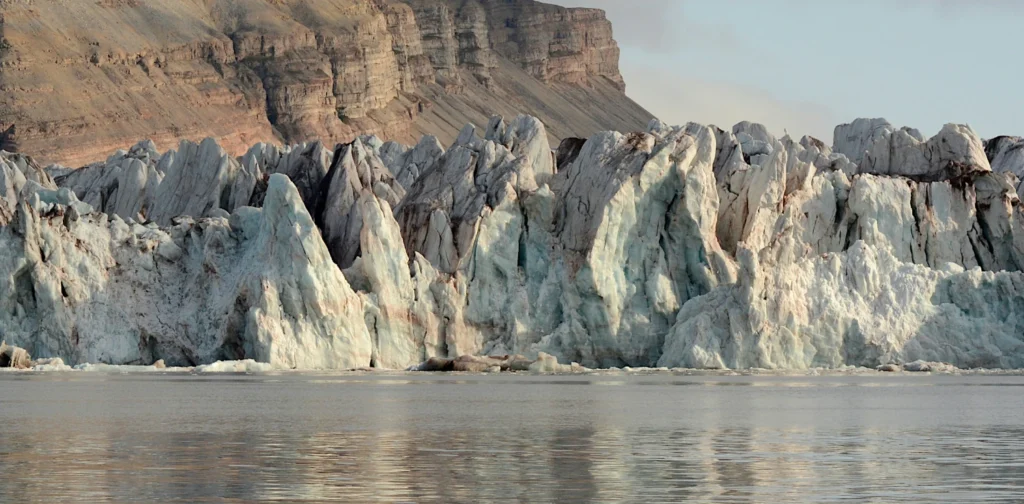
Photo: Jacek Urbanski on Unsplash.
As ice melts under the sun, glaciers around the world are melting quicker than ever before due to global warming. Small and large glacier loss occurs globally, raising alarms about far-reaching environmental, cultural, and economic impacts.
The Projected Peak
There are over 200,000 glaciers globally. They cover around 700,000 square meters of the Earth’s surface, and store around 158,000 cubic kilometers of Earth’s freshwater. Glaciers are an essential pillar of the ecosystems and human livelihoods, sustaining life on Earth by providing water for drinking, agriculture, industry, and energy production.
However, for years now, global warming has threatened these water reservoirs. A study projects that glacier extinction will peak between 2041 and 2055, with around 4,000 individual glaciers lost annually. The rate of this extinction, the study says, will depend on the scale of global warming.
For instance, under the +1.5°C scenario, glacier extinction will peak in 2041 with around 2,000 annual losses. Meanwhile, under the +4°C scenario, the peak will occur in 2055, with an estimated 4,000 glacier loss occurring every year.
Glacier Loss in the Arctic
As glacier loss occurs globally, the Arctic is warming faster than other places. The Arctic Report Card 2025, published by NOAA Arctic, reveals that the region’s annual temperature change has more than doubled the global rate since 2006. Moreover, the years 2015-2025 are the region’s warmest years on record.
The rapidly rising temperatures have dissolved an estimated 129 billion tons of ice from the Greenland Ice Sheet in 2025. Meanwhile, Alaskan glaciers have lost an average of 38 meters of ice since the 1950s. This glacier loss has been a major contributor to global sea-level rise and has affected the health and productivity of marine ecosystems.
The report also reveals other severe impacts, including declining biodiversity due to ecosystem changes, contaminated rivers and streams resulting from thawing permafrost, and devastating disasters.
Halting Global Warming
Beyond their ecological functions, glaciers also provide income and cultural significance for communities. The widespread glacier loss has forced them to adapt to its impacts; some communities even mark their loss with ceremonies and rituals, such as glacier funerals. Several notable rituals were held for the Okjökull glacier in Iceland (2019), the Pizol glacier in Switzerland (2021), and the Yala glacier in Nepal (2025).
This underscores the importance of limiting the rise in global temperature, as agreed in the 2015 Paris Agreement. Moreover, the United Nations has designated 2025 as the International Year of Glacier Preservation to highlight the importance of glaciers and their protection. The most important step would be to intensify efforts to reduce global greenhouse gas emissions that drive global warming, supported by strong political will, concrete actions, and collaboration among governments, businesses, and civil society.
Editor: Nazalea Kusuma
 Beyond Fashion: The Environmental Cost Behind Animal Leather
  Addressing the Hidden Risk of Microplastics from Offshore Infrastructures
  Addressing Antimicrobial Resistance as More Than a Medical Issue
  Holding Harmful Industries Liable for Harm to Human Life and the Environment
  Clearing the Air of Despair Surrounding the Climate Crisis with Data
  How Do Wild Animals Survive Wildfires?