

Upholding the Women in Agriculture Who Are Feeding Africa
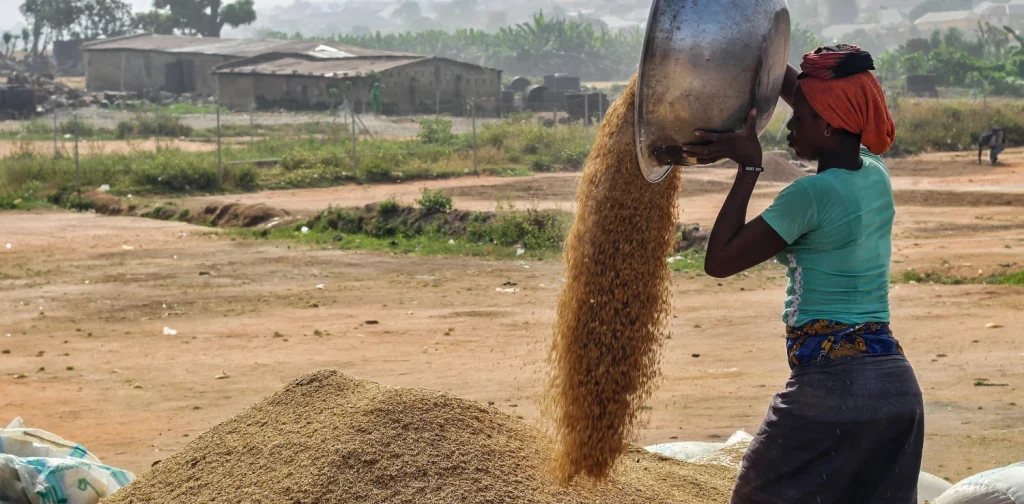
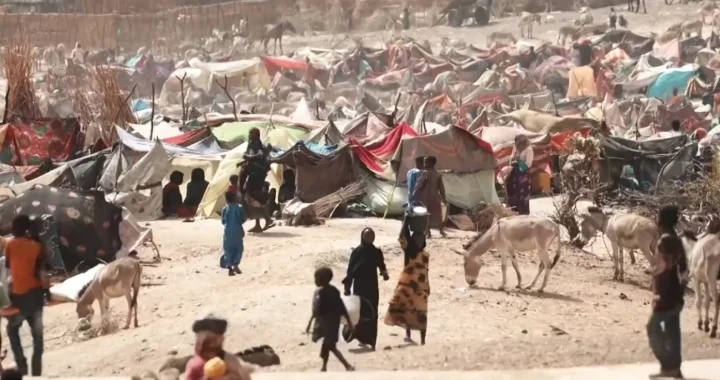
Photo: Fatima Yusuf.
Africa’s food systems have a paradox at their center: while women account for nearly half of the continent’s agricultural labor force, they remain among the most structurally excluded actors within the very systems they sustain. Women in agriculture produce food for households and markets alike, but the resources that would make that work more productive, secure, and fairly rewarded consistently bypass them.
Women in Agriculture: The Foundation
The scale of women’s contribution to African food production is well established. Research shows that women represent 52% of the agricultural population across the continent and produce between 60% and 80% of its food. Furthermore, a study conducted across six sub-Saharan African countries highlights that women provide an average of 40% of crop labor, with shares exceeding 50% in Malawi, Tanzania, and Uganda.
These figures tell the same story: African women in agriculture are not a footnote, but the foundation.
Yet, women’s participation in agricultural labor is overwhelmingly concentrated in unpaid, seasonal, and informal work, such as tending animals, collecting fuels and water, and processing and preparing food—the kind that feeds families but rarely appears in economic statistics, and even less in policy budgets.
Lack of Land Ownership
One major issue for women in agriculture is the lack of land ownership. Beyond just a place to farm, land is collateral, credibility, and capital. However, despite their outsized role in food production, women represent just 15% of agricultural landholders across Africa, ranging from as low as 3% in Mali.
Research finds that this land inaccessibility directly contributes to women’s economic deprivation and household food insecurity. Customary law is a key institutional barrier that formal legal frameworks have largely failed to override. Even where constitutions guarantee equal rights, customary laws in rural communities continue to exclude women from inheritance and ownership. The legal right exists on paper, but the locality does not follow.
Consequently, the lack of land ownership brings financial exclusion. Without land as collateral, women cannot access formal credit. Without credit, they cannot afford fertilizer, improved seeds, and equipment that would increase their agricultural productivity.
Confronting Structural Barriers
Africa’s food systems do not have a labor shortage nor capability problem. A UN Women policy brief based on research across Ethiopia, Malawi, Rwanda, Uganda, and Tanzania is unambiguous on this point: gender gaps in agricultural productivity do not exist because women are less capable farmers. They exist because women have less access to inputs. Equalizing that access could raise crop production by up to 19% across the five study countries.
Women in agriculture are already there, already working, already producing. What they lack is equity in land ownership, financing, and in the decision-making spaces where agriculture policy is shaped. With the same access to productive resources as men, women could help raise total agricultural output by 2.5–4%, enough to lift 100-150 million people out of hunger.
The continent’s food security depends on confronting that structural reality directly. Not as a matter of charity, but as a matter of logic and equality.
Editor: Nazalea Kusuma & Kresentia Madina
Co-create positive impact for people and the planet.
Amidst today’s increasingly complex global challenges, equipping yourself, team, and communities with interdisciplinary and cross-sectoral insights on sustainability-related issues and sustainable development is no longer optional — it is a strategic necessity to stay ahead and stay relevant.
 Salt in the Wound: Cautioning Saltwater Intrusion amid Global Water Crisis
  How Overtourism Pushes Local Communities Out of Their Own Homes
  Why the World Still Doesn’t Have a Global Plastics Treaty
  Understanding the Regional Impacts of Climate Change on Malaria in Africa
  Challenging Interdependence and the Inequality of Imagining the Future
  The Shrinking Safety Net: Inside the Global Collapse of Refugee Aid