

From Apollo to Artemis: Reflecting on The Importance of Space Exploration
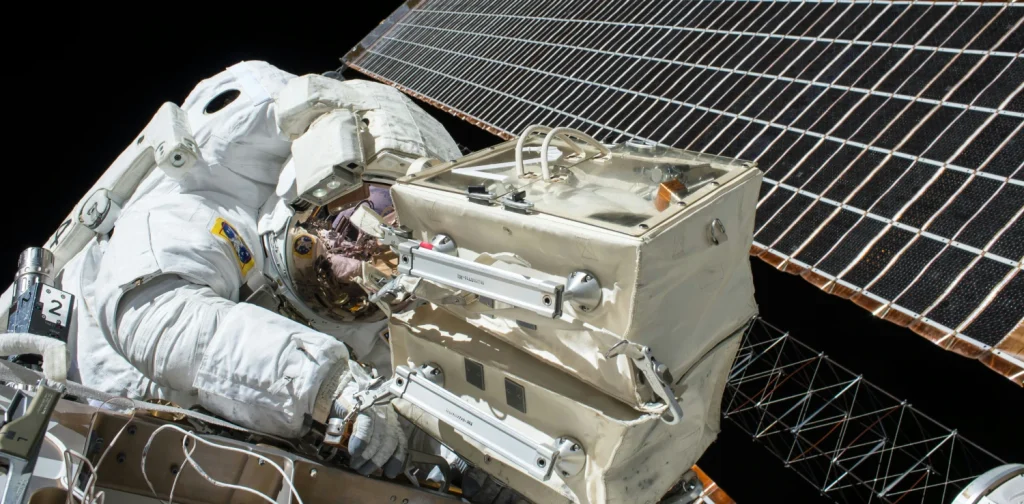
Photo: NASA on Unsplash.
The year 1957 marked the beginning of space exploration, when the Union of Soviet Socialist Republics (USSR) launched the first-ever artificial satellite, Sputnik, to orbit the Earth. Still in the middle of the Cold War, the United States, as the opposing party, felt challenged to develop space technologies to demonstrate its strength in national security.
The US finally sent astronauts to the moon in 1969 on the Apollo 11 mission after a series of space races between the two rivals. In April 2026, NASA launched Apollo’s sister mission, Artemis II, for a lunar flyby. Over the years, space engineering has progressed and is now more developed than ever.
The Positive Outcomes of Space Exploration
The initial space travel not only proved useful but also set many technological advancements in motion. After its launch, Sputnik 1 gathered necessary insights about the Earth’s atmosphere. Five years later, Telstar 1 became the first artificial satellite to transmit transatlantic data for broadcast television. Then, space infrastructure gradually becomes more crucial as the world relies on digital transactions and communications.
Additionally, satellites are important to gather data necessary for weather forecasting. These data are then used to monitor climate change, establish disaster management, and improve agriculture. Hyperspectral and optical imaging contribute to the identification of early-stage pests, thus capable of salvaging up to 0.8 billion tonnes of crops annually.
Spacefaring also contributes to the breakthrough of astrobiology studies—the study of the origin, evolution, and distribution of life in the universe. Multiple space explorations have been conducted throughout the years to understand the cosmos better. For instance, NASA sent the Europa Clipper probe in 2024 on a journey to explore Europa, one of Jupiter’s moons, to find signs of extraterrestrial life. Europa contains liquid water, one of the essential components for life as we know it, beneath its surface.
Moreover, space exploration allows astrobiologists to examine how model organisms, such as Salmonella sent to the International Space Station (ISS), affect bacterial virulence. The result can be useful in improving risk assessment and countermeasures against diseases. Tardigrades, micro-animals with high resilience against hostile conditions, have also been boarded onto spaceships through a series of experiments. Understanding how tardigrades could survive extreme radiation will lead to medical discoveries, including potential advances in cancer and cardiovascular disease research.
At What Cost?
The journey into space is not without cost. Space exploration is inherently dangerous. Even with maximum preparation, lives were lost during spaceflight launch, reentry, or testing. In 1986, the space shuttle Challenger exploded shortly after launch, causing the death of all seven crew members on board. In 2003, the space shuttle Columbia disintegrated upon its reentry, killing all seven astronauts inside. The Soviet space programs, Soyuz 1 and 11, were also met with fatality.
Space exploration has also been criticized for its financial cost. The most frequently asked question is: why should we fund trips to space when the cost of living on Earth is rising and the number of unhoused people is increasing?
Furthermore, the privatization of space travel birthed the space tourism business model. It also further complicates the environmental impacts of spacefaring. According to research, the global-warming impact of sustaining manned spaceflight reaches over 1,500 kg of CO₂ per hour. Now that space tourism is more accessible, the amount of carbon footprint produced is astronomical. At the end of the day, it is the global population, which has never been able to afford such extravagant activities, that must bear the climate cost.
The Need for Balance
The topic of space exploration generally elicits enthusiasm and hope from people, as space odyssey often means new scientific discoveries. However, there needs to be sustainable space governance that addresses all existing and potential issues.
International space diplomacy still relies on treaties from the 1960s, while technologies advance rapidly over time. The European Commission attempted to overcome the problem of the outdated legal framework by launching the European Union Space Act in 2025. It aims to ensure safety, resilience, and environmental sustainability in the space sector for both public and private entities. Such an initiative can be a benchmark for nations that plan to expand their space infrastructure.
Moreover, the Center for Strategic and International Studies noted that a global space traffic coordination system should be established, including sharing rules of the road to reduce the risk of accidents. This data sharing can be the basis for generating debris-mitigation standards, considering the large number of satellites within Earth’s orbit.
Ultimately, space management should be a collective work among nations and international bodies. The discussion should also involve marginalized communities who might also receive the environmental consequences of space exploration.
Editor: Nazalea Kusuma & Kresentia Madina

Co-create positive impact for people and the planet.
Amidst today’s increasingly complex global challenges, equipping yourself, team, and communities with interdisciplinary and cross-sectoral insights on sustainability-related issues and sustainable development is no longer optional — it is a strategic necessity to stay ahead and stay relevant.
 The Textile Industry Is Growing, and So Is Textile Wastewater
  EESG: We Need a New Economic Narrative for Sustainability in the Age of AI, Energy Crisis, and Geopolitical Divide
  The Continued Struggle for Equality and Dignity in Women’s Sportswear
  Behavior Change for the Planet: Is composting worth it?
  Building Bridges Between Environmental Policy and Mental Health
  We May Surpass 1.5°C Soon, But We Can Do Something About It