

Recognizing Psychosocial Hazards in the Workplace

Photo: Zhen Yao on Unsplash.
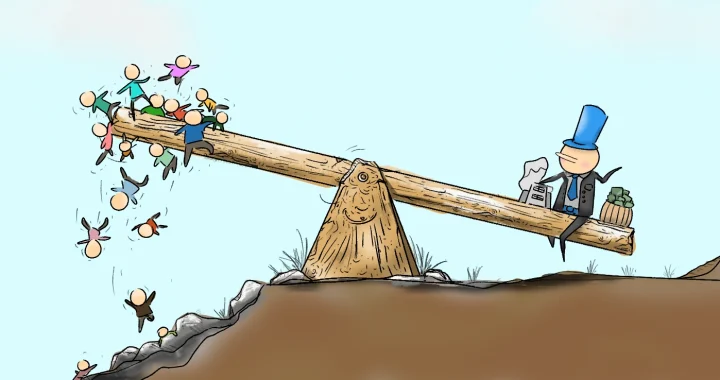
In a world shaped by capitalism, pursuing profit above all else has become a common sight. Achieving ambitious targets, or even minimum wages, often comes at the cost of people’s physical and mental wellbeing. This reality creates psychosocial hazards at work.
On the Job Hazards
Work ideally should allow us to lead a dignified life. The concept of decent work highlights equal opportunities for workers to do productive work, receive fair income and social protection, have room for growth, and participate in decision-making processes that would affect their lives.
However, the opposite is usually truer: work is often physically and mentally taxing. Workers struggle with bare minimum wages, lack of clarity and stability in the work, and discriminatory or biased practices. Combined, these conditions negate the definition of decent work.
Millions of workers lose their lives due to occupational accidents and diseases every year. Meanwhile, others suffer debilitating work-related injuries and chronic conditions. In Indonesia, for instance, Trend Asia recorded 93 workplace incidents between 2015 and 2023 in nickel smelters across the country. The hazards range from truck collisions to fire incidents and explosions.
Realizing decent work for all includes preventing and managing accidents and diseases related to the workplace, broadly known as occupational safety and health (OSH). While the majority of cases documented count as physical hazards, risks related to the psychosocial environment cannot be overlooked.
Recognizing Psychosocial Hazards
The International Labor Organization (ILO) defines the psychosocial work environment as the interrelated aspects of how jobs are carried out and the broader policies and practices governing them. All of these factors can influence workers’ health and wellbeing as well as organizational performance.
These days, the changing work landscape has heightened the psychosocial hazards at work. In a report, the ILO notes how digitalization is transforming how tasks are coordinated, executed, and monitored. The emergence of gig works through online platforms are also reshaping work. It enhances time and place flexibility, as well as job expectations from both employers and employees.
For instance, food delivery and ride-hailing drivers tend to work long hours with minimum pay. A survey by National University of Singapore’s Institute of Policy Studies in 2022 found that 29% of nearly 1,000 gig workers, mostly online drivers, work more than 59 hours per week. Even though this is way over the country’s 44 hours limit, gig workers are not considered full-time employees, thus are not protected under the existing labor laws. This also reflects the issue of new working arrangements and the lack of protection that comes with it.
ILO’s survey notes long working hours as one of the most well-documented psychosocial hazards. Estimation shows that 35% of workers globally worked more than 48 hours weekly in 2019. Highest burden occurred in the Asia-Pacific, with the common sectors being wholesale and retail, transport and communication, and manufacturing. Furthermore, informal workers are more likely to experience long working hours (44%) compared to formal workers (28%).
Additionally, workers’ inability to have control over working hours, working pace, and decision-making counts as a type of psychosocial hazard that affects their sense of autonomy and purpose. Other hazards include severe time pressure and workload, high emotional and cognitive demand, and lack of workplace support.
Adverse Health Outcomes
Psychosocial hazards at work influence workers’ wellbeing in various ways. Stress culminating from an unfavorable work environment is linked to adverse physical and mental health outcomes.
In the most severe cases, psychosocial risk factors are associated with an estimated 840,088 deaths annually worldwide. These numbers are majorly attributable to cardiovascular diseases, particularly ischaemic heart disease (IHD) and stroke. Studies also indicate that the combination of multiple psychosocial hazards, including long working hours and low autonomy, can disrupt circadian and metabolic regulation and induce other physical ailments.
Meanwhile, mental health outcomes cause the overall loss of quality of life, leading to chronic and disabling conditions for workers. Issues such as depression, anxiety, burnout, or chronic fatigue can emerge due to lack of support and unhealthy coping mechanisms. Psychosocial hazards at work may also exacerbate existing conditions. ILO’s report estimates that 15% of working adults live with a mental disorder.
Besides a worker’s individual woes, these impacts echo throughout the system. Physical and mental strain can cause workers to take time off work due to sickness more frequently. Consequently, this affects workers’ performance, organizational productivity, and the economy at large. ILO’s report states that the combined burden corresponds to an estimated loss of 1.37% of global gross domestic product (GDP).
Seeking Clarity for Progress
Even though the progress varies across the globe, there is a growing recognition of the psychosocial hazards at work in policies and regulations. However, many of the existing frameworks have yet to explicitly mention the hazards and incorporate dedicated response mechanisms to address them.
Therefore, strengthening data collection, measurement tools, and coverage is vital to gain a better understanding of the prevalence and trends of psychosocial hazards at work. The data collection process must account for the ever-evolving worker characteristics, diverse forms of work, as well as shifts in economic, social, cultural, and environmental contexts.
Comprehensive data will act as a strong foundation for coherent and clear policy and regulatory frameworks. OSH policies and regulations should explicitly address psychosocial risks as a systemic factor affecting workers’ wellbeing, rather than conditions that occur at individual levels. The clarity at national and regional level allows governing bodies to demand clear and measured compliance from companies. In turn, they can help guide companies’ effort to reduce risks. Companies can do so by improving work design, organization, and management, which requires strong commitment by company leadership.
Ultimately, enhanced cooperation among governments, business entities, and stakeholders in the public health sector can encourage the development and implementation of a more comprehensive OSH framework. The involvement of workers organizations through social dialogue can also help ensure effective and practical implementation that can truly support their wellbeing.
Editor: Nazalea Kusuma

Co-create positive impact for people and the planet.
Amidst today’s increasingly complex global challenges, equipping yourself, team, and communities with interdisciplinary and cross-sectoral insights on sustainability-related issues and sustainable development is no longer optional — it is a strategic necessity to stay ahead and stay relevant.
 From European Heat to the Himalayan Flood: The Transboundary Nature of Climate Risk
  Noise Pollution Is Making Us Sick, and Climate Change Is Making It Worse
  Beyond Fashion: The Environmental Cost Behind Animal Leather
  Addressing the Hidden Risk of Microplastics from Offshore Infrastructures
  Addressing Antimicrobial Resistance as More Than a Medical Issue
  Holding Harmful Industries Liable for Harm to Human Life and the Environment