

The City’s Veins: Inclusive Transport Systems for the Wellbeing of People and Cities
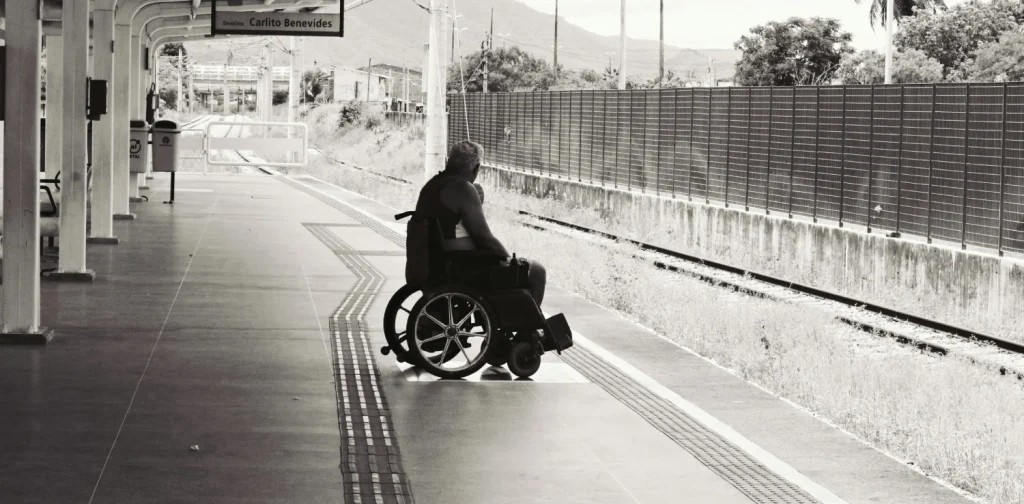
Photo: Igor Rodrigues on Unsplash.
Behind the whirl of people bustling through busy roads, a key system is making it happen: public transport. It is a vital system connecting people, livelihoods, and opportunities, signifying the need for inclusive transport systems for all.
Diverse Needs
Like the veins in our body, public transport circulates people to keep cities alive. Millions of people hop onto trains and buses daily to make a living, search for connections, and do activities that can sustain their wellbeing. So, ensuring inclusive transport systems that can accommodate the needs of diverse city dwellers is crucial.
People’s travel needs can differ according to their social groups. Women, for example, often need to make multiple stops while commuting to fulfill their domestic responsibilities and make household-related trips, including dropping off or picking up children. So, their priorities lie in safety, affordability, and flexibility.
Meanwhile, infrastructure that eliminates barriers is especially important for people with disabilities and older adults, whose physical, emotional, and psychological conditions vary. This includes the existence of wheelchair ramps, clear signage and information, and other assistive devices. Other points of priority include reliable and respectful services, safety, and physical comfort.
Exclusion Remains
Unfortunately, public transport systems often fail to meet these various needs. A study in South and Southeast Asia finds multiple barriers hindering women’s mobility, including risk of harassment. Peak hours are particularly noted for posing higher risks of physical and sexual harassment, concerningly with lack of interventions from bystanders due to patriarchal norms. Poor transport systems also add to the challenges, causing overcrowding, delays, and transit difficulties.
Accessibility gaps also discourage people with disabilities from traveling. In the UK, for instance, people with disabilities take 38% fewer trips than those without disabilities. Data by Motability shows that the figure remained stagnant even after a decade, from 2012 to 2022. Many have also reported facing humiliation and disrespect while using public transportation, even to the point of creating mental distress and further physical ailments.
Lack of inclusive transport systems reinforces inequality, which is already deep to begin with. The International Labour Organization notes that lack of transport could reduce chances of women working by 16.5%. Negative experiences in public transport can trigger negative emotional reactions, such as anxiety and doubt, that may impact the ability and willingness of people with disabilities and older adults to use public transport. When stops or stations have long walking distances with uneven pavements, combined with limited information, irregular schedule, and unkind behavior from fellow passengers and/or staff, people are less likely to hop on buses and trains again.
Moreover, the absence of affordable and safe transport also prevents children and young people from low-income households from accessing education, further trapping them in the poverty cycle.
Advancing Inclusive Transport Systems
Inclusive transport systems can pave the way for people to create a better life for themselves, both socially and economically. Using public transport instead of individual vehicles is also encouraged now more than ever when we take into account the skyrocketing amount of greenhouse gas emissions produced by the transport sector.
Therefore, improving current transport systems must begin by recognizing the challenges and needs faced by different user groups. Timely data collection through surveys and direct engagement with communities can provide the basis for creating well-targeted interventions that can eliminate barriers and fulfill needs.
Additionally, improved understanding of challenges and needs on the ground can be the basis for authorities to direct more funding for inclusive transport systems and develop plans for long-term implementation. Better coordination between government bodies, business entities, and communities is the necessary string that ties them, to advance inclusive transport systems for all.
Editor: Nazalea Kusuma

Co-create positive impact for people and the planet.
Amidst today’s increasingly complex global challenges, equipping yourself, team, and communities with interdisciplinary and cross-sectoral insights on sustainability-related issues and sustainable development is no longer optional — it is a strategic necessity to stay ahead and stay relevant.
 Behavior Change for the Planet: Is composting worth it?
  Building Bridges Between Environmental Policy and Mental Health
  We May Surpass 1.5°C Soon, But We Can Do Something About It
  From European Heat to the Himalayan Flood: The Transboundary Nature of Climate Risk
  Noise Pollution Is Making Us Sick, and Climate Change Is Making It Worse
  Beyond Fashion: The Environmental Cost Behind Animal Leather