

Improving the Participation of Women in STEM

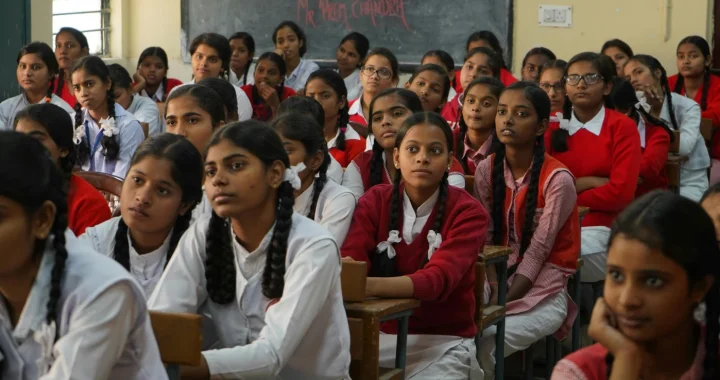
Photo: Chokniti Khongchum on Pexels.
Women have crucial roles in creating progress toward sustainable development. Encouraging women’s participation in various fields, including science, technology, engineering, and mathematics (STEM), is one necessary step. Unfortunately, the role of women in STEM is still considered low globally.
The Gender Gap in STEM
The gap in women’s participation in STEM exists in both education and professional working environments. The Global Gender Gap 2023 report by the World Economic Forum revealed that the number of female college students graduating from STEM majors is still relatively small.
For instance, women only comprise 24.92% of the Engineering major graduates and 34.67% of the Communication Technology graduates. The numbers are lower than those graduating from social and humanities majors. Female graduates majoring in Business Administration and Law reached 57.93%, while Social Science and Journalism reached 50.56%.
Similar conditions also occur in the job landscape. In Indonesia, female researchers account for only 45% of the total number of science researchers. A 2020 report by ASEAN-USAID IGNITE showed that Cambodia and Lao PDR had the lowest percentage of female researchers among ASEAN countries (20-25%). Additionally, women make up approximately 22% of the tech workers.
The minimal participation of women in STEM can diminish the potential creativity, innovation, and perspectives for technological development and scientific solutions. The effect will ripple to many sectors, including research, industries, and public affairs. It can hinder the overall progress in social and economic development. The gender gap in STEM can also perpetuate inequality in opportunities, income, and women’s roles in societal development. This can result in a lack of recognition of women’s needs and aspirations in policymaking and less inclusive public services.
Structural, Psychological, and Sociocultural Challenges
A UNESCO research in Indonesia, Cambodia, and Vietnam revealed several factors hindering women’s participation in STEM. Those factors can be grouped into structural, psychological, and sociocultural aspects.
Structural Factors
- Lack of high-quality STEM learning in current education systems that can draw girls’ interest in the fields.
- Limited access to supporting equipment for STEM fields, such as digital devices and laboratory equipment.
- Minimal access to quality STEM education in many rural areas.
- Limited infrastructure and digital gaps prevent women from accessing information related to STEM.
Psychological Factors
- Many women feel they lack the capacity to gain education and have a career in STEM fields.
- Many women still adhere to the gender stereotypes that dictate what is considered socially appropriate for women.
Sociocultural Factors
- Gender norms and bias lead girls to believe that their main role is to be a homemaker. This can hinder their opportunities to lead education and careers in STEM fields.
- Lack of financial and moral support, including from families, toward women who participate in STEM fields.
Increasing the Participation of Women in STEM
Based on the findings, UNESCO shared several recommendations to increase the participation of women in STEM, especially among young women. Some of the recommendations are:
- Develop a holistic approach involving all key stakeholders to reduce the gender gap and support women in STEM education.
- Develop communication strategies to support women’s career aspirations in STEM fields. One way is to encourage dialogues with parents to reduce gender stereotypes related to STEM and broaden their knowledge of potential career paths. Strengthening teachers’ capacity is also required to lead students who want to pursue education and careers in STEM.
- Improve STEM education by developing infrastructure and facilities, strengthening curriculum, eradicating gender stereotypes in educational materials, and broadening opportunities for practical learning beyond the formal education setting.
- Improve women and girls’ interest and motivation to continue their studies and careers in STEM through financial aid and scholarships.
Ultimately, increasing the participation of women in STEM requires inclusive education systems that ensure women and girls can receive equal access and opportunities for quality STEM education at all levels. Furthermore, governments and policymakers must implement policies supporting flexibility at work, especially for working mothers, so they can still access career opportunities in STEM fields. Investment also becomes a significant factor in supporting STEM research and innovations to ensure the fulfillment of women’s aspirations and needs.
Translator: Kresentia Madina
Editor: Abul Muamar
Read the original article in Indonesian at Green Network Asia – Indonesia.
 India’s Supreme Court Declared Menstrual Health and Hygiene as Fundamental Rights
  Impacts of E-waste Pollution on Animals and Human Health
  Africa’s Solar Energy Surge: Why 2025 Was a Breakthrough Year
  Agrihoods: Integrating Farms and Urban Neighborhoods into Sustainable Communities
  Women in Waste Management: Asia’s Circularity Runs on Women. Its Policies Still Don’t
  Embracing the Business Value of Sustainability