

Looking into Unregulated Mining along the Mekong River and Its Impacts
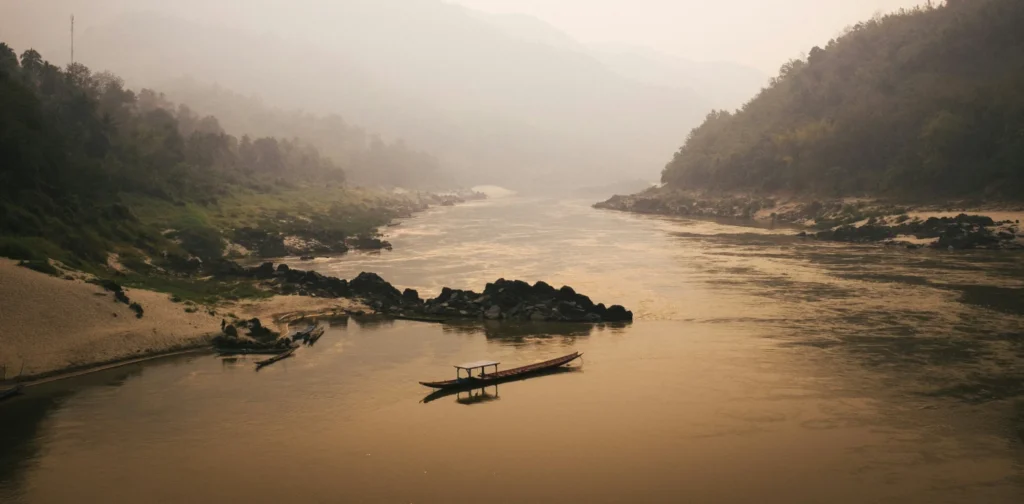
Mekong River in Pak Beng, Laos. | Photo: Parker Hilton on Unsplash.
The Mekong River is a vital source of life for millions of people across six countries where it flows. The river provides key resources that are important for transportation, hydropower, agriculture, and fisheries. However, rapid development has been driving exploitative activities, such as mining. A report by a US-based think tank reveals a massive scale of unregulated mining in the Mekong River and its tributaries, which threatens the health and safety of local communities and ecosystems.
Unregulated Mining Sites in Mainland Southeast Asia
Using satellite imagery, Stimson Center’s report reveals that there are more than 2,400 sites of unregulated in situ leach (rare earth), heap leach (gold, copper, nickel), and alluvial mining (gold, silver, tin) activities on 43 rivers in Myanmar, Laos, and Cambodia. These unregulated mining operations could contaminate the water with toxic chemicals, posing a significant health risk to the local communities whose livelihoods depend on the river.
The unregulated mining activity is driven by the surging gold prices and the increasing global demand for rare earth elements, which are used in electric vehicles, wind turbines, industrial motors, and robotics. Another factor is China exporting its own rare earth mining industry outside of its own borders, especially in Myanmar. Lax regulations, poor governance, and corruption have also allowed unchecked mining activities that have persisted for over a decade.
Most of the unregulated mining is found in Myanmar—1,885 sites of the identified 2,419sites. The majority of mines operate in the ethnic armed groups’ control territory, like Kachin or Shan State. Meanwhile, in Laos, most of the unregulated mining is found in the northern provinces along 13 tributaries of the Mekong River and rivers that flow from Laos to Vietnam. This boom, especially of the rare earth mines, is most likely due to the weak land tenure regulations. The national ministries also have little oversight over the development and operations of the mines.
In Cambodia, illegal alluvial mining sites are also observed even within the Virachey National Park, home to threatened species. Even though Cambodia’s ministry claims to be committed to cracking down on the illegal mines, they lack the capacity to monitor and regulate it.
Impacts on People and the Environment
Stimson’s data reveals that the highest concentrations of mining are on the tributaries of the Irrawaddy and the Mekong rivers. These mines can impact the river ecosystems, groundwater, and surface soils. Stimson’s data shows how the mines transform the landscape along the riverbeds. Although, it cannot say for certain to what extent these impacts are and whether all of the mining activities leak chemicals into the river.
However, in early 2025, Thai government authorities tested for pollution in the Kok and Sai rivers, close to the Thai-Myanmar border. They found unsafe levels of arsenic and other heavy metals. This is likely caused by the unregulated gold mining in Myanmar’s southern Shan state. The arsenic from the Kok and Sai rivers—both originate in Myanmar—also flows into the Mekong river.
Previous research from Stimson’s also noted that unregulated mining activity in Myanmar increased the severity and frequency of floods along the Sai-Ruak River. Additionally, local people who live close to the Kok River Basin have complained about skin rashes when coming in contact with the river’s water. Thailand’s Pollution Control Department also conducted tests in August 2025 at the part of the Mekong River in the Thai-Lao border and found arsenic contamination that exceeded national safety standards.
Responsible Practices
The unregulated mining in the Mekong River and its tributaries is a regional problem that impacts the health and livelihoods of people in several countries. Investigation and proper testing of the Mekong’s waters are crucial to shed light on the extent of contamination due to the mining activities. That way, Mekong countries can take more assertive action, such as bringing the problem to the negotiation table even within the context of power imbalance.
However, these “discoveries” should also spark a bigger conversation about responsible mining practices and consumption of products that use rare earths and gold, especially when these critical minerals are essential for the production of renewable technologies. Therefore, it is important to strengthen the legal and policy frameworks to ensure that these mines operate within global standards for environmental impacts and human rights. A publicly available comprehensive assessment of the entire supply chain is also necessary to let the general public know whether the mines involve illegal practices or negatively impact the environment and local communities, so they can make informed decisions on their consumption.
Editor: Nazalea Kusuma
 What Fading Butterfly Colors Reveal About Environmental Stress
  The Right to Be Cold and What It Means for Indigenous Inuit
  All Pain, No Gain for Women from the Tobacco Industry’s So-Called Generosity
  Upholding the Women in Agriculture Who Are Feeding Africa
  The Role of Trade Unions in Peacebuilding
  Red Flags in the EU’s Industrial Accelerator Act (IAA)