

Rising Attacks and Violence Against Land and Environmental Defenders
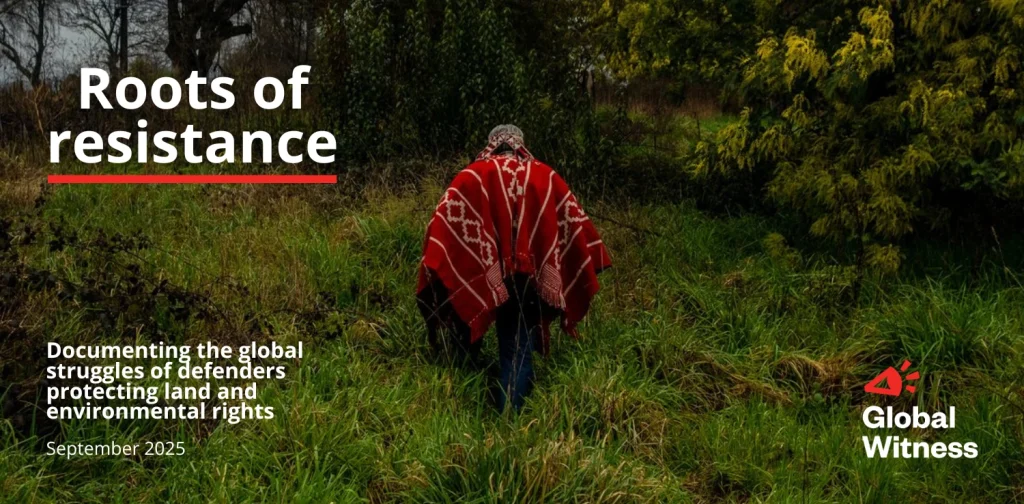
Photo: Cristobal Olivares / Bloomberg via Getty Images.
Land and environmental defenders are individuals or groups of people who act to promote and protect the realisation of human rights in relation to the environment. They stand against the unjust, discriminatory, or damaging exploitation of natural resources. Unfortunately, environmental defenders are facing threats and violence, including cases of killings and disappearances.
The Killings and Disappearances of Environmental Defenders
Between 2012 and 2024, at least 2,253 people had been killed or “disappeared” for their actions as environmental defenders. In 2024 alone, Global Witness documented 146 killings and disappearances of land and environmental defenders. Around a third of them were Indigenous Peoples or Afro-descent, while 10% of them were women.
They were attacked for taking action to defend their right to land, especially from harmful extractive projects. In fact, Global Witness’s report states that most of the cases are related to mining. Logging and agribusiness are next in line. Other practices related to the killings and disappearances include roads and infrastructure, hydropower, and poaching.
Most of these cases (82%) occurred in Latin America. Colombia had the highest rates, with 48 cases in 2024. To this day, environmental defenders in Colombia, particularly the Indigenous communities in the Cauca region, remain highly vulnerable to violence due to a mix of coca cultivation, drug trafficking, and armed struggle.
Inequality in Context
The root causes and contexts for violence against environmental defenders vary, but there are standouts. Global Witness reports that access to land and conflicts over its control are central issues in most countries with cases. Wealth and power are increasingly concentrated in the hands of a few, while vulnerable communities such as Indigenous People, smallholder farmers, and women face discrimination, oppression, and dispossession.
Land inequality, coupled with environmental crises from climate change, largely results from the extraction of natural resources, many of which come with human rights abuses and destructive practices. These situations become even more complex in a conflict zone where destruction, violence, and mass displacement tear defenders away from their communities and the land they protect.
Systemic Rot
Worryingly, states often provide inadequate protection for environmental defenders. This is primarily due to weak legal systems that are under-resourced and sometimes corrupt. The report notes that of the 22 countries where the killings and disappearances were documented, over half of them were categorised as “repressed” or “closed” by civic freedom tracker CIVICUS Monitor. This means that those countries have some degree of restrictions on freedom of association, peaceful assembly, and expression.
The report also reveals a high level of impunity across countries since the attackers are rarely brought to justice. States often fail to investigate and identify the perpetrator. Most of them are left unpunished, mostly due to the lack of proper evidence gathering.
At times, governments are also active perpetrators of violence. According to the report, 17 documented killings in 2024 were linked to the police and other government entities. Moreover, just under a third of all cases involved organized crime—which often makes investigation more complicated since they are sometimes connected to government and corporate interests.
Furthermore, the media has a hand in this as well. Land and environmental defenders are frequently adorned with toxic narratives such as anti-development or accused of being criminal gang members, guerrillas, terrorists, or threats to national security.
Defending Land and Environmental Defenders
As the climate crisis and planetary health worsen, protecting environmental defenders becomes crucial. There are existing treaties and mechanisms that recognise the critical role of environmental defenders and the dangers they face, such as the UN Declaration on Human Rights Defenders or the Escazú Agreement in Latin America. However, they remain insufficient.
To break the cycle of violence, the Global Witness report offers recommendations for governments. Some of them include to:
- Tackle the root causes by guaranteeing the land rights of rural communities and Indigenous peoples through redistribution of land and promoting fairer land ownership.
- Establish legal frameworks on business and human rights, such as mandatory legislation that holds companies accountable for human rights abuses and environmental harms across their value chains.
- Guarantee the recognition and protection of environmental defenders and their communities by creating policies that include protection measures and avoid instituting militarized responses.
- Stop criminalisation against land and environmental defenders by revising any existing laws that allow it, such as by introducing Anti-SLAPPs measures.
- Systematically identify, document, and analyze attacks on land and environmental defenders.
Editor: Nazalea Kusuma

Co-create positive impact for people and the planet.
Amidst today’s increasingly complex global challenges, equipping yourself, team, and communities with interdisciplinary and cross-sectoral insights on sustainability-related issues and sustainable development is no longer optional — it is a strategic necessity to stay ahead and stay relevant.
 From Anxiety to Action: How Youth Climate Activism Is Evolving
  India’s Supreme Court Declared Menstrual Health and Hygiene as Fundamental Rights
  Impacts of E-waste Pollution on Animals and Human Health
  Africa’s Solar Energy Surge: Why 2025 Was a Breakthrough Year
  Agrihoods: Integrating Farms and Urban Neighborhoods into Sustainable Communities
  Women in Waste Management: Asia’s Circularity Runs on Women. Its Policies Still Don’t