

The Injustice of Climate Finance: How Climate Change Is Draining Developing Nations
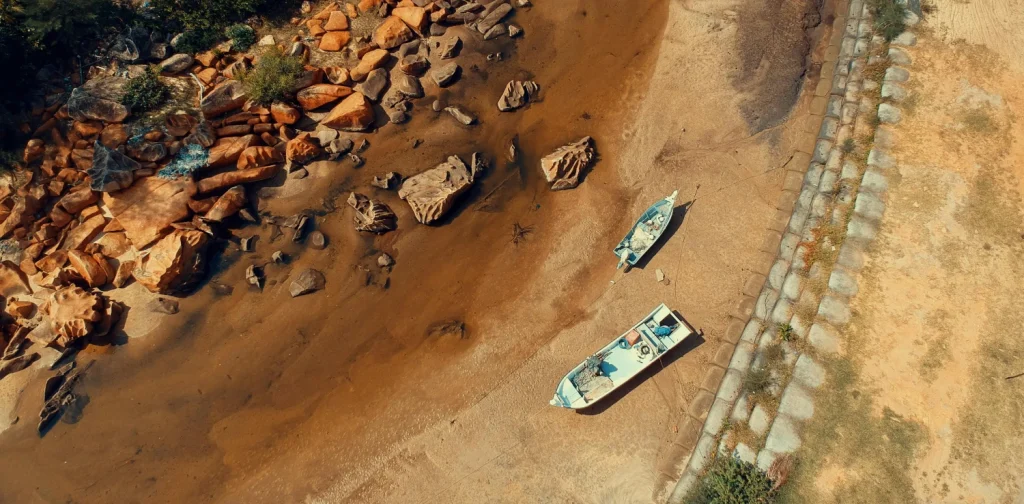
Kijal, Malaysia | Photo: Pok Rie on Pexels.
There is a particular injustice baked into the current climate reality. Developing nations account for a small share of the emissions that drive global warming, yet are absorbing a disproportionate share of the consequences. As such, the demand for climate finance to cover those consequences is growing. Floods, droughts, crop failures, and disasters are beyond abstract projections in these countries. They are the climate-changed reality that becomes budget line items.
Between 2000 and 2019, the world suffered at least $2.8 trillion in loss and damage from climate-related events, costing around $16 million every single hour. Most of that burden fell on countries least equipped to absorb it. From the harvests that fail to feed to the communities that disappear long before help arrives, the cost is more than a pretty penny.
When Harvests Fail
For many developing nations, agriculture is the backbone of the economy. Smallholder farmers account for a significant share of GDP and employment across sub-Saharan Africa, South Asia, and Latin America. However, warming temperatures are dismantling this foundation through prolonged droughts, unpredictable rainfalls, and desertification.
When harvests fail, many rural households lose their primary income. Food prices spike in urban centers. Governments face simultaneous import bills and social unrest. The FAO has documented how climate-related disruptions are compounding food insecurity across the world’s most vulnerable regions, threatening not just nutrition but the economic survival of entire communities.
Even within the border, the impacts are unequal. Women and girls bear a disproportionate share of this burden, taking on additional unpaid labor in water collection, care work, and subsistence farming as household incomes collapse.
Disaster After Disaster
When a cyclone tears through a developing nation or a flood submerges entire provinces, the immediate humanitarian toll dominates headlines. Then, the financial aftershock lasts for years. Funds for schools, hospitals, and long-term development might have to be diverted to pay for emergency response and reconstruction. Borrowed money fills the gap that aid does not, and debt compounds.
In Vanuatu, overall debt rose from 20% of GDP in 2013 to 44% in 2018 following a series of devastating cyclones. The Prime Minister of the Bahamas stated it plainly after Hurricane Dorian devastated the country in 2019. Davis said, “Forty percent of my national debt could be directly attributed to the consequences of climate change.”
Each disaster adds to a debt load that the next disaster will make it even harder to carry. This is the pattern.
According to the UNDRR’s Global Assessment Report 2025, total disaster costs now exceed $2.3 trillion annually when cascading and ecosystem costs are factored in. When disasters occur repeatedly—which they do now more than ever, due to climate change—economic growth slows, debt increases, and developing countries face the dual burden of higher exposure to risk and the least access to resources for recovery.
Climate Finance Beyond Simple Calculation
The economic toll is not limited to what can be easily quantified. The impacts of climate change include the loss of homes, sacred land, heritage sites, and biodiversity, among others. For some, like Indigenous Innuit, the loss of ice in the Arctic also means the loss of culture itself. These are things that cannot be calculated or compensated for in any conventional financial sense.
For instance, rising sea levels and coastal erosion are swallowing areas and communities that have existed for generations. Small island developing states in the Pacific face an existential version of this reality. For nations like Tuvalu and Kiribati, entire territories are at risk of becoming uninhabitable within decades.
The loss of a homeland is way beyond a budget line item. But the downstream costs of climate finance, including displacement, resettlement, loss of fisheries, and destruction of coral reef ecosystems that protect coastlines and support livelihoods, translate directly into economic catastrophe for countries that contribute almost nothing to the emissions causing it.
An Ever-Growing Climate Finance Gap
Underlying all of this is a structural problem in climate finance. More specifically, it is about how climate-vulnerable countries access support.
The Loss and Damage Fund, formally established at COP27 in 2022 after three decades of negotiations, was supposed to change the equation. The Loss and Damage Collaboration estimates developing countries’ needs at around $400 billion per year. By late 2024, total pledges reached around $700 million, covering less than two days of that annual need.
The climate finance picture beyond the fund is equally grim. UNEP’s Adaptation Gap Report 2025 found that developing nations need over $310 billion per year by 2035 to adapt to worsening conditions. Meanwhile, international public adaptation finance flows stood at just $26 billion in 2023, a gap of more than twelve to one.
Making matters worse, the Global North economies delivered $136.7 billion in climate finance in 2024, yet only 7% of that total reached low-income countries. Among that, loans dominated.
What Developing Nations Need
At COP30 in Belém, Ghana chaired the African Group of Negotiators. They placed loss and damage financing at the center of Africa’s collective climate agenda. This reflects how seriously frontline nations are taking the fight for accountability. Our need for climate finance is only going to keep growing as climate change worsens. Thus, robust, bold, and accurate moves are urgently necessary.
First and foremost, a paradigm shift is key. Climate finance contributions must be treated as obligations, not charity. This means the amount must be proportional to actual documented need rather than whatever wealthy nations find politically comfortable.
Additionally, financing must flow as grants, not loans. The UN Environment Programme has explicitly cautioned that funding structures must be carefully designed to avoid adding to the debt burdens of already vulnerable countries. Asking a country to borrow money to recover from a disaster it did not cause is not climate justice. It is a trap.
Furthermore, the governance of climate finance must be simplified without unnecessary layers of bureaucracy that delay disbursement by years. After all, at its core, a just and fair global climate finance flow is one where money reaches affected communities directly, in time, before the irreversible happens.
Editor: Nazalea Kusuma
Co-create positive impact for people and the planet.
Amidst today’s increasingly complex global challenges, equipping yourself, team, and communities with interdisciplinary and cross-sectoral insights on sustainability-related issues and sustainable development is no longer optional — it is a strategic necessity to stay ahead and stay relevant.
 Indonesia’s Greenwashing Diplomacy at COP31 and Beyond
  The Textile Industry Is Growing, and So Is Textile Wastewater
  EESG: We Need a New Economic Narrative for Sustainability in the Age of AI, Energy Crisis, and Geopolitical Divide
  The Continued Struggle for Equality and Dignity in Women’s Sportswear
  Behavior Change for the Planet: Is composting worth it?
  Building Bridges Between Environmental Policy and Mental Health