

Displaced and Depressed: Addressing the Mental Reality of Climate Migrants
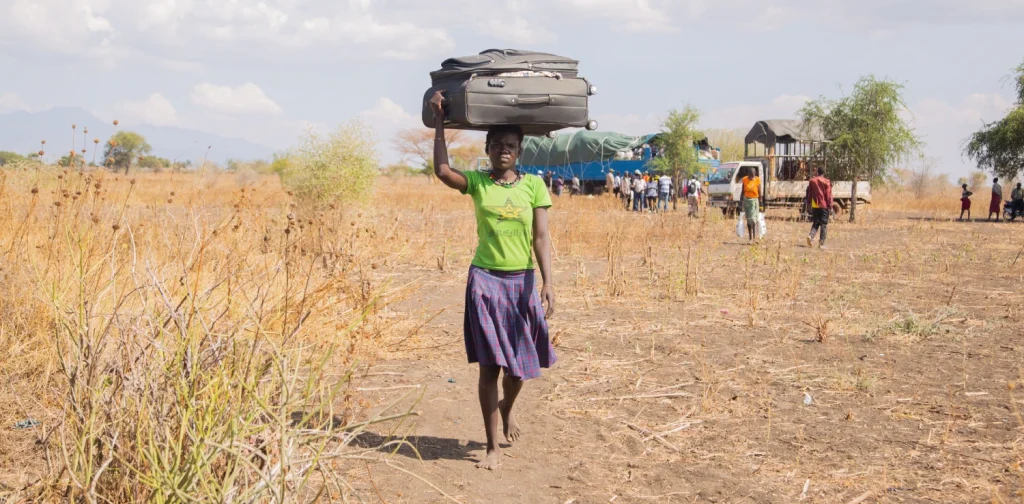
Photo on Pexels: Speak Media Uganda.
When people picture the impacts of climate change, they usually picture the moment of crisis. They think of the flood, the wildfire, or the storm surge that finally makes a place unlivable. What gets far less attention is everything that happens after to the survivors. Climate migrants do not simply lose a home and rebuild somewhere else. Many carry a psychological weight that outlasts the disaster itself, and the world’s mental health systems are not yet ready to meet them where they are.
About Climate Migrants
Climate migrants are people forced to leave their homes because of environmental changes linked to climate change. These include sudden disasters like floods and storms or slower-moving pressures like drought, desertification, and rising sea level. Unlike refugees, who are protected under the 1951 Refugee Convention, climate migrants exist in something of a legal gray zone. There is no internationally recognized legal status for someone displaced primarily by a changing climate yet.
The scale of this issue is staggering, and it will keep growing as the climate crisis escalates. In 2023 alone, climate-related hazards like floods, storms, and wildfires played a role in 26.4 million displacements. Looking ahead, the World Bank’s Groundswell report projects that climate change could force 216 million people to migrate within their own countries by 2050. Sub-Saharan Africa alone might account for as many as 86 million of them. The waves have already started.
The Intangible Loss
The mental toll that climate migrants experience is not always straightforward. A study of Maasai pastoralists driven from their homelands by intensifying drought in Tanzania found that climate-driven migration fundamentally changed how people understood and prioritized health, with migrants placing far greater emphasis on mental health than non-migrants who remained in their communities. Drought was killing their livestock and forcing entire families into unfamiliar urban environments in search of new ways to survive.
Losing your home is one injury. Losing the web of relationships, routines, and roles that make up your identity is another, quieter one that often goes undiagnosed.
An integrative review covering 104 studies on the mental health impacts of climate change reveals that land-vulnerable people, Indigenous communities, children, older adults, and climate migrants are consistently among the most disproportionately affected groups globally.
In Nigeria, for instance, researchers found that rural farming families experience climate-related depression tied to crop failure and food insecurity. Their condition is made worse by extremely limited access to coping resources once displacement becomes unavoidable.
Flaws in the System
Furthermore, displacement also compounds existing vulnerabilities. The emerging field of geopsychiatry has started to formally name this phenomenon.
A 2024 review in the Industrial Psychiatry Journal identifies climate change and migration as two of the major geopolitical determinants now shaping global mental health. It notes that their convergence is significantly complicating an already difficult situation for mental health services worldwide, particularly in low and middle income countries where access to care is scarce or unequal. The review specifically flags migrating children, older migrants, refugees, and asylum seekers as groups especially vulnerable to developing psychiatric disorders. This vulnerability compounds when climate disasters are the reason someone is on the move in the first place.
WHO data confirms that refugees and migrants exposed to adversity are more likely than the host populations to experience depression, anxiety, PTSD, and suicide. At the same time they face significant barriers to dependable mental health care.
Low and middle-income countries host 71% of the world’s displaced people. And beyond their already-strained healthcare systems, displaced and migrant populations, including those uprooted by climate change, often remain excluded from national health and climate adaptation strategies altogether. Their access to quality healthcare—physical and mental—is not even a guarantee after the devastation they experience.
Improving Psychosocial Support for Climate Migrants
First, mental health support needs to start before disaster strikes. A review on the mental health impacts of climate change recommends that communities at high risk of climate disasters receive routine mental health screening and education beforehand. This way, hopefully vulnerable people can already be identified and connected to care before a flood, drought, or storm forces them to leave home. Right now, most systems work the opposite way. Support only shows up once someone has already lost everything and is searching for help in an unfamiliar place, rather than reaching them while they still have the stability to access it.
Second is embedding psychosocial care directly into primary healthcare for displaced populations rather than treated as a specialized add-on. WHO’s Mental Health and Psychosocial Support guidance recommends training general health staff to recognize and manage common mental health conditions. This would be beneficial since specialist psychiatric care is often simply unavailable in regions hosting the most climate migrants.
Third, interventions should be culturally grounded. A 2025 study on children displaced by climate change found that responses developed in high-income countries often carry limited validity elsewhere. Adopting them risks overlooking informal community networks and cultural coping resources that may work better.
Aftermath, Not Afterthought
Finally, the response needs to work within current funding constraints rather than waiting for new resources to appear. A systematic review on MHPSS implementation in developing countries found that limited mental health resources were one of the most consistent barriers to delivering care after disasters in low-income settings. Thus, it is necessary to fold mental healthcare funding into existing disaster and displacement response budgets from the outset. It should exist the same way water, shelter, and food are automatically planned for, rather than leaving it to be funded only if money happens to be left over once the more visible needs are covered.
Climate migrants are still surviving the disaster long after it ends. The least the world can do is build the kind of support that allows them to actually recover, live, and thrive.
Editor: Nazalea Kusuma

Co-create positive impact for people and the planet.
Amidst today’s increasingly complex global challenges, equipping yourself, team, and communities with interdisciplinary and cross-sectoral insights on sustainability-related issues and sustainable development is no longer optional — it is a strategic necessity to stay ahead and stay relevant.
 Building Bridges Between Environmental Policy and Mental Health
  We May Surpass 1.5°C Soon, But We Can Do Something About It
  From European Heat to the Himalayan Flood: The Transboundary Nature of Climate Risk
  Noise Pollution Is Making Us Sick, and Climate Change Is Making It Worse
  Beyond Fashion: The Environmental Cost Behind Animal Leather
  Addressing the Hidden Risk of Microplastics from Offshore Infrastructures