

Australia’s Vision to Achieve Sustainable Aviation Sector by 2050
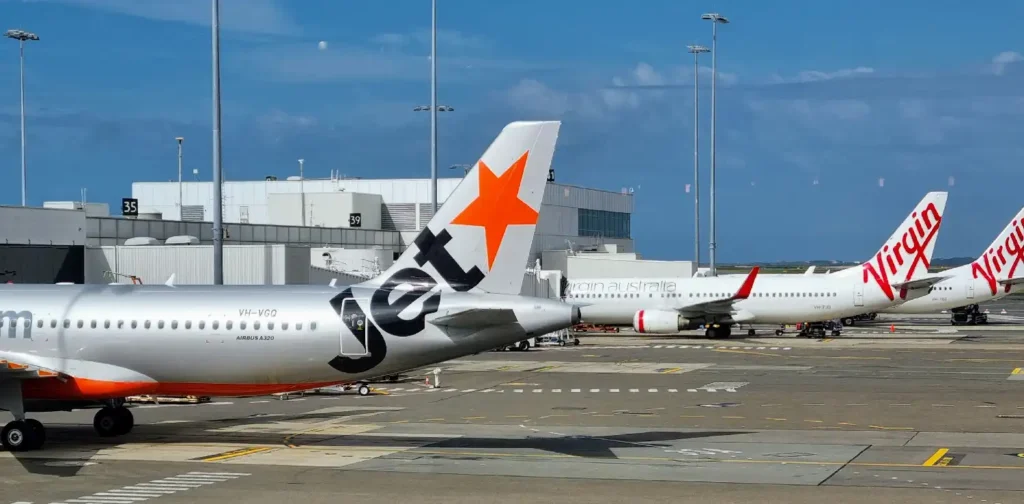
Photo: Max on Unsplash.
The aviation industry has a critical role in connecting people and enabling economic activities. As the call for sustainable practices becomes more urgent, the Australian Government published the Aviation White Paper to set the vision for Australia’s sustainable aviation sector in 2050.
Australia’s Aviation Sector
“Air travel connects Australians across our vast continent, and to family and friends overseas,” wrote Catherine King, the Minister for Infrastructure, Transport, Regional Development and Local Government of Australia. “It enables access to international markets, for both people and goods, expanding business opportunities that facilitate our economic growth.”
Despite its critical role, Australia’s aviation industry has faced multiple challenges in its growth, particularly after the COVID-19 pandemic. In response, the Aviation White Paper was published in August 2024 to address the key issues experienced by Australia’s aviation sector. The document was formulated through a consultation period with actors in the aviation industry, state and territory governments, and the Australian community.
Addressing Issues
The White Paper outlines the Australian Government’s policy vision to achieve a sustainable aviation sector by 2050. The vision focuses on several key areas, including improving customer experiences and ensuring customer rights, maximizing net-zero efforts, and investing in regional and remote airports to increase connectivity.
The consultation process revealed that barriers still exist for people with disabilities to travel safely, such as the lack of wheelchairs, denied assistance requirements, and other potentially discriminative and harmful behaviors. To address this, the Australian Government plans to create new aviation-specific disability standards. These standards will require collaboration between airlines and airports to provide and demonstrate suitable assistance and services to support people with disabilities’ journeys and experiences.
Furthermore, in line with Australia’s net-zero goal, more actions are required to decarbonize the aviation sector. The Australian Government aims to support the use of sustainable aviation fuel (SAF) using Australian feedstocks. The support includes providing a certification scheme to verify emissions from SAF production and granting access to the $1.7 billion funding for low-carbon liquid fuel production.
Beyond the two areas, the Aviation White Paper also outlines the Australian Government’s policy initiatives for improving the aviation workforce, reducing noise, enhancing safety, and enabling new technologies.
Towards Sustainable Aviation Sector
Overall, enabling a safe and inclusive transportation sector is an essential aspect of sustainable development. Meanwhile, decarbonization efforts are crucial, as it is one of the major contributors to greenhouse gas emissions. The Aviation White Paper is hoped to strengthen the Australian Government’s effort to improve the country’s economic wellbeing and citizens’ quality of life.
Read the full document here.

Kresentia Madina
Madina is the Assistant Manager of Stakeholder Engagement at Green Network Asia. She holds a bachelor’s degree in English Studies from Universitas Indonesia. As part of the GNA In-House Team, she supports the organization's multi-stakeholder engagement across international organizations, governments, businesses, civil society, and grassroots communities through digital publications, events, capacity building, and research.
 The Invisible Infrastructure: What ASEAN’s Carbon Market Needs Most
  Indonesia Ruled to Recognize Chronic Illness as a Disability
  Clean Cooking as a Developmental Multiplier in Africa
  Congo Basin Peatlands Are Releasing Ancient Carbon
  From Anxiety to Action: How Youth Climate Activism Is Evolving
  India’s Supreme Court Declared Menstrual Health and Hygiene as Fundamental Rights