

EU Continues to Update List of Waste to Support Battery Circularity
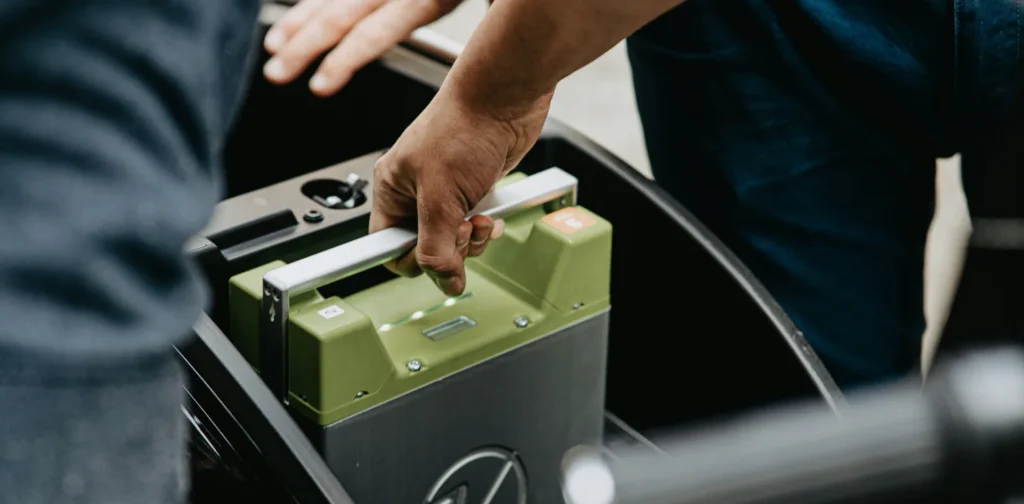
Photo: Kumpan Electric on Unsplash.
The world is undergoing an energy transition, and batteries play a key role. From powering electric vehicles to mini-grids, a battery’ versatility has been utilized for a wide range of purposes. However, questions about battery circularity and disposal mechanisms continue to emerge. To address this, the European Union has established and continued to develop battery-related regulations and frameworks.
Growth and Concerns
The deployment of battery storage in the power sector grew substantially in 2023. Data from the IEA shows that the increasing number of EVs by 40% contributed to most battery use in the energy sector. Other than that, it is also used for utility-scale projects, behind-the-meter systems, mini-grids, and solar home systems for electricity access.
However, battery use has its drawbacks, particularly regarding the sourcing through critical mineral mining, which is often linked with biodiversity loss and forced labor. Improper battery disposal will also lead to harmful substance leakage, which can contaminate nearby ground and water, along with the people around it. Therefore, proper disposal mechanisms are required to promote battery circularity.
EU’s Battery Circularity
The European Parliament and the Council adopted the Batteries Regulation in July 2023 to advance the region’s progress toward a circular economy and zero pollution. The regulation aims to improve battery circularity throughout its life cycle, from material sourcing and collection to recycling and repurposing. Additionally, it aims to ensure that batteries circulating in the EU market can only contain a restricted amount of necessary harmful substances.
The EU’s framework and policy on this matter keep developing as innovations and research emerge. In March 2025, the EU Commission updated the European List of Waste to support the Battery Regulation and the overall effort to promote battery circularity. First established in 2000, the European List of Waste identifies and classifies different types of waste, including those with potential hazards to human and environmental health.
The update considers emerging new battery chemistries and specific waste codes to identify and support proper waste management at different stages of the battery life cycle, including the manufacturing, post-consumer, and recycling stages. Furthermore, several types of waste batteries are classified as hazardous, including black mass, lithium-based, nickel-based, and zinc-based waste batteries.
“This will lead to better control of black mass shipments and especially a ban on its export to non-OECD countries. By keeping black mass longer in the economy, we can boost battery recycling and our circular economy,” said Jessika Roswall, Commissioner for Environment, Water Resilience and a Competitive Circular Economy.
A Just Energy Transition
The amendment to the List of Waste will take effect 20 days after it is reviewed and published in the Official Journal of the EU. Relevant stakeholders, from businesses to waste operators, must adapt and implement the new codes. Ultimately, proper waste management is an essential part of a clean energy transition that benefits people and the planet.
Editor: Nazalea Kusuma

Kresentia Madina
Madina is the Assistant Manager of Stakeholder Engagement at Green Network Asia. She holds a bachelor’s degree in English Studies from Universitas Indonesia. As part of the GNA In-House Team, she supports the organization's multi-stakeholder engagement across international organizations, governments, businesses, civil society, and grassroots communities through digital publications, events, capacity building, and research.
 The Invisible Infrastructure: What ASEAN’s Carbon Market Needs Most
  Indonesia Ruled to Recognize Chronic Illness as a Disability
  Clean Cooking as a Developmental Multiplier in Africa
  Congo Basin Peatlands Are Releasing Ancient Carbon
  From Anxiety to Action: How Youth Climate Activism Is Evolving
  India’s Supreme Court Declared Menstrual Health and Hygiene as Fundamental Rights