

Global Companies’ Progress Toward Deforestation- and Conversion-Free Supply Chains
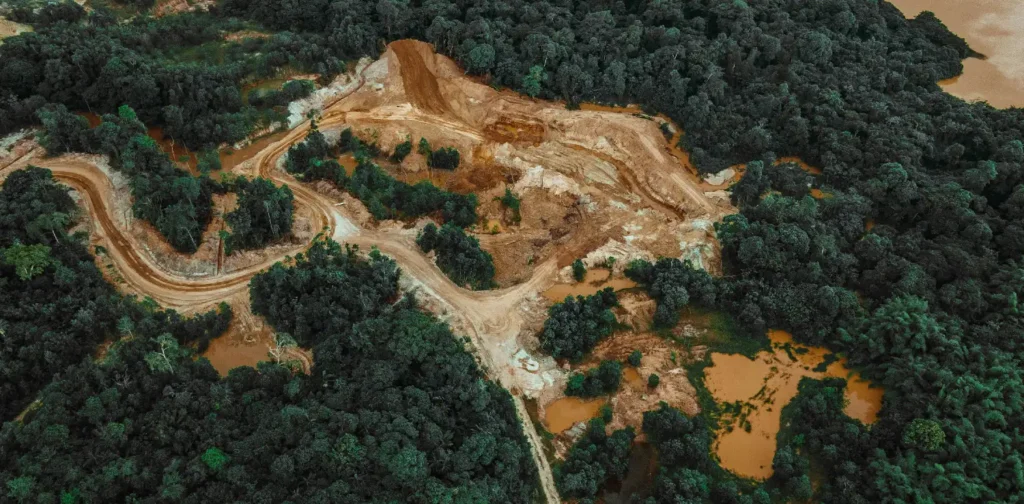
Photo by Renaldo Matamoro on Unsplash
A healthy planet is home to diverse ecosystems that thrive in their own ways—forests, rivers, peatlands, and more. For too long, industrialization has been threatening the existence of biodiversity and ecosystems. In this light, it is urgent for businesses to take accountability and transform toward more sustainable, deforestation- and conversion-free supply chains.
Deforestation- and Conversion-Free (DCF)
Land clearance for agriculture is behind more than 10% of global greenhouse gas emissions and is linked to over a third of biodiversity loss globally. Beyond that, it also often encroaches on the rights of Indigenous Peoples and local communities.
Therefore, eliminating commodity-driven deforestation and conversion of other ecosystems is necessary. Companies must comply as it is required by the Science Based Targets initiative (SBTi). Deforestation and conversion-free (DCF) supply chains are also laid out in the Convention on Biological Diversity and in accordance with the EU’s Deforestation Regulation, which goes into effect in 2025.
One of the steps to achieve this is through a DCF disclosure framework with standardized indicators. This allows for a comparable and easy-to-interpret assessment by stakeholders – including investors, consumers, and regulators – that helps them make informed decisions. In 2023, CDP and AFi (Accountability Framework initiative) partnered to develop a new disclosure framework of companies’ progress toward deforestation and conversion-free (DCF) supply chains.
CDP’s Global Forests Report 2024
The CDP has identified seven high-risk commodities: timber products, palm oil, soy, cattle products, natural rubber, cocoa, and coffee. These commodities are the focus of the Global Forests Report 2024, in which 1,152 companies worldwide reported on their deforestation management in 2023. The companies were based in Europe (349), Asia (303), North America (285), Latin America (191), Oceania (13), and Africa (11).
Out of all of them, 186 companies made sufficiently comprehensive and high-quality disclosures. However, only 64 companies (7%) disclosed that at least one of their commodity supply chains was 100% deforestation- or conversion-free. For 27 companies, less than 20% of their total volumes were reportedly DCF.
Furthermore, the report found, “Leading companies can add and are adding DCF disclosure to an existing set of good practices to address deforestation and conversion in their supply chains.”
To elaborate, 94% of the 217 high-quality disclosures made by 186 companies mentioned having a traceability system in place. Meanwhile, 92% used third-party certification. This occurrence suggests that having the necessary policies built into systems and strategies can help companies committed to eliminating deforestation and ecosystem conversion in their supply chains.
Toward Sustainable Supply Chains
Transparency in the monitoring and assessment process is only one of many crucial aspects in achieving deforestation- or conversion-free supply chains. Ultimately, a multisector, multistakeholder, holistic approach is needed to create a path toward sustainable production and consumption.
With that being said, the report offers several recommendations to improve companies’ DCF disclosure, such as:
- Communicating their intentions to achieve deforestation- and conversion-free supply chains, both publicly and to suppliers.
- Understanding the capabilities of certification programs to avoid certification models that do not provide assurance of DCF status.
Read the full report here.
Nazalea Kusuma
Naz is the Manager of International Digital Publications at Green Network Asia. She is an experienced and passionate writer, editor, proofreader, translator, and creative designer with over a decade of portfolio. Her history of living in multiple areas across Southeast Asia and studying Urban and Regional Planning exposed her to diverse peoples and cultures, enriching her perspectives and sharpening her intersectionality mindset in her storytelling and advocacy on sustainability-related issues and sustainable development.
 The Invisible Infrastructure: What ASEAN’s Carbon Market Needs Most
  Indonesia Ruled to Recognize Chronic Illness as a Disability
  Clean Cooking as a Developmental Multiplier in Africa
  Congo Basin Peatlands Are Releasing Ancient Carbon
  From Anxiety to Action: How Youth Climate Activism Is Evolving
  India’s Supreme Court Declared Menstrual Health and Hygiene as Fundamental Rights