

ILO’s Global Strategy for Occupational Safety and Health
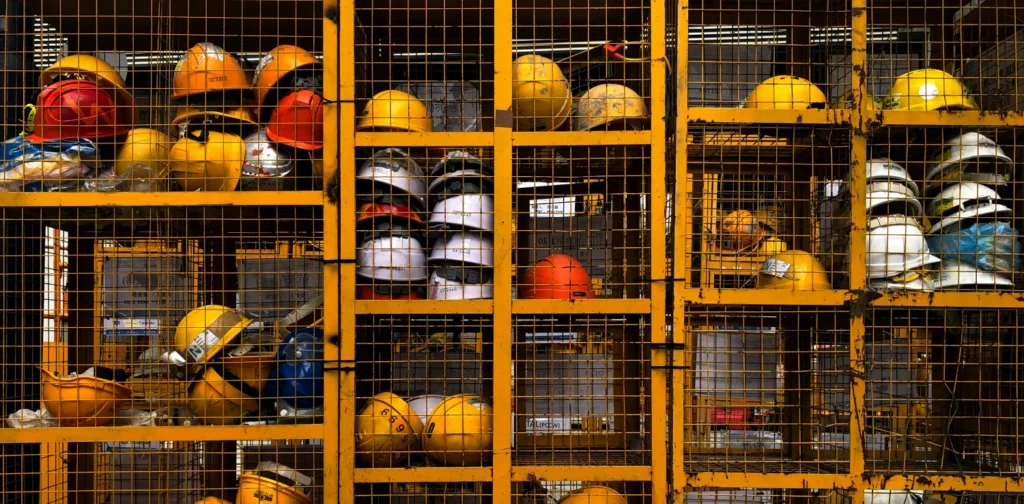
Photo: Pop & Zebra on Unsplash.
Most of our time as adults is spent making ends meet through work. Beyond striving for economic gains, workplaces must create and ensure a safe and healthy working environment for all, which unfortunately remains a challenge in many parts of the world. In this light, the International Labour Organization (ILO) has adopted the global occupational safety and health strategy to strengthen the system.
A Safe and Healthy Workplace
Every worker is entitled to a safe and healthy working environment. Target 8.8 of the Sustainable Development Goals aims to protect labor rights and promote safe and secure working environments for all workers.
Unfortunately, workers in all sectors worldwide are still exposed to unsafe and unhealthy working environments. The ILO estimates that 2.93 million workers die each year as a result of work-related factors, and 395 million workers worldwide sustain a non-fatal work injury each year.
Workplace accidents, first and foremost, impact workers and their families. These incidents also caused significant economic costs for businesses and nations at large.
ILO’s Global Strategy
While workplace accidents and injuries are sometimes unavoidable, many incidents could have been prevented or mitigated with proper management. The field of occupational safety and health (OSH) focuses on preventing occupational accidents and diseases by eliminating and reducing risks in the work environment.
As of June 2022, the ILO has included ‘a safe and healthy working environment’ in its framework of fundamental principles and rights at work, requiring ILO Member States to promote and realize the principles to support a safe and healthy working environment. Then, in 2023, the ILO adopted the Global Strategy on Occupational Safety and Health and its Plan of Action (2024-2030) to support ILO Member States in the implementation.
The strategy is based on three pillars: improving national occupational safety and health frameworks; strengthening coordination, partnerships, and investment in occupational safety and health; and enhancing workplace occupational safety and health management systems.
In its implementation, the strategy follows international labor standards, social dialogue and participation, and a focus on prevention throughout the life cycle. ILO’s plan also prioritizes a human-centered, inclusive, and gender-transformative approach as the guiding principles.
Stronger Protection for Workers
The risk of occupational hazards keeps rising. In light of climate-related weather events, outdoor workers often have to withstand excessive heat with minimal protective gear and measures. At the same time, the progress of energy transition also poses risks of modern slavery, especially in places where regulations and political willingness for social justice are weak.
Therefore, regulations, frameworks, and strategies are fundamental in transforming workplaces to be safer and healthier for workers. Developing standards, expanding and disseminating knowledge, raising awareness, and fostering collaboration related to OSH implementation are crucial for industry-wide transformation, which requires participation from key stakeholders in governments, businesses, and civil society.
Editor: Nazalea Kusuma

Kresentia Madina
Madina is the Assistant Manager of Stakeholder Engagement at Green Network Asia. She holds a bachelor’s degree in English Studies from Universitas Indonesia. As part of the GNA In-House Team, she supports the organization's multi-stakeholder engagement across international organizations, governments, businesses, civil society, and grassroots communities through digital publications, events, capacity building, and research.
 India’s Supreme Court Declared Menstrual Health and Hygiene as Fundamental Rights
  Impacts of E-waste Pollution on Animals and Human Health
  Africa’s Solar Energy Surge: Why 2025 Was a Breakthrough Year
  Agrihoods: Integrating Farms and Urban Neighborhoods into Sustainable Communities
  Women in Waste Management: Asia’s Circularity Runs on Women. Its Policies Still Don’t
  Embracing the Business Value of Sustainability