

Integrating Informal Waste Workers into the Waste Management System in Vietnam
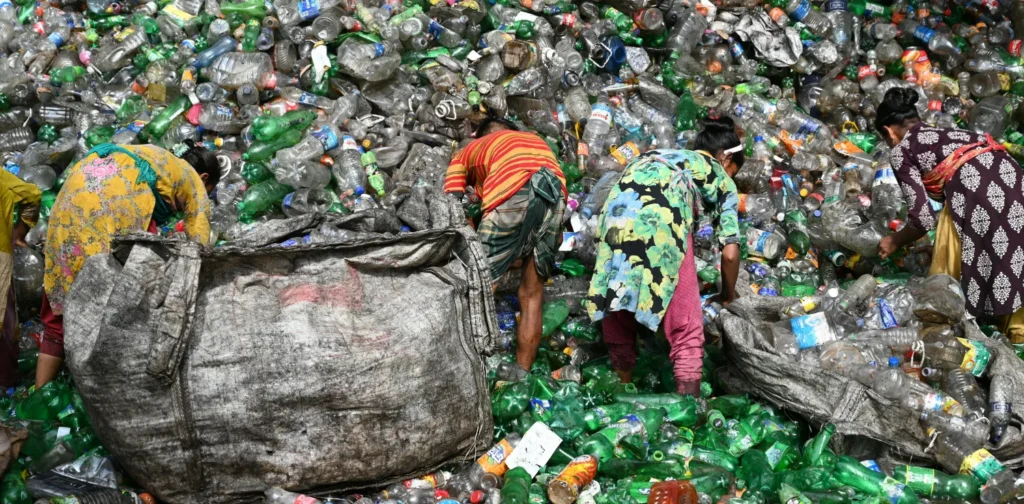
Photo: Mumtahina Tanni on Pexels.
Who takes care of our waste once we drop them into the bin? Globally, informal waste workers (IWW) significantly support waste management, yet they often go unnoticed and unappreciated in many cases. In Vietnam, efforts are underway to support the role of informal waste workers, one of which is integrating it into the Extended Producer Responsibility mechanism.
Informal Waste Workers
Essentially, informal waste workers contribute by collecting, sorting, recycling, and selling waste to collection and consolidation centers. In 2016, they collected around 27 million metric tonnes of plastic waste and prevented it from ending up in landfills or the ocean.
Despite their contribution, the workers’ welfare and wellbeing remain overlooked in many settings. Every day, they come in contact with toxic fumes and chemicals, often without wearing proper gloves and other protective gear. Consequently, they are highly vulnerable to musculoskeletal damage, infection, and other severe diseases like cancer.
Additionally, their status as ‘informal’ workers means a lack of regular wages, income security, and social protection benefits. The societal stigma of being ‘dirty’ because they work with waste also adds to their vulnerabilities. Therefore, acknowledging and integrating IWW’s role in sustainable waste management becomes crucial.
Vietnam’s National Plastic Action Partnership
Vietnam is among the top plastic waste polluters in the world. Every day, the country generates around 8,000 tons of plastic waste. To address the mounting waste problem, Vietnam launched the National Plastic Action Partnership (NPAP) in 2020.
The nationally led multi-stakeholder platform aims to foster collaboration between the government and other key actors on plastic actions. Central to this platform is the promotion and acknowledgment of informal waste workers’ role in waste management, as they contribute to managing most of Vietnam’s waste.
In 2024, the Gender and Social Inclusion Task Force of the NPAP collaborated with UNDP Vietnam and IUCN Vietnam to hold a meeting discussing actions necessary to reduce plastic waste. Among the things discussed were integrating informal waste workers into the Extended Producer Responsibility (EPR) implementation.
The government-mandated EPR mechanism demands more accountability from businesses for their waste. While this encourages business participation, informal waste workers can be significantly affected because businesses might take over their tasks of collecting, sorting, and recycling waste. Therefore, integrating the role of IWWs into the EPR mechanism is crucial, both to ensure the workers’ welfare and wellbeing and to advance the waste management system in the country.
“EPR is not only about producers’ responsibility towards recycling rates, but also about responsibility for people throughout the waste value chain, and especially informal waste workers, whose livelihoods depend on waste collection,” said Ms. Ramla Khalidi, Resident Representative of UNDP Vietnam.
Collaboration for Waste Management
The UNEP predicted that by 2050, global annual waste generation will reach 3.8 billion tonnes. Left unmanaged, waste will cause significant harm to people and the environment in various forms, from pollution to health issues.
Therefore, multi-stakeholder collaboration and participation are essential. Recognizing IWW’s roles, improving working conditions, ensuring fair payment and safety nets, and making efforts to reduce waste are all critical to promoting, integrating, and safeguarding informal waste workers’ waste management.

Kresentia Madina
Madina is the Assistant Manager of Stakeholder Engagement at Green Network Asia. She holds a bachelor’s degree in English Studies from Universitas Indonesia. As part of the GNA In-House Team, she supports the organization's multi-stakeholder engagement across international organizations, governments, businesses, civil society, and grassroots communities through digital publications, events, capacity building, and research.
 From Anxiety to Action: How Youth Climate Activism Is Evolving
  India’s Supreme Court Declared Menstrual Health and Hygiene as Fundamental Rights
  Impacts of E-waste Pollution on Animals and Human Health
  Africa’s Solar Energy Surge: Why 2025 Was a Breakthrough Year
  Agrihoods: Integrating Farms and Urban Neighborhoods into Sustainable Communities
  Women in Waste Management: Asia’s Circularity Runs on Women. Its Policies Still Don’t