

The Call for Investment for Africa’s Development
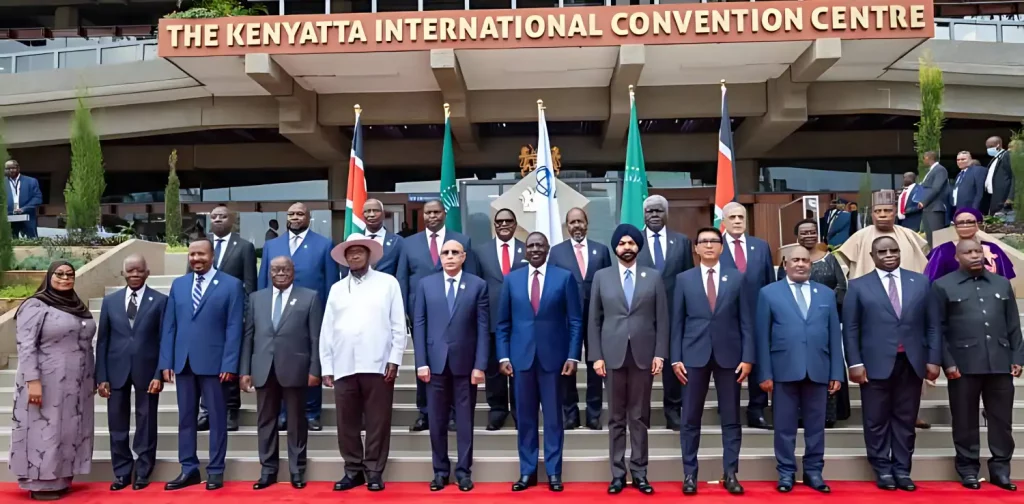
Leaders gather for the IDA for Africa Heads of State Summit in Nairobi, Kenya, on April 29, 2024. | Photo: World Bank.
The world is currently experiencing multiple crises simultaneously. The weather is getting hotter, the global economy is fragile, and our societal structure is hanging by a thread. On April 29, 2024, country leaders gathered at the IDA for Africa Head of State Summit to discuss economic reforms to accelerate Africa’s development.
Challenges & Opportunities
Africa is the second-largest continent in the world with over 1.2 billion people living in it. Additionally, the continent also has abundant resources. The United Nations Environment Programme estimated that Africa houses 30% of global mineral reserves, 8% of global natural gas reserves, and 12% of global oil reserves.
Despite its abundance, the continent is grappling with multiple crises. Africa suffers disproportionately from climate change, taking hits from heatwaves, heavy rains, floods, and prolonged drought. According to the World Meteorological Organization, climate-related disasters caused over US$8.5 billion in economic damage and impacted more than 110 million people in 2022.
Africa’s population is projected to reach 2.5 billion in 2050. While this means the continent will have an abundant workforce to drive the economy, the population growth also demands immediate action from country leaders to mitigate crises and improve livelihoods. On April 29, 2024, the government of Kenya and the World Bank hosted the IDA for Africa Head of State Summit to discuss the plan for Africa’s development.
The International Development Association
The summit gathered 19 country leaders and 32 finance ministers to discuss Africa’s development agenda, particularly in the economic, job creation, and climate action sectors.
Investment is an integral part of this transformation. Against this backdrop, the summit highlighted the role of the International Development Association (IDA), which helps low-income countries through investment and solidarity funds. The IDA is part of the World Bank, which has partnered with Africa for the last six decades.
Leaders, global youth, the private sector, and civil society called for more funding to further support the IDA’s role in Africa’s development. These stakeholders formed a coalition and claimed commitment to a strong, inclusive, and sustainable recovery.
“IDA has been and must remain a dependable development partner for Africa, and we urge stronger donor contributions to IDA21 so that together we can drive transformational impact not only for a better Africa, but also for a better world,” said President Ruto of Kenya.
IDA21 refers to the 21st fund replenishment of the IDA since 1960, which occurs every three years. This period’s work will focus particularly on women and youth, climate actions, digitalization, job creation, and infrastructure implementation for economic growth.
Collaboration for Africa’s development
Beyond investment and funding, pushing for Africa’s development requires support and participation from all related stakeholders. Governments, private sectors, and civil society groups must work together to make robust progress for the continent’s better future.
“IDA21 must be different. It must be transformative. This means that we must collectively work to make sure IDA21 is robust and ambitious and is delivered with transparency and accountability for Africa’s citizens, ensuring that we build stable and resilient economies for the future,” said Ndidi Nwuneli, President of the non-profit organization ONE Campaign.
Editor: Nazalea Kusuma

Kresentia Madina
Madina is the Assistant Manager of Stakeholder Engagement at Green Network Asia. She holds a bachelor’s degree in English Studies from Universitas Indonesia. As part of the GNA In-House Team, she supports the organization's multi-stakeholder engagement across international organizations, governments, businesses, civil society, and grassroots communities through digital publications, events, capacity building, and research.
 Women in Waste Management: Asia’s Circularity Runs on Women. Its Policies Still Don’t
  Embracing the Business Value of Sustainability
  American Farmers Call for Government Support Amidst PFAS Contamination
  Asia Pacific’s SDG Progress Faces Major Setbacks
  Exploring the Bidirectional Relationship Between Olympic Games and the Environment
  The Hidden Threat of Tire Pollution to Salmon Populations