

Urgency in Addressing the Severe Impacts of Climate Change in Africa
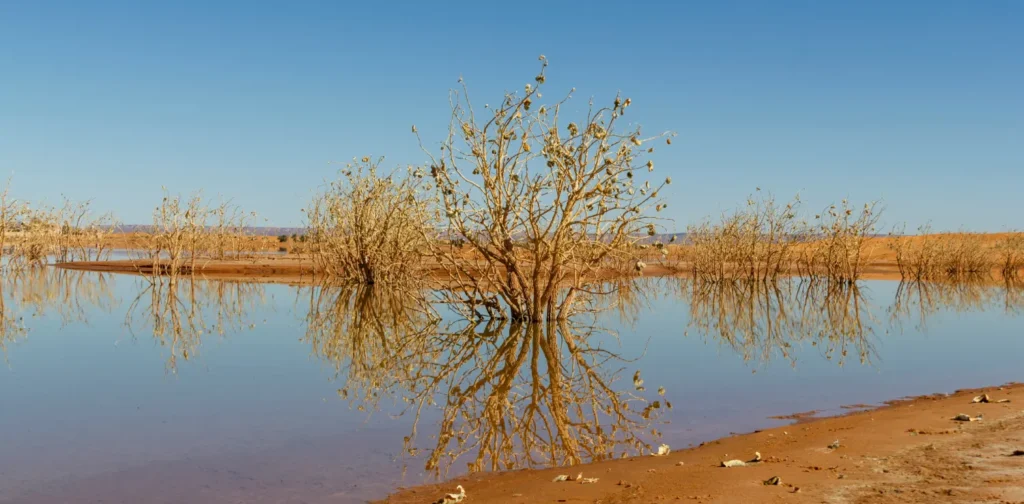
Photo: Maria Krasnova on Unsplash.
The impacts of climate change are broad and severe, especially in countries where mitigation is lacking. In Africa, extreme weather and climate change threaten almost every aspect of the region’s development, signalling the need for stronger and more comprehensive response mechanisms.
Impacts of Climate Change in Africa
The years 2023 and 2024 broke the threshold as the hottest years on record consecutively. The rising temperature is closely tied to the high carbon emission levels despite the global call and effort to reduce greenhouse gas emissions. This trend also makes achieving the Paris Agreement target of 1.5°C a tough, nearly impossible feat.
The impacts of climate change are felt more severely in Africa, even though the region’s greenhouse gas emissions are relatively smaller than those of other regions. In 2024, the average temperature across Africa was among the warmest since 1900. According to the World Meteorological Organization (WMO)’s State of the Climate in Africa 2024 report, the temperature reached 0.86°C above the 1991–2020 average. This rise led to a record-high sea-surface temperature and above-global-average sea level rise.
Extreme Weather Anomalies
WMO’s report further highlights the weather anomalies in Africa as one of the most glaring impacts of climate change. The extreme weather patterns were also significantly influenced by the 2023 cycles of El Niño and the Indian Ocean Dipole, which lasted into the beginning of 2024.
In West and Central Africa, for instance, millions of people suffer the impacts of torrential rains, leading to widespread infrastructure damage and displacements. Chad experienced weeks of severe rains in September 2024, which affected over 1.5 million people in need of humanitarian assistance. Floods also occurred in the Sahara Desert, its first flooding incident in decades.
On the other hand, the region also experienced a prolonged drought, particularly in Southern Africa, leading to crop failures, food insecurity, and humanitarian and environmental challenges. In Namibia, the government even resorted to wildlife culling in May 2024 to cope with chronic food insecurity due to the lack of rainfall.
WMO’s report also reveals how a lack of water supply led to electricity shortages in Zambia and Zimbabwe. Lake Kariba experienced a critically low water supply, thus affecting hydroelectric power generation in those countries.
Stronger Response and Mitigation
In the Africa Climate Summit 2023, country leaders claimed a commitment to advance Africa’s economic development while contributing to global decarbonization efforts. However, to make substantial progress, there is a lot to be done in the short- and long-term.
WMO’s report highlights the critical role of digital technologies in supporting the country’s early warning systems, such as artificial intelligence, mobile communication tools, and advanced weather prediction models. However, optimizing these technologies hinges on greater investment in infrastructure, stronger data-sharing frameworks, and inclusive service delivery, which requires substantial effort from governments, businesses, and civil society. Beyond that, the region must improve and strengthen its infrastructures, frameworks, and policies to respond to the impacts of climate change for the resilience and future of people and the planet.
Editor: Nazalea Kusuma

Kresentia Madina
Madina is the Assistant Manager of Stakeholder Engagement at Green Network Asia. She holds a bachelor’s degree in English Studies from Universitas Indonesia. As part of the GNA In-House Team, she supports the organization's multi-stakeholder engagement across international organizations, governments, businesses, civil society, and grassroots communities through digital publications, events, capacity building, and research.
 Women in Waste Management: Asia’s Circularity Runs on Women. Its Policies Still Don’t
  Embracing the Business Value of Sustainability
  American Farmers Call for Government Support Amidst PFAS Contamination
  Asia Pacific’s SDG Progress Faces Major Setbacks
  Exploring the Bidirectional Relationship Between Olympic Games and the Environment
  The Hidden Threat of Tire Pollution to Salmon Populations