

Towards Climate-Responsive Trade Policies
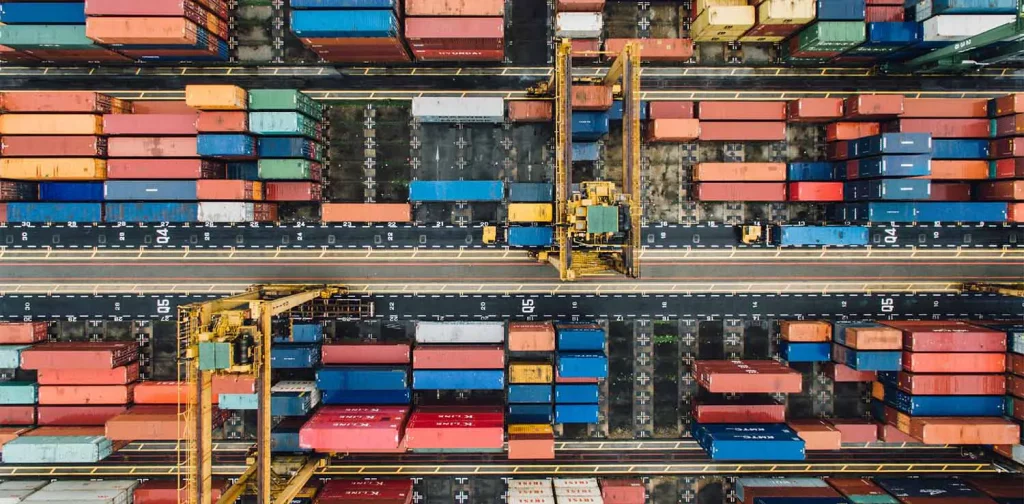
Photo: CHUTTERSNAP on Unsplash.
In this life mechanism, trade is one of the engines that keep it going. From food to fuel, things in our lives are made accessible through trading activities. With strong regulations, trade policy can be an essential means to support sustainable development. Recently, the Coalition of Trade Ministers on Climate was launched to address climate change through climate-responsive trade policies.
An SDGs instrument
Trade is recognized as an important instrument in the 2030 Agenda for Sustainable Development. The goal is to encourage the total contribution of trade to the sustainable development agenda through liberalizing trade, supporting the environment, providing financial resources for developing countries, and encouraging macroeconomic policies concerning the environment and development.
The World Trade Organization (WTO) listed nine Sustainable Development Goals that can be supported through comprehensive and strategic trade policies, including Goal 1 on poverty reduction, Goal 3 on health and well-being, and Goal 5 on gender equality. To achieve those goals, a global-scale effort is required to shape trade policies to become climate-responsive and development-oriented.
Climate-responsive trade policies
The Coalition of Trade Ministers on Climate was launched during the World Economic Forum’s Davos 2023. It was the first ministerial-level global forum initiated by the Trade Ministers of Ecuador, the EU, Kenya, and New Zealand in 2022.
The Coalition will foster global actions to promote trade policies that can help address climate change through local and global means. One of the main focuses of the Coalition is to identify the most vulnerable developing and least developed countries with higher risk from climate change.
Currently, there are 52 members of the Coalition working together for climate-responsive trade policies. The Coalition aims to involve trade ministers, civil society, businesses, and organizations to participate in the Coalition’s work in the future.
“We now have the platform to mobilize our common will to fix the problem and to cooperate to pull the many threads of action together in a coherent and effective way,” said New Zealand Minister for Trade and Export Growth Damien O’Connor. “The Climate Coalition is a timely and critical initiative that brings Ministers together to provide high-level political direction to support technical work at the WTO and to ensure that actions in the WTO, APEC, G20, G7, and other forums are pulling in the right direction, that there are no gaps in critical areas, and resources are directed to the right priorities and not wasted,” he added.
Editor: Nazalea Kusuma

Kresentia Madina
Madina is the Assistant Manager of Stakeholder Engagement at Green Network Asia. She holds a bachelor’s degree in English Studies from Universitas Indonesia. As part of the GNA In-House Team, she supports the organization's multi-stakeholder engagement across international organizations, governments, businesses, civil society, and grassroots communities through digital publications, events, capacity building, and research.
 From Anxiety to Action: How Youth Climate Activism Is Evolving
  India’s Supreme Court Declared Menstrual Health and Hygiene as Fundamental Rights
  Impacts of E-waste Pollution on Animals and Human Health
  Africa’s Solar Energy Surge: Why 2025 Was a Breakthrough Year
  Agrihoods: Integrating Farms and Urban Neighborhoods into Sustainable Communities
  Women in Waste Management: Asia’s Circularity Runs on Women. Its Policies Still Don’t