

Bringing Buried Rivers Back to Life Through Daylighting
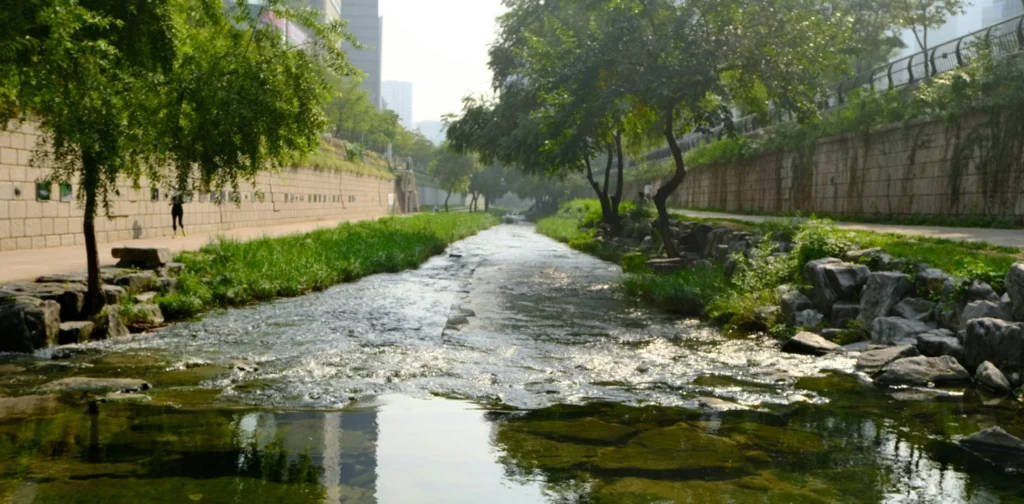
Cheonggyecheon River in Seoul, South Korea | Photo: Shai Lopez on Unsplash
Around the world, people are calling for the return of nature into towns and cities. They want to see more trees, animals, and flowing water instead of smog and industrial waste. As part of urban revitalization efforts, daylighting emerges, integrating nature into urban areas by bringing dead and buried rivers back to life.
What Is Daylighting?
During the Industrial Revolution, burying rivers became an increasingly common practice. They were often polluted with toxic waste and sewage or simply stood as an obstacle to industrial or residential expansion. Many rivers were also incorporated into sewer systems as part of the gray infrastructure, aiding in drainage or as interceptors. But even when buried, these rivers still follow their natural paths. Urban planners, to this day, must take into account the location and details of underground waterways when building anything.
However, excessive and unpredictable rain—driven by climate change—is overwhelming these underground infrastructures. This can lead to flooding or costly strains on infrastructure. Cities like Tokyo have spent significant time and money to build an intricate subterranean system that can manage floodwaters and runoff.
Then, the last few decades have seen a re-emergence of these rivers as cities recognize the benefits of embracing nature-based solutions. Daylighting, also known as deculverting, is the practice of reviving what were once natural rivers that were buried or connected into sewer systems. Daylighting rivers is not just a way of adding natural elements back into the urban sphere. It is also key to prevent flooding in cities. Moreover, daylighting also lightens the load on wastewater treatment plants and works against the Urban Heat Island effect.
The Rising Popularity of Daylighting
Cities around the world have successfully utilized daylighting to bring back lost rivers. The most well-known is the Cheonggyecheon river in Seoul, now a bustling public park in the heart of the city. The South Korean government worked extensively with local business owners and private sector developers to complete the project.
Meanwhile, in the US alone, there have been more than three dozen completed projects. Notably, New York has completed several major daylighting projects, particularly Tibbetts Brook and Saw Mill River.
While the UK and Europe in general have several daylighting projects, a good practice hails from Switzerland. The country’s “Bachkonzept” involves separating sewer systems from natural streams or rivers and bringing those rivers back to life. Cities all over Switzerland, such as Basel, Bern, and Geneva, have transformed their once-buried rivers into public spaces. But Zurich stands out, having daylighted over 30 streams in the last few decades. The city’s success is an evidence of the positive impacts that daylighting can have on infrastructure, development, as well as public health and wellbeing. It is also notable that the strategy was as part of a larger legislation that was passed to protect water quality all over the country.
Tackling Challenges Through Collaborative Efforts
Areas around daylighted rivers often see an increase in property value and a surge in human activity. Thus, these projects result in economic benefits as well as environmental ones like cooling effects and decreased pollution.
However, daylighting is not without its challenges. Once restored, these rivers often require large scale and expensive maintenance and coordination. Additionally, the construction period requires local businesses to experience disruptions, and land ownership along the path of the river can become a point of contention.
Ultimately, widespread implementation of daylighting and other ecosystem-based solutions requires robust collaboration between governments, the private sector, experts, and citizens. A holistic combination of strong policies and laws, sustainable financing, and community participation can lead to a fundamental redesign of urban areas, one that promotes harmony between the built environment, people, and nature.
Editor: Nazalea Kusuma
 The Widespread Impacts of Severe Drought in Somalia
  Ensuring Access to Justice for Women and Girls
  The Invisible Infrastructure: What ASEAN’s Carbon Market Needs Most
  Indonesia Ruled to Recognize Chronic Illness as a Disability
  Clean Cooking as a Developmental Multiplier in Africa
  Congo Basin Peatlands Are Releasing Ancient Carbon