

Building Resilience Through Environmental Education in Odisha
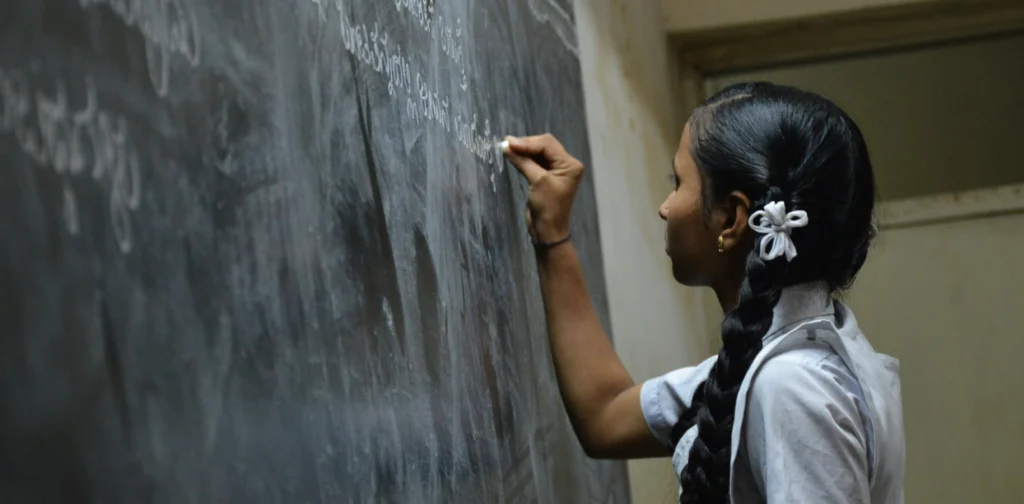
Photo: Nikhita S on Unsplash
Environmental education is a learning process that develops awareness, knowledge, values, and skills to address environmental challenges. Beyond teaching ecological concepts, it should also encourage learners to adopt sustainable practices in their daily lives. How is it integrated into the formal school curriculum in Odisha, India?
Environmental Education in Odisha
Integrating environmental education into the school curriculum is crucial because it prepares the youth to face global climate challenges. UNESCO’s Education for Sustainable Development (ESD) for 2030 framework highlights education as a key enabler of climate action. Several countries have adopted similar initiatives, such as the Eco-Schools program, which is implemented in more than 100 countries.
In India, the state of Odisha has introduced the Holistic Progress Card under India’s National Education Policy 2020. It assesses students across 41 parameters, encompassing not only written tests but also cognitive, social-emotional, and practical skills. This means that environmental projects are not treated as extracurricular activities, but rather are considered part of a formal evaluation. For instance, students gain credit for maintaining compost pits, leading tree-planting drives, or contributing to mangrove protection along coastal areas.
Eco-Clubs further strengthen this system. There are around 9,500 Eco-Clubs across Odisha, linked to the National Green Corps program. They train students in waste management, water conservation, and energy monitoring, extending environmental practices from schools to households and communities. This approach empowers students to be active agents of change rather than passive learners.
Gaps on the Ground
Still, gaps remain on the ground. A study in Rayagada district assessed the environmental knowledge of 100 tribal students at secondary school levels. Environmental knowledge here refers to students’ understanding of ecological principles, human impacts on nature, and their relevance to daily life. The study revealed that 73% of them had a moderate level of environmental knowledge, 15% had a high level, and 12% had a low level. It also notes that tribal students in urban areas demonstrated a higher level of awareness than those living in rural areas, underscoring significant gaps.
These gaps occur against the backdrop of climate vulnerability in Odisha, where the state frequently faces cyclones, floods, and heatwaves. Moreover, the state is home to 62 tribal communities, 13 of which are considered vulnerable due to the depleting forest resources and modernization. Tribal communities, who rely greatly on nature, are more susceptible to the impacts of climate change, which can disrupt their cultural and spiritual practices, as well as their livelihoods. Bridging the gap in environmental awareness among tribal youth and making information more accessible in their languages can become a way to enhance their understanding of climate risks and the actions required to mitigate them.
An Investment in the Future
The global People’s Climate Vote survey showed that 70% percent of young people aged 14–18 perceive climate change as an emergency. Therefore, stronger learning structures are needed to transform awareness into concrete action. In this case, environmental education becomes more than academic enrichment. Students can learn adaptive practices that directly address the issues they encounter in their daily lives, including water conservation, ecosystem preservation, and waste management.
Still, treating environmental education as a strategic investment to build long-term resilience requires addressing the gap on the ground, especially the accessibility gap between urban and rural areas. This includes promoting environmental education through languages and practices that resonate with Indigenous peoples and local communities in target areas. After all, environmental education prepares youth for life itself, empowering them to be part of the solution to global challenges that would impact them now and their future the most.
Editor: Nazalea Kusuma & Kresentia Madina

Co-create positive impact for people and the planet.
Amidst today’s increasingly complex global challenges, equipping yourself, team, and communities with interdisciplinary and cross-sectoral insights on sustainability-related issues and sustainable development is no longer optional — it is a strategic necessity to stay ahead and stay relevant.
 The Invisible Infrastructure: What ASEAN’s Carbon Market Needs Most
  Indonesia Ruled to Recognize Chronic Illness as a Disability
  Clean Cooking as a Developmental Multiplier in Africa
  Congo Basin Peatlands Are Releasing Ancient Carbon
  From Anxiety to Action: How Youth Climate Activism Is Evolving
  India’s Supreme Court Declared Menstrual Health and Hygiene as Fundamental Rights