

Empowering Small-Scale Fish Farmers for Sustainable Aquaculture
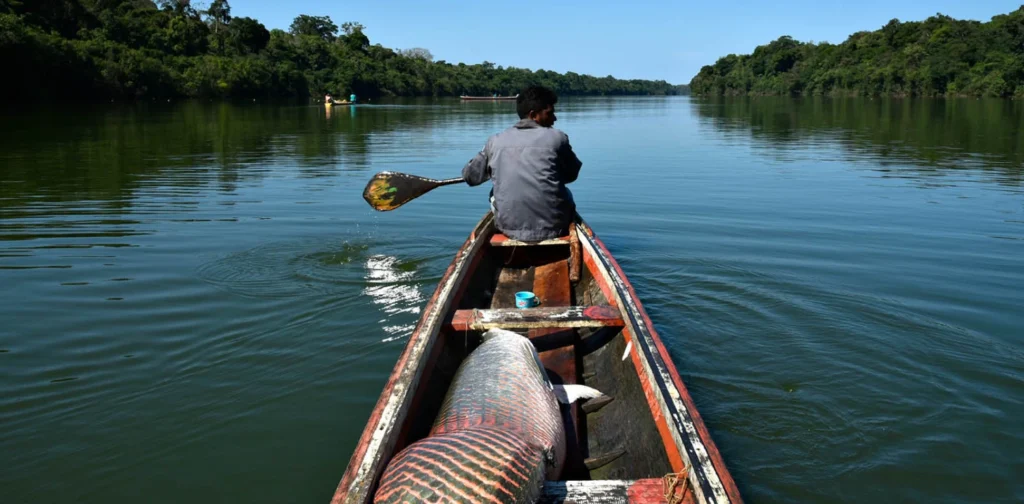
Photo: FAO.
Since over two-thirds of the planet is water, it is no surprise that fish is a significant part of a human’s diet. Humans also use fish as raw materials for other things, such as clothing, jewelry, and pharmaceutical. While fishing is a common practice to acquire fish for those various uses, there is also farming—aquaculture. More specifically, small-scale fish farmers play a vital yet often overlooked role in global economies and food security.
Small-Scale Aquaculture
In many developing regions, aquaculture provides affordable protein sources and essential micronutrients. More specifically, in areas where other animal proteins are less accessible or affordable, it is an important sector with significant participation from small-scale operations.
Small-scale fish farmers account for about 40% of the world’s total catch. Global aquaculture production reached 223.2 million tons in 2022, valued at US$472 billion, with Asia contributing nearly 90% of total output. Countries such as China, Indonesia, India, Vietnam, and Bangladesh lead production, where around 70–80% of farms are small-scale and family-run.
In estimates, 61.8 million people are employed in primary fishery production, mostly in small-scale operations. Women form nearly half of the workforce in processing, trade, and post-harvest activities.
Unfortunately, the sector is vulnerable to climate change, environmental degradation, and market fluctuations. Small-scale fish farmers, in particular, have limited access to resources, markets, and technologies to adapt to climate change.
Supporting Small-Scale Fish Farmers
Across the globe, collaborative programs are emerging to build resilience in aquaculture. One example is the AquaLivelihood Project. It is a partnership between the South Asian Association for Regional Cooperation Development Fund (SDF) and the Indian Council for Agricultural Research-Central Institute of Freshwater Aquaculture (ICAR-CIFA). This three-year regional initiative, starting in 2025, includes technical training, improved market access, and regional collaboration. Operating in Bangladesh, Bhutan, India, Nepal, and Sri Lanka, the project aims to empower over 12,000 small-scale fish farmers, targeting at least 30% women participants.
Meanwhile, the Small-Scale Fisheries (SSF) Hub serves as a digital platform supporting the implementation of the Voluntary Guidelines for Securing Sustainable Small-Scale Fisheries (VGSSF). The platform connects fishers, researchers, policymakers, and civil society organizations to share knowledge, good practices, and policy tools. By fostering dialogue and collaboration, the SSF Hub should help bridge community-based initiatives with global sustainability frameworks.
Building a Resilient and Inclusive Aquaculture Future
Building a sustainable aquaculture industry requires a comprehensive strategy that connects local knowledge, innovation, inclusivity, and supportive policy frameworks. Furthermore, investment in research, nature-based solutions, and community-based approaches is vital for environmental and industrial resilience.
In particular, supporting small-scale fisheries can be the key to maintaining both ecological balance and food security amid the growing global demand. Inclusive policies that improve access to finance, technology, and capacity development can help small-scale producers adapt and thrive. After all, small-scale fish farmers are central to the development of a sustainable and equitable blue economy.
Editor: Nazalea Kusuma
Co-create positive impact for people and the planet.
Amidst today’s increasingly complex global challenges, equipping yourself, team, and communities with interdisciplinary and cross-sectoral insights on sustainability-related issues and sustainable development is no longer optional — it is a strategic necessity to stay ahead and stay relevant.
 From Anxiety to Action: How Youth Climate Activism Is Evolving
  India’s Supreme Court Declared Menstrual Health and Hygiene as Fundamental Rights
  Impacts of E-waste Pollution on Animals and Human Health
  Africa’s Solar Energy Surge: Why 2025 Was a Breakthrough Year
  Agrihoods: Integrating Farms and Urban Neighborhoods into Sustainable Communities
  Women in Waste Management: Asia’s Circularity Runs on Women. Its Policies Still Don’t