

Expanding Rural Electrification for Sustainable Agriculture in India
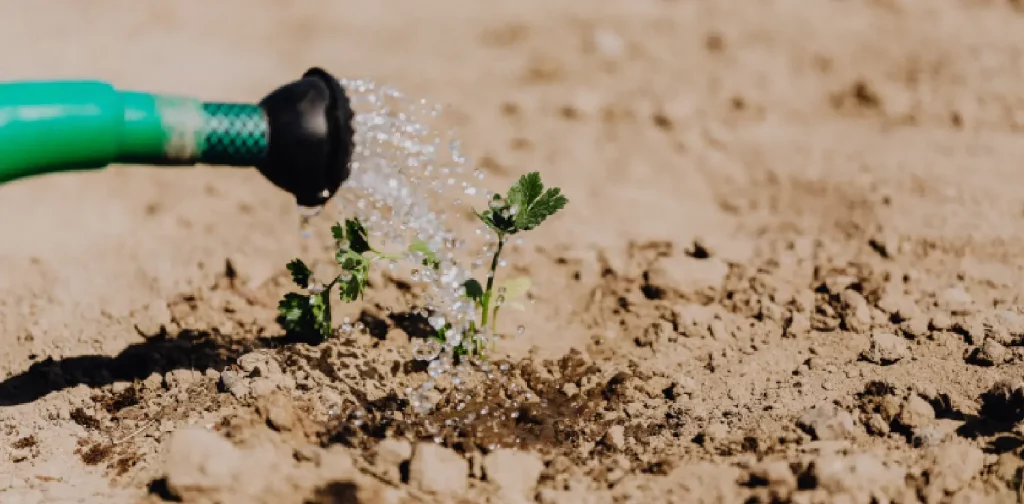
Photo: Karolina Grabowska on Pexels.
Electrification is a significant step toward achieving a clean energy transition. To ensure a just energy transition, broadening electricity access to rural areas is crucial. However, more than electrifying households, electricity also plays a vital role in other aspects, such as agriculture. A new study reveals the impacts of rural electrification and calls for its expansion coverage to support the agriculture sector in India.
Rural Electrification in India
Global electricity access has progressed in the last decade. Between 2010 and 2021, data from the World Bank shows that the number of people with electricity access grew from 84% to 91% of the world’s population. Despite the progress, 675 million people were still without electricity in 2021. Roughly 8 of 10 of them were living in rural communities.
The World Bank data further specifies that 6 million people in India’s rural areas were still without electricity in 2021. Still, the country has shown significant progress in rural electrification through the Rajiv Gandhi Grameen Vidyutikaran Yojana (RGGVY) program. Launched in 2005, the program aimed to provide electricity to all rural areas in India. According to the latest government data, the program has achieved near-universal household electrification.
However, researchers from the National University of Singapore and Deakin Business School argue that rural electrification in India should be extended beyond households to agriculture. In a new study, the researchers examined data from 1986 to 2013 to see how predominantly household electrification policies affected the agriculture sector as one of the economic drivers in rural India.
Household & Agriculture
The first wave of rural electrification in India focused on groundwater irrigation before shifting to domestic electrification. In the late 1960s, India integrated technology into its agricultural practices, including electric wells. The electric wells became vital for irrigation due to lower costs than diesel pumps.
In 2005, the country aimed for universal household electrification through the RGGVY program. The study cites that the program connected over 280M people to the electricity grid between 2000 and 2010.
However, despite the presence of electricity infrastructure that connects households, the study finds that electricity use for groundwater pumping is still regionally concentrated. In other words, the improvement of household connectivity doesn’t translate into improvement in the agriculture sector.
The study further reveals that the regions with established electric wells were included in the first wave of rural electrification before the policy shifted to domestic electrification. The lack of access to groundwater for irrigation further leads to income reduction in the agricultural sector. Meanwhile, the World Bank states that nearly three-quarters of India’s families depend on rural incomes. Therefore, expanding electricity coverage to groundwater irrigation becomes crucial.
Expanding Electricity Access
The study calls for revisiting how household electrification is the sole indicator of electricity access. Policy interventions are needed to expand electricity coverage to include agriculture and other aspects to support food security, decent work, and the overall welfare of rural people in India.
The study concludes, “Perhaps it is time for more studies to isolate the different avenues whereby electricity impacts rural economies across the developing world and maximize electrification’s role in poverty alleviation.”
Read the complete study here.
Editor: Nazalea Kusuma

Kresentia Madina
Madina is the Assistant Manager of Stakeholder Engagement at Green Network Asia. She holds a bachelor’s degree in English Studies from Universitas Indonesia. As part of the GNA In-House Team, she supports the organization's multi-stakeholder engagement across international organizations, governments, businesses, civil society, and grassroots communities through digital publications, events, capacity building, and research.
 The Invisible Infrastructure: What ASEAN’s Carbon Market Needs Most
  Indonesia Ruled to Recognize Chronic Illness as a Disability
  Clean Cooking as a Developmental Multiplier in Africa
  Congo Basin Peatlands Are Releasing Ancient Carbon
  From Anxiety to Action: How Youth Climate Activism Is Evolving
  India’s Supreme Court Declared Menstrual Health and Hygiene as Fundamental Rights