

How Bahrain’s Agricultural Productivity Rises Amidst Global Decline
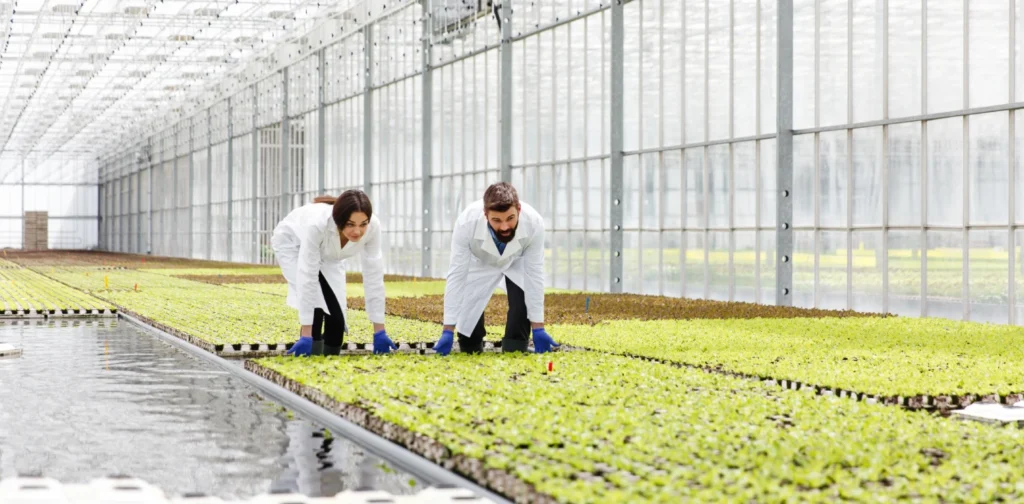
Photo: freepic.diller on Freepik.
The recent trend of decreasing agricultural productivity due to climate change and increasingly limited resources has put global food security at risk. However, Bahrain is an exception. Despite having low rain precipitation and desert climate, Bahrain’s agricultural productivity is rising. How is this possible?
Declining Global Agricultural Productivity Growth
World hunger persists. In 2024 alone, 623 million people worldwide might have experienced hunger. Meanwhile, climate change puts pressure on the two most important parts of life to survive: water and food. It induces extreme weather events like drought and heatwaves, putting food production at risk.
Globally, there is a declining trend in food production growth. While overall agricultural output is still rising, the rate of growth of agricultural productivity is slowing down. The global total factor productivity (TFP) rate — meaning how efficiently food is produced with the same amount of resources — was growing at an annual rate of 1.99% during 2001–2010. But during 2011–2020, the growth slowed to 1.12% annually.
According to the Global Agricultural Report, the world needs a safe growth of 1.73% annually for sustainable food production and to fulfill global demand by 2050. In other words, our current food production growth rate still falls short to sustainably meet future needs.
Bahrain’s Agricultural Productivity
Amidst the declining trend of productivity, one country in the Middle East differs. Bahrain, a desert archipelago located in the Persian Gulf, has a moderately small yet important agricultural sector to feed its 1.6 million population. The sector mostly produces dates and various vegetables like tomato, cucumber, and onions.
Bahrain’s agricultural productivity has seen an increase of 55% in the past decade. According to the official national statistics, the total production has risen from 37,806 to 58,597 tonnes from 2015 to 2024. Considering Bahrain’s dry climate and extremely limited water sources, how is this possible?
Bahrain’s government has been actively promoting agricultural growth through the National Initiative for Agricultural Development. Furthermore, this growth is not due to traditional farmland expansion–-it is agritech. For example, controlled environment farming, such as greenhouses for hydroponics and vertical farming, is prominent in Bahrain. The number of greenhouses grew more than 50% from 2015 to 2022.
Additionally, another key reason for Bahrain’s agricultural productivity growth is efficient water management. Bahrain promotes the use of drip irrigation, treated wastewater, and seawater desalination in modern farms. Among the efforts is the National Water Strategy 2030, which aims to expand desalination capacity to 227,000 cubic meters.
Advancing Sustainable Agriculture
Agriculture is a conundrum; it is both a major contributor to global warming and environmental degradation and a sector heavily impacted. As food demand and climate threats grow, the sector must transform. Harmful and resource-intensive practices that center short-term profit will no longer do.
Therefore, developing, promoting, and enabling sustainable agricultural practices is an urgent matter. From energy and water resources to waste management, there are many aspects involved. Thus, we need synergized, cross-sectoral, and multi-stakeholder action.Governments must implement supportive policies, funding mechanisms, and inclusive infrastructure to help existing farmers to level up, not replace them. Public-private partnerships to support the research, development, and adoption of sustainable agriculture innovations are also crucial.
Shifting to sustainable practices is challenging but not impossible. The rise in Bahrain’s agricultural productivity is an example that growth is possible amid limitation and pressure. After all, it is necessary to ensure food security, protect natural resources, and create a resilient future for all.
Editor: Nazalea Kusuma
 The Disproportionate Cost of Data Centers for Local Communities
  Will the EU Ban on Destroying Unsold Clothes Reduce Textile Waste?
  How Extreme Heat Affects Human Livability
  Looking into Green Ramadan Initiatives Worldwide
  The Widespread Impacts of Severe Drought in Somalia
  Ensuring Access to Justice for Women and Girls