

Learning from India’s Dual Reality of Tiger Conservation
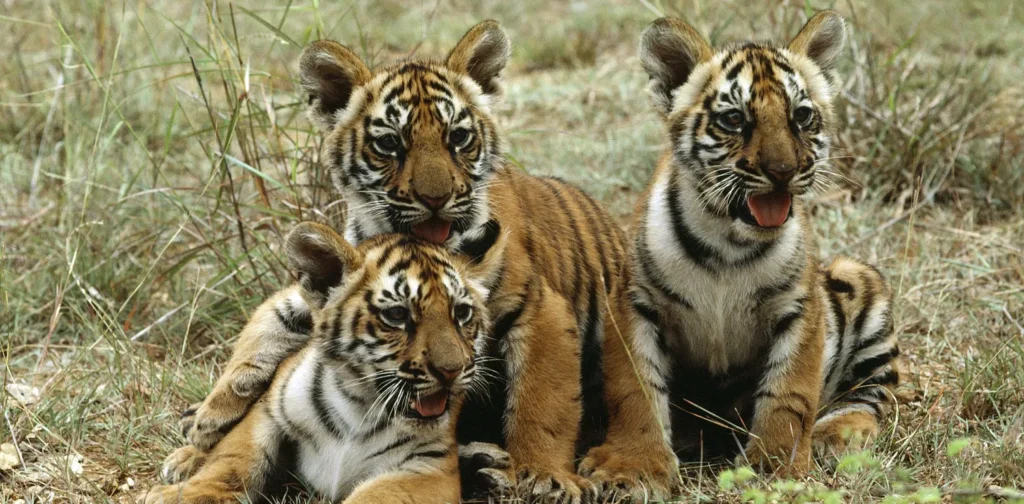
Photo by United Nations on Flickr
Wild animals play an essential role in maintaining the balance of the food chain and the ecosystems. Unfortunately, the poaching of predators like tigers has led to a sharp population decline in the last few decades, including in India. The country began its tiger conservation efforts to address the issue, which has been highlighted for its success in increasing tiger populations.
Yet, beneath the achievement lies a more complex reality involving human-wildlife conflicts and the displacement of Indigenous communities, making it difficult to navigate between biodiversity conservation and social justice. India’s tiger conservation journey highlights the important lesson that protecting wildlife and people must go hand in hand.
Tigers’ Role and Population Decline
Tigers play a crucial role in maintaining healthy ecosystems. As apex predators, they help regulate prey populations, preventing overgrazing that can lead to habitat degradation and ecological imbalance. By keeping herbivore numbers in check, tigers indirectly support the growth of diverse vegetation. In turn, this vegetation provides food and shelter for a wide range of other species.
Furthermore, tigers are also considered umbrella species, which means that protecting them also helps protect many other species that live in the same habitat. In other words, implementing tiger conservation efforts, such as preserving forests and reducing human threats, can benefit many plants, animals, and even water sources in the area.
At the beginning of the 1900s, there were more than 100,000 tigers in the wild roaming across Asia. Sadly, habitat loss and massive poaching have led to a dramatic decline of the tiger populations in the last 100 years.
In India alone, there used to be more than 50,000 tigers. By the 1970s, however, the population had plummeted to around 1,800. They are mainly hunted for their parts like claws, skin, and bones, which are believed to have medicinal benefits or are taken as status symbols.
India’s Tiger Conservation Progress
Fortunately, India’s wild tiger population is steadily recovering. In just over a decade, the number of tigers increased from 1,706 in 2010 to approximately 3,682 in 2022. Nowadays, the region holds about 70% of the global tiger population.
Researchers have found that India’s relative success in tiger conservation comes from combining two key strategies. First, some areas are set aside as strictly protected zones, where there are no human settlements and the focus is only on conserving tigers and their habitats. Tigers live in protected areas rich in prey and largely free from human activity, covering about 35,000 square kilometers, and nearby landscapes where people live.
Second, India also uses multi-use landscapes, where tigers and people share the same space. Today, 45% of India’s tiger-occupied landscapes are shared with around 60 million people. The country has developed various strategies to reduce human-wildlife conflict, prevent poaching, and ensure the safety of both people and wildlife living in shared landscapes.
Policies are used to improve the acceptance of locals to live side-by-side with wild animals. For example, farmers who lose their cattle to the tigers are eligible to receive financial compensation from the government. In tragic cases where a person is killed by a tiger, their family is also compensated. These efforts help turn conflict into cooperation.
However, tiger populations tend to be lower in areas with high poverty levels or greater dependence on forest resources. In such places, human-wildlife conflict is more frequent and difficult to manage.
The Cost of Conservation
But the success of India’s tiger conservation relies on the cost of complex and painful stories. Many Indigenous communities have been displaced from their ancestral lands to make space for tiger reserves. These communities have relied on the forests for their livelihood and hold a spiritual connection to their lands and the wildlife in it.
These ‘voluntary’ relocations are often compensated with financial gains, but the reality is more complicated. Indigenous communities have reported being moved without complete information, fair choices, or enough support. Relocations, in some cases, are not properly compensated, like the Nilgiri tribes that were relocated to create the Mudumalai Tiger Reserve. Other tribes, like the Paniya and Kattunayakan, have shared that they have not received the compensation they were promised. This has led many to call for their right to return to their ancestral lands.
Categorizing local communities strictly as threats to wildlife is unwise and unfair. In fact, findings show that Indigenous peoples have a central role in biodiversity conservation. In some regions, India’s tiger population has grown significantly in areas where local tribes stayed.
For instance, the BRT Tiger Reserve in Karnataka doubled its tiger population from 35 to 68 in just four years while living alongside the Soliga tribespeople. The tribe shares an ancestral relationship with their forest and holds a spiritual connection with the tigers. They see the tiger not as a threat, but as part of their living world and something to value and protect, not to fear or fight.
Inclusive Conservation Is a Must
The duality of India’s tiger conservation efforts highlights the importance of ensuring that wildlife protection also safeguards the rights of local communities.
When communities are removed from their ancestral lands for the sake of conservation, they lose more than just their place to live. They lose access to food, traditional medicine, and the deep cultural ties that shape their identity. Removing people from the forest also means losing generations of Indigenous knowledge and wisdom.
Therefore, conservation efforts rooted in sustainable development values must be inclusive and participatory. This includes recognizing Indigenous peoples and local communities as contributors and essential stakeholders in the conservation effort. It also means recognizing their traditional knowledge as valuable assets in conservation planning.
Governments, conservationists, and Indigenous communities must be involved in creating community-led conservation to halt biodiversity loss. In the face of the ongoing climate and biodiversity crises, protecting biodiversity also means safeguarding the wellbeing of people and building a healthier planet for all.
Editor: Nazalea Kusuma & Kresentia Madina
 The Invisible Infrastructure: What ASEAN’s Carbon Market Needs Most
  Indonesia Ruled to Recognize Chronic Illness as a Disability
  Clean Cooking as a Developmental Multiplier in Africa
  Congo Basin Peatlands Are Releasing Ancient Carbon
  From Anxiety to Action: How Youth Climate Activism Is Evolving
  India’s Supreme Court Declared Menstrual Health and Hygiene as Fundamental Rights