

New Study Says Earthworm Contribute to Global Food Production Through Soil Health
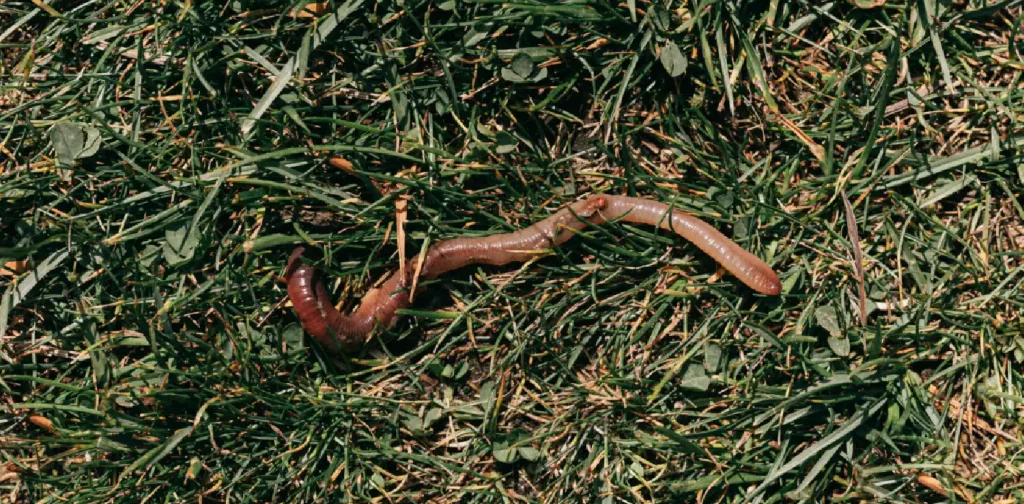
Photo: Karolina Grabowska on Pexels.
Soil is an integral part of agriculture and food production. As global food demand increases with food crises around the corner, sustainable soil management and soil health have become crucial to strengthening food security without further damaging the planet. A study reveals how earthworms, as a part of healthy soils, contribute to global food production.
Soil Health for Healthy Crops
Soil is the basis of food production—it is where we plant, grow, and harvest crops. Unfortunately, soil is degrading in many parts of the world. The United Nations estimates that one-third of global soils are already degraded due to multiple threats like pollution, acidification, loss of soil biodiversity, and erosion.
Producing healthy and nutritious crop yields requires healthy soil. Healthy soil are living and dynamic ecosystems with organisms, including earthworms. Earthworms play significant roles in creating healthy soil and plants by maintaining soil structure, water capture, organic matter cycling, and nutrient availability. A study by researchers from Colorado University examines the impacts of earthworms on the productivity of major cereal and legume crops worldwide.
Earthworms for Food Production
The study examines soil properties, fertilizer inputs, and earthworm abundance to determine earthworm’s contribution to food production. The findings show that earthworm contributes to 6.45% of global cereal crop production, specifically rice, maize, wheat, and barley production. The number equals roughly 128 million metric tons of grain.
On the other hand, earthworm’s contribution to legume production is lower, with 2.3% of the total global production or 16 million metric tons. The legumes examined in the study include soybean, dry beans, peas, garbanzos, lentils, alfalfa, and clover.
Based on the region, the study finds that earthworm activity has the most significant impact in Sub-Saharan Africa, contributing to roughly 10% of total cereal yields and 3.2% of legume yields. In Eastern & Southeast Asia, earthworm impacts are also relatively high, contributing to 7.4% of cereal grain yields. The study associated the impacts with these regions’ lower soil pH values.
In terms of production, however, earthworm-based activities contributed the highest in Eastern & South-Eastern Asia and Europe, with over 40 million metric tons of grain produced in respective regions. The difference between crop yields and production is attributed to the different production levels in different regions around the globe.
Sustainable Soil Management
Healthy and nutritious food begins with healthy soil. So, strengthening food production and securing food supply entails escalating efforts in sustainable soil management. The study concludes with a call for investments in research and implementation of sustainable agroecological practices, especially those that enhance soil biological communities like earthworms and other organisms. After all, protecting soil health and its living organisms is crucial, not only for food production but also for the overall health of the planet.
Editor: Nazalea Kusuma

Kresentia Madina
Madina is the Assistant Manager of Stakeholder Engagement at Green Network Asia. She holds a bachelor’s degree in English Studies from Universitas Indonesia. As part of the GNA In-House Team, she supports the organization's multi-stakeholder engagement across international organizations, governments, businesses, civil society, and grassroots communities through digital publications, events, capacity building, and research.
 The Invisible Infrastructure: What ASEAN’s Carbon Market Needs Most
  Indonesia Ruled to Recognize Chronic Illness as a Disability
  Clean Cooking as a Developmental Multiplier in Africa
  Congo Basin Peatlands Are Releasing Ancient Carbon
  From Anxiety to Action: How Youth Climate Activism Is Evolving
  India’s Supreme Court Declared Menstrual Health and Hygiene as Fundamental Rights