

The Call to Support Climate Resiliency in Pacific Islands Countries
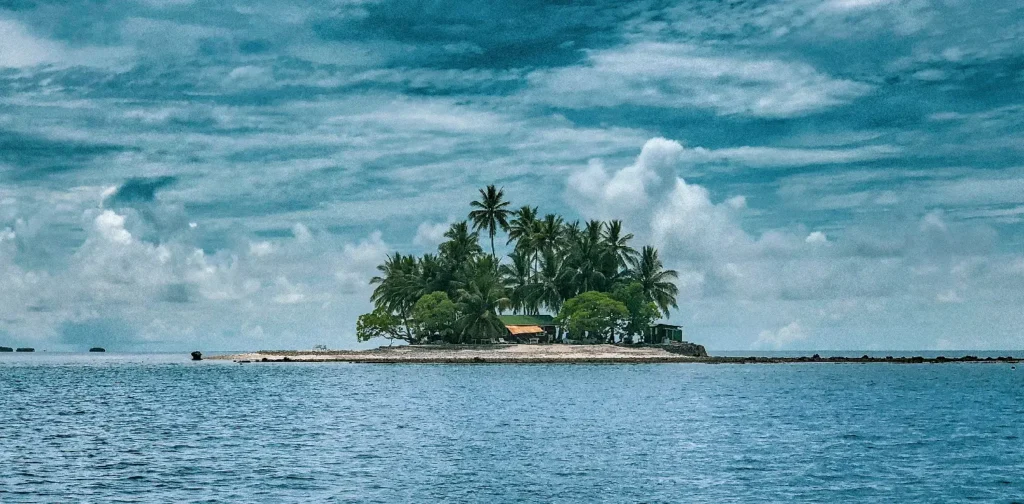
Photo: Marek Okon on Unsplash.
Countries in the Pacific Region face enormous challenges in today’s age of polycrisis. Their vulnerable geographical conditions underscore the urgency for an integrated approach to support a resilient Pacific Region. In August 2024, Pacific country leaders gathered in the 53rd Pacific Islands Forum Leaders Meeting to discuss the region’s climate-resilient future.
Threats of Rising Sea Level
“This is a region of fearless seafarers, expert fishers, and deep ancestral knowledge of the ocean. But humanity is treating the sea like a sewer,” said UN Secretary-General António Guterres at the 53rd Pacific Islands Forum Leaders Meeting Opening Ceremony.
Most countries in the Pacific region suffer from extreme sea level rise. According to the World Meteorological Organization, countries in the western tropical Pacific saw a 10–15 cm sea level increase in 2023, nearly twice the global rate measured since 1993. Meanwhile, the central tropical Pacific experienced a 5–10 cm increase.
This climate change-induced phenomenon has rippling effects on other aspects. In Kiribati, for instance, people in affected areas have already relocated due to inadequate infrastructure, lack of access to clean water, and other impacts of climate change.
The 53rd Pacific Islands Forum Leaders Meeting
The 53rd Pacific Islands Forum Leaders Meeting was held in Tonga from 26–30 August 2024. The meeting was attended by representatives from 18 Pacific countries: Australia, the Cook Islands, the Federated States of Micronesia, the Republic of Fiji, French Polynesia, the Republic of the Marshall Islands, the Republic of Nauru, New Caledonia, New Zealand, Niue, Palau, Papua New Guinea, Samoa, Solomon Islands, Tonga, Tuvalu, the Republic of Vanuatu, and the Republic of Kiribati.
Bringing the theme of “Transformative and Resilient Pasifika: Build Better Now,” the forum became a place for country leaders to state their commitments to improve integrated resilience across the Pacific countries, especially against climate change and environmental degradation. Climate-resilient approaches must be implemented in various sectors, from economy and technology to health and education.
Multiple existing frameworks and strategies were brought up during the forum, with the affirmation of support from the Pacific country leaders. One is the 2050 Strategy for the Blue Pacific Continent adopted in 2022. The strategy covers seven thematic areas, including resource and economic development, climate change and disasters, and ocean and natural environment.
Additionally, a representative from the World Health Organization also called for Pacific Islands leaders to prioritize resilient health infrastructure against climate change. The organization noted that 62% of health facilities in several countries were within 500 meters of the sea or a river, which put them at high risk of collapsing during extreme weather events.
Robust Actions Needed
While climate change affects everyone globally, the scale varies. Often, those who contributed the least to the crisis are the ones bearing the heaviest impacts. Considering the urgency of the rise in sea levels in the Pacific Islands, country leaders must implement robust actions and make real progress to improve the region’s resiliency. Meanwhile, global leaders are also called to put in their efforts to curb emissions and implement climate mitigation and adaptation measures.
“Global leaders must step up to drastically slash global emissions, to lead a fast and fair phase-out of fossil fuels, and to massively boost climate adaptation investments, to protect people from present and future risks,” said Guterres.

Kresentia Madina
Madina is the Assistant Manager of Stakeholder Engagement at Green Network Asia. She holds a bachelor’s degree in English Studies from Universitas Indonesia. As part of the GNA In-House Team, she supports the organization's multi-stakeholder engagement across international organizations, governments, businesses, civil society, and grassroots communities through digital publications, events, capacity building, and research.
 How Extreme Heat Affects Human Livability
  Looking into Green Ramadan Initiatives Worldwide
  The Widespread Impacts of Severe Drought in Somalia
  Ensuring Access to Justice for Women and Girls
  The Invisible Infrastructure: What ASEAN’s Carbon Market Needs Most
  Indonesia Ruled to Recognize Chronic Illness as a Disability