

A Major Cause of Changing Rainfall Patterns
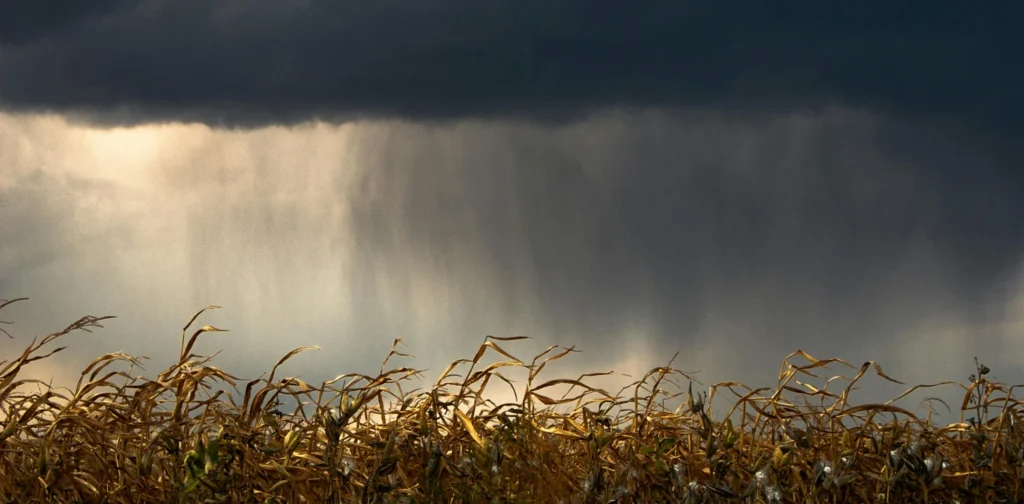
Photo: Andriy Nestruiev on Pexels.
Humans depend on nature. Yet for centuries, human activities have been changing our planet’s cycle and patterns, leaving real impacts on lives globally, often for the worse. For the agriculture sector, for instance, rainfall is critical, but it has become increasingly unpredictable. A 2025 study has discover a major factor in changing rainfall patterns.
Changing Rainfall Patterns
Rainfall patterns are becoming more and more unpredictable as the climate changes. Rising temperatures contribute to this inconsistency—on average, a 1°C increase in temperature enables air to hold 7% more water. This increases the risk of extremely heavy rain instead of steady ones or creates conditions where wet regions get wetter while dry regions get drier. As 2025 is on-track to be the third consecutive year of among record warmest years, a global assessment found that 33% of global regions now possess irregular precipitation and shift to more erratic patterns.
Meanwhile, agriculture heavily depends on rain. Approximately 80% of global cropland relies on natural precipitation to produce over 60% of world cereal grains. As the climate crisis intensifies, observations show many regions continue to receive regular rainfall yearly. However, regions like the Middle East, such as Syria and Iran, experienced below average rainfall, showing 70% and 85% decrease in 2024-2025 respectively. This led to plummeting wheat production and water supply.
In finding a solution, scientists are digging into overlooked causes behind these changing rainfall patterns.
Where Is It From?
A study by the University of California San Diego published in November 2025 looks into a key factor in the changing rainfall patterns: water origins. It reveals that rain sourced from the land tends to be less reliable than oceans. Land-sourced rainfall uses evaporation from plants, lakes, or soil that changes in heat and drought. Therefore, crops are more vulnerable in areas where land-sourced rain dominates rainfall.
In this context, regions with a higher share—more than one third—of land-sourced rainfall may face higher risks of drought or moisture loss. Some agricultural areas fit these conditions, and when soils dry and vegetation declines, less moisture returns as rain. This creates a feedback loop that weakens rainfall consistency.
Researchers found regions like the U.S. Midwest or some areas in East Africa are notably under that risk. These regions’ major demands depend on rain-fed agriculture and have had soil moisture stress underway already. In mid December 2025, the U.S. Midwest experienced drought in 35–43% of their areas. On the other side of the world, October–December 2025 has been a failure of agriculture due to “short rains” in parts of Kenya and Ethiopia of East Africa.
Climate-Resilient Farming for Sustainability
These findings present a new variable and tool to predict drought stress and mitigate its risks. It underscores how land management is key in creating farming resiliency amidst climate change. Therefore, governments must regulate land conversion and protect sources of rain in the land like forests. Creating policy based on scientific findings and recommendations is critical to help sustain a healthy water cycle for more reliable rainfall.
Furthermore, educating and training farmers in soil conservation and restoration may further stabilize agricultural production and local rainfall. Supplementing farmers with integrated agriculture and climate data allows for data-driven decision making that will benefit all stakeholders. After all, resilient farming translates to safeguarded food systems and livelihoods for a sustainable future for all.
Editor: Nazalea Kusuma
 What Australia Can Do to Help Prevent the Next Fire Crisis in Indonesia
  Looking into Gender Inequality in the Water Domain
  How the Earth’s Energy Imbalance Affects the Climate
  When Distant Conflict Ripples: How Global Supply Disruptions Find Africa
  Urgency to Protect Migratory Species as Extinction List Expands
  How Spogomi Addresses Waste Through Competitive Sport