

Africa’s Solar Energy Surge: Why 2025 Was a Breakthrough Year
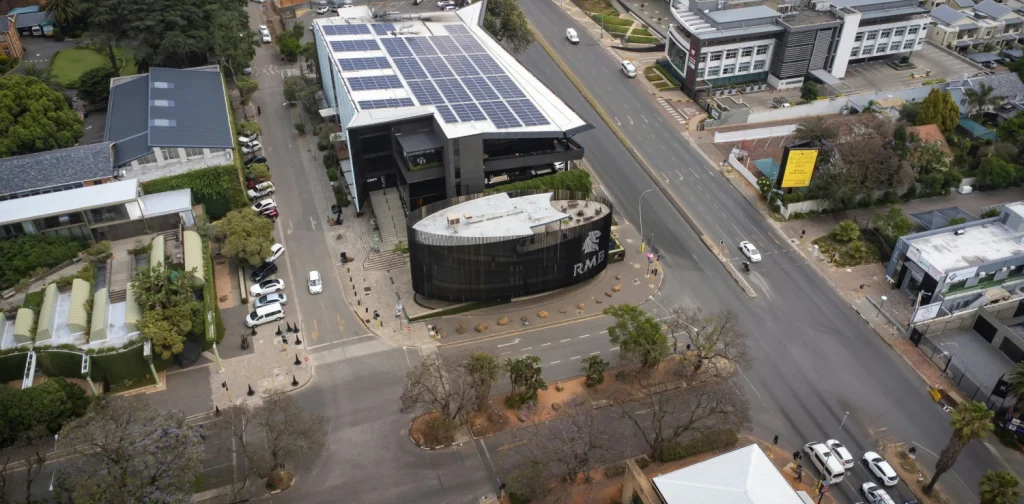
Johannesburg, South Africa. | Photo: Jolame Chirwa on Unsplash.
A decade ago, Africa was depicted as “energy-poor”. About 600 million sub-Saharan Africans lacked electricity, despite the continent’s abundant resources for renewable energy. As renewables overtook coal as an electricity source globally in 2025, Africa’s solar energy surge marked a notable growth for the continent.
Africa’s Solar Energy Surge: Africa Always Had Sun, But Now It Has Scale
A 2022 report from the International Renewable Energy Agency (IRENA) noted that by 2021, 53 African countries had submitted Nationally Determined Contributions (NDCs) under the Paris Agreement. Around 40 of them included renewable energy targets, primarily in the power sector.
Africa’s ambition has long been evident. From “Paris-era” climate pledges and NDCs to continental summits and the Africa Renewable Energy Initiative, its goals were bold and Africa-led.
Yet, financing shortfalls, regulatory bottlenecks, political instability, and chronic grid underinvestment repeatedly slowed momentum. Research shows that Africa utilized only about 1% of its solar energy potential, indicating a substantial gap between resources and actual implementation.
Then, 2025 proved to be Africa’s fastest year ever of solar energy growth. Across the continent, solar power installations rose 54% year-on-year to 4.5 GW, surpassing the previous record set in 2023. In that year alone, eight African countries installed over 100 MW of solar capacity each (double the number in 2024), revealing that solar growth is spreading well beyond early-mover markets. Moreover, Africa’s solar energy capacity is projected to rise sixfold by 2029, after last year’s record.
How Finance Changed the Game
The resource remained unchanged while Africa’s systems matured. Private energy investment grew from $17 billion (2019) to $40 billion (2024). By 2025, Africa secured 13.84 billion USD across 306 energy transition deals, with clean energy projects accounting for 98.3% of total investment value.
Africa is scaling these investments through blended finance. The International Finance Corporation (IFC) Scaling Solar Programme attracted private investment into utility-scale solar projects in Zambia, Senegal, and Madagascar. Additionally, the African Development Bank’s SEFA fund mobilized concessional capital to scale clean energy projects, while the Beyond the Grid Fund for Africa supported off-grid solutions in Zambia, Liberia, Uganda, DRC, Burkina Faso, and Mozambique.
Africa’s solar energy surge is also a result of growth in the global clean energy market. Competitiveness has led to significant cost reductions for renewables. In 2025, Solar Photovoltaics (PV) represented the least-cost source of power in many African countries. Furthermore, competitive auctions across countries have reduced costs and boosted private-led PV. This auction system signals to investors that a project is financially credible, because long-term government backed contracts remove a huge portion of revenue risk.
Beyond the Grids
Similarly, the expansion of regional power pools (connecting grids across West, East, and Southern Africa), is amplifying solar reach. This connectivity allows countries to trade surplus energy across borders and reduce dependence on expensive backup power.
Meanwhile, development also occurred within country borders. Extending the national grid to rural areas in Africa is extremely slow and expensive, but mini-grids have been able to bypass that problem. Within a decade, since 2010, the rural electrification of sub-Saharan Africa had increased from 17% to 28%. The 11 million mini-grids that are currently operational are lighting homes, powering schools and clinics, driving irrigation pumps, and charging digital economies.
Looking Ahead
Africa has green industry opportunities. Its critical mineral wealth (copper, lithium, cobalt), growing workforce, and clean energy momentum can act as a launching pad. Amidst this growth, however, it is imperative to ensure Africa’s clean energy develops with equity while safeguarding the rights and wellbeing of its people and biodiversity.
What’s more, Africa is building infrastructure and governance for prosperity without pollution, potentially the first continent to industrialize through clean energy. UN Secretary General Guterres calls Africa’s renewable energy transition “the economic opportunity of the century.”
Africa still receives just 3% of global energy investment. Yet in 2025, it delivered its fastest year of solar growth on record. The breakthrough was not built on abundance, but on policy, regional cooperation, and sustainable financing. If 2025 was the turning point, the next decade—with deeper investment, stronger grids and developed markets—could be the start of Africa’s solar energy age.
Editor: Nazalea Kusuma

Co-create positive impact for people and the planet.
Amidst today’s increasingly complex global challenges, equipping yourself, team, and communities with interdisciplinary and cross-sectoral insights on sustainability-related issues and sustainable development is no longer optional — it is a strategic necessity to stay ahead and stay relevant.
 Agrihoods: Integrating Farms and Urban Neighborhoods into Sustainable Communities
  Women in Waste Management: Asia’s Circularity Runs on Women. Its Policies Still Don’t
  Embracing the Business Value of Sustainability
  American Farmers Call for Government Support Amidst PFAS Contamination
  Asia Pacific’s SDG Progress Faces Major Setbacks
  Exploring the Bidirectional Relationship Between Olympic Games and the Environment