

Global Reform on Fisheries Subsidies Signals a Hopeful Shift Toward Ocean Sustainability
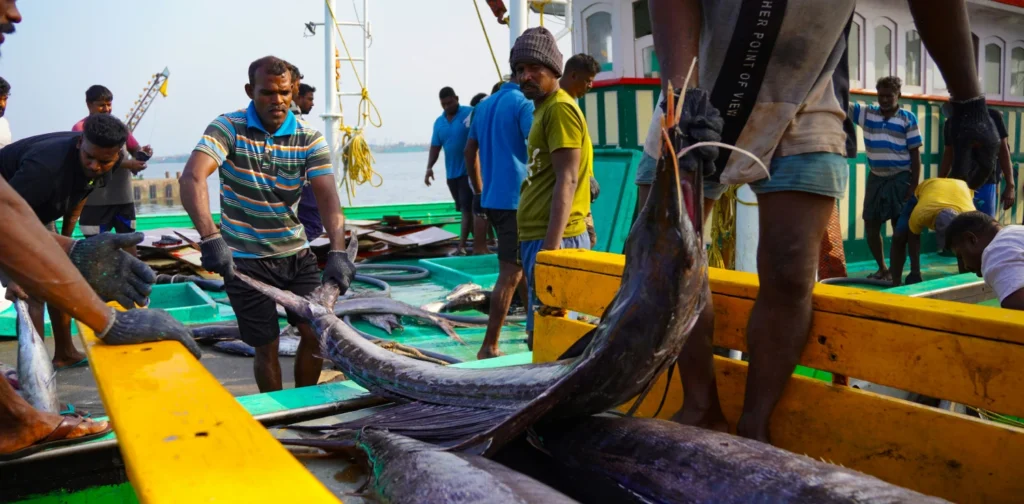
Photo: Naveena V on Unsplash.
The sea is an abundant food source, especially for protein. Unfortunately, the pressures from the rising global food demand and the worsening climate crisis threaten the health and sustainability of our oceans. In this light, the World Trade Organization Agreement on Fisheries Subsidies finally entered into force in 2025, signifying international commitment to ocean sustainability.
The Development and Impacts Of Fisheries Subsidies
Subsidies are government grants, tax breaks, or other such benefits given to an industry or sector to increase revenue or decrease cost. Fisheries subsidies first became necessary in the early 20th century amid major post-war advances in technology. They aimed to increase fish supply, and in turn food security. These subsidies were also supposed to develop better infrastructure and provide support for fishermen.
However, this has amounted to an “over-capitalization”, leading to a rapid diminishing of marine resources.
There are many different types of fisheries subsidies. Notable ones are tax exemptions for fuel, funding for the construction or modernization of fishing vessels, and rights to access foreign or distant waters. These subsidies are leading to gross overfishing, including in areas far beyond coastal areas and into international waters (known as the high seas). These policies tend to disproportionately profit industrial fisheries and leave local fishing communities with little to nothing.
Moreover, too many industrial fleets have little regard for environmental preservation. Currently, global fisheries subsidies add up to almost $35 billion USD per year, and an estimated $22 billion of it is classified as contributing to destructive practices. Beyond overfishing, other problems to address include the significant damage to marine ecosystems and the continued use of GHG-emitting fossil fuels.
Subsidy Reform Efforts
Ideas to reform fisheries subsidies have been ongoing since the 1960s, when the OECD called for restrictions and transparency from its member states. In 2015, the UN adopted its Sustainable Development Goal 14.6, calling for the World Trade Organization (WTO) to end harmful fisheries subsidies that contribute to overfishing.
Meanwhile, the WTO has been attempting to tackle this issue since 2001. After a nearly 20-year negotiation process, the WTO finally adopted the Agreement on Fisheries Subsidies in 2022. The agreement entered into force in September 2025 after over two-thirds of total WTO members officially accepted it.
In addition to curbing or stopping any current or future subsidies that are deemed harmful, this agreement also calls for all member states to carry out initiatives to restore overfished stocks. It bans subsidies to any party looking to fish in the high seas, because much of it is unregulated international waters.
The WTO has also established the WTO Fish Fund to provide project grants to developing countries to help them carry out implementation of this agreement. There is also a large emphasis on transparency and reporting. Countries will now have to give the WTO detailed information about their fisheries subsidies, as well as data on management and oversight and the status of fish stocks.
Future Policies
The WTO Agreement on Fisheries Subsidies should also trickle down to regional and local law reforms as it affects local fishing communities as well. This proves that positive change at all levels can happen through multilateral effort and international cooperation. Ultimately, the passing and execution of this agreement hopefully signals a shift toward international bodies prioritizing environmental issues in their policies.
Editor: Nazalea Kusuma

Co-create positive impact for people and the planet.
Amidst today’s increasingly complex global challenges, equipping yourself, team, and communities with interdisciplinary and cross-sectoral insights on sustainability-related issues and sustainable development is no longer optional — it is a strategic necessity to stay ahead and stay relevant.
 What Australia Can Do to Help Prevent the Next Fire Crisis in Indonesia
  Looking into Gender Inequality in the Water Domain
  How the Earth’s Energy Imbalance Affects the Climate
  When Distant Conflict Ripples: How Global Supply Disruptions Find Africa
  Urgency to Protect Migratory Species as Extinction List Expands
  How Spogomi Addresses Waste Through Competitive Sport