

In Peru, Stingless Bees Are Granted Legal Rights
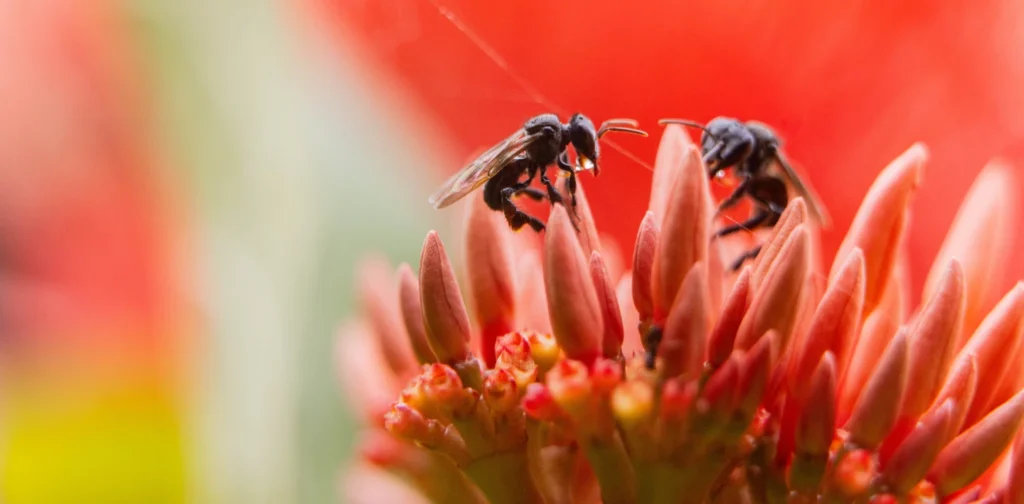
Photo: Luis García/Earth Law Center.
As the natural environment is strained under crises, we have seen a notable decline in insect populations in recent years. Attempts to safeguard biodiversity and ecosystems can begin by recognizing their rights to existence and protection. In Peru, stingless bees have been granted this legal right as part of the efforts to protect the country’s biodiversity and biocultural heritage.
Pillars for Ecosystems and Communities
Stingless bees are found in most tropical and subtropical regions worldwide. As the name suggests, they have highly reduced stingers that cannot be used for defense.
Bees generally act as pollinators, helping plants produce healthy and nutritious fruits and seeds. For communities in the Peruvian Amazon, stingless bees have economic and cultural significance. The honey produced by stingless bees provides livelihoods for the Indigenous communities. Additionally, studies have also explored the medicinal quality of the honey.
However, in parallel with the global trend, Amazon’s stingless bee populations are dwindling. The area itself is facing numerous pressures from land-use change and the climate crisis, which are affecting the bees’ habitat. In a protective measure, two municipalities in Peru have approved an ordinance granting the rights of nature to bees.
Legal Rights for Stingless Bees
Rights of nature refer to a legal framework that recognizes the intrinsic rights of ecosystems and species, and holds them to the same standards of protection as people and corporations.
In November 2025, the Provincial Municipality of Satipo granted these legal rights to native stingless bees in the Avireri VRAEM Biosphere Reserve through the Municipal Ordinance No. 33-2025-CM/MPS. A month later, the municipality of Nauta approved a similar ordinance.
Essentially, the ordinance recognizes the bees’ indispensable roles in the ecosystems. Several rights are acknowledged, including the right to exist and thrive, a healthy habitat free from pollution, and ecologically stable climatic conditions. The bees can also be represented legally in cases of threat or harm, which enables immediate action against violations of the rights outlined above.
Towards Broader Efforts
The legislation’s passage was the result of a collaborative campaign among scientists, Indigenous leaders, conservation organizations, and advocates.
“This ordinance marks a turning point in how we understand and legislate our relationship with Nature,” said Constanza Prieto, the Earth Law Center’s Latin America Legal Director, who took part in the campaign.
According to the organization’s note, the ordinance is part of a broader effort to protect stingless bees, alongside other initiatives that integrate science with Indigenous wisdom. This includes mapping beehive populations, documenting the Ashaninka ethnoknowledge about the species, and developing the Ashaninka Biocultural Community Protocol. Ultimately, this move is hoped to set a precedent for the global effort to safeguard the rights of biodiversity and ecosystems for a healthy planet now and in the future long to come.
Editor: Nazalea Kusuma

Co-create positive impact for people and the planet.
Amidst today’s increasingly complex global challenges, equipping yourself, team, and communities with interdisciplinary and cross-sectoral insights on sustainability-related issues and sustainable development is no longer optional — it is a strategic necessity to stay ahead and stay relevant.
 Agrihoods: Integrating Farms and Urban Neighborhoods into Sustainable Communities
  Women in Waste Management: Asia’s Circularity Runs on Women. Its Policies Still Don’t
  Embracing the Business Value of Sustainability
  American Farmers Call for Government Support Amidst PFAS Contamination
  Asia Pacific’s SDG Progress Faces Major Setbacks
  Exploring the Bidirectional Relationship Between Olympic Games and the Environment