

Exploring and Advancing Young Persons with Disabilities’ Participation in Decision-Making
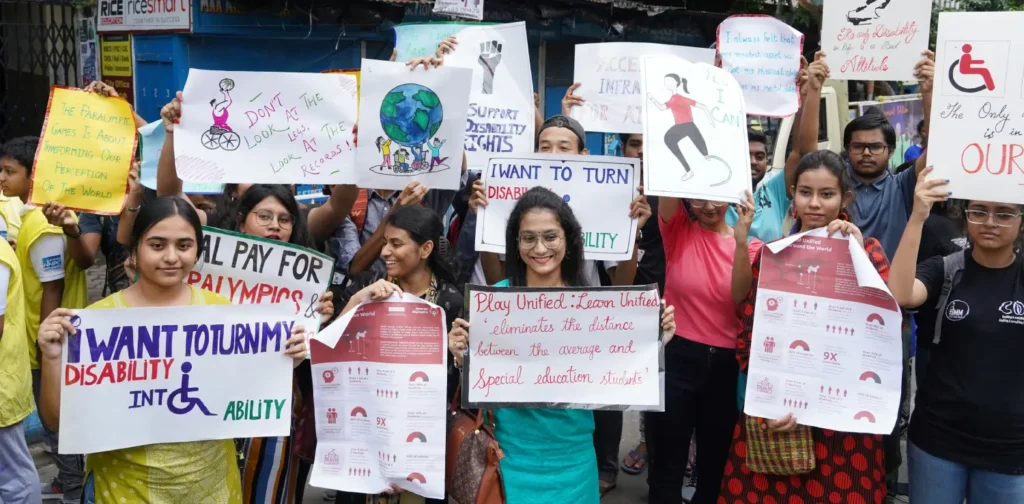
Photo: Dibakar Roy on Unsplash.
Creating an inclusive society entails engaging with every member from every layer to understand their experiences and needs. This includes encouraging the role of young persons with disabilities through involvement in decision-making. Then, what is their current participation in the process? A joint report led by the UN Youth Office explores the state of the issue, along with the challenges and opportunities surrounding it.
Low Levels of Engagement
The “Believe in Better: Shaping the future through the meaningful engagement of young persons with disabilities” report was developed through desk research, secondary data analysis in 46 countries, an online survey in 40 countries, and focus group discussions and key informant interviews in six countries. Overall, it found that there has been minimum engagement between governments and organizations with young persons with disabilities (aged 15-24).
Young persons with disabilities have diverse experiences. Some might face more restrictions compared to others due to their gender, age, and type of disability. Hence, their input and involvement are instrumental in creating inclusive policies, regulations, and programs in society.
However, the report found that most young persons with disabilities report low levels of government engagement. A significant 57.9% chose rarely or never, 33.9% sometimes, and only 8.3% very often. The lowest government engagement is found in Eastern Europe and Central Asia, while the highest is in Asia Pacific. In terms of gender, many young women with disabilities reported low interactions with the government compared to their male counterparts.
Meanwhile, the United Nations and other organizations fare slightly better. Interactions with them are seen in a more favorable light by young persons with disabilities.
Discrimination and Other Barriers
Governments and organizations must work to broaden the involvement of young persons with disabilities in all areas, including those outside of disability-focused agendas. Unfortunately, there are some challenges. The report discovered some barriers, such as multiple discrimination and marginalization, a lack of awareness and understanding of disability rights, and inadequate social, legal, and financial support.
Ableism and adultism are seen as the primary social and cultural obstacles. Ableism refers to negative prejudices toward disability, while adultism sees young people as less superior than adults. These behaviors, combined with sexism, racism, and other forms of oppression, undermine the voices and contributions of young persons with disabilities in decision-making processes. They are often seen as inexperienced and immature, which leads to the dismissal of their input.
Moreover, young persons with disabilities often experience multiple layers of marginalization, from lack of education to intergenerational poverty. As a result, many of them are still unaware and less informed of their rights, therefore unable to raise concerns and ask for them.
Barriers also persist regarding support, especially in community, legal, and financial aspects. The report found that lack of representation, legal support, and funding limit the room for participation for young persons with disabilities in forums and other organizational settings.
Supporting Young Persons with Disabilities
Realizing sustainable development means creating a society where everyone can safely thrive without leaving anyone behind. One way to achieve this is by addressing existing societal inequalities and implementing right-based and participatory approaches in decision-making processes. The report concludes with several points of recommendations for governments and United Nations country teams, some of them are to:
- Implement and support disability-inclusive national policies by collecting comprehensive data, updating existing policies to include diverse members of society, increasing investment to improve support for young persons with disabilities, and fostering their inclusion in government and UN initiatives.
- Promote meaningful engagement in decision-making by prioritizing, valuing, and encouraging the participation of young persons with disabilities.
- Elevate public awareness of disability rights through capacity building and technical assistance.
- Review existing strategies, procedures, and other processes to improve and prioritize engagement with people with disabilities.
Read the full report here.
Editor: Nazalea Kusuma
 Whimsymaxxing and Beyond: Rethinking the Waste Behind Viral Trends
  Seeking Guidance from Karl Marx to Face the Climate Catastrophe
  Indonesia’s Greenwashing Diplomacy at COP31 and Beyond
  The Textile Industry Is Growing, and So Is Textile Wastewater
  EESG: We Need a New Economic Narrative for Sustainability in the Age of AI, Energy Crisis, and Geopolitical Divide
  The Continued Struggle for Equality and Dignity in Women’s Sportswear