

Understanding the Climate-Care Nexus
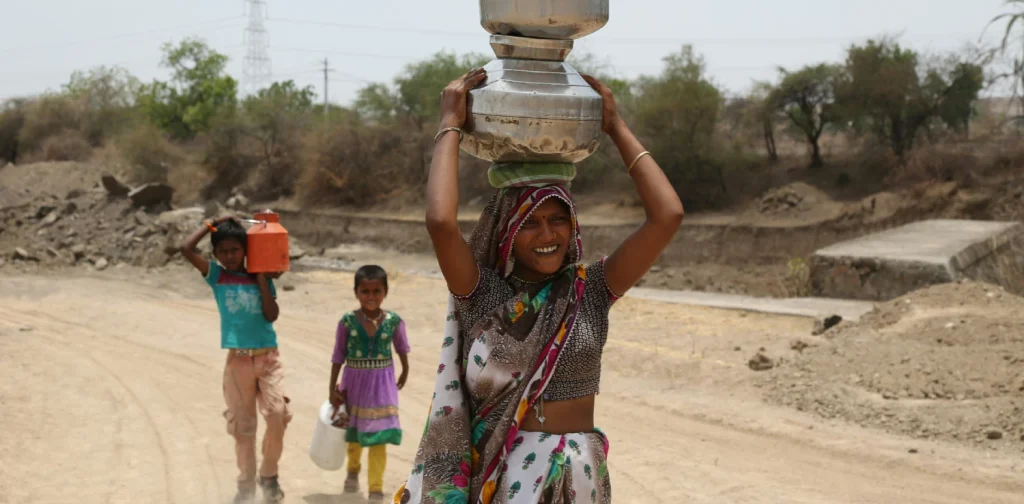
Photo: Gyan Shahane on Unsplash.
For too long, the world has relied on nature and the care provided by women to the point of crisis. We seek natural resources to fuel our needs and often unquestioningly place the heavier burden of providing care on women’s shoulders. As taking care of each other is how we can continue to move forward, understanding the climate-care nexus is essential.
The Undervalued
The Earth and women bear much resemblance, especially as the planet itself has been personified as Mother Earth for a long time. They are both the foundation of our lives, providing resources and services that sustain all economies. However, this importance is often taken for granted.
Overconsumption is on the rise, and natural resources are exhausted. Some even almost to the point of no return. Scientists have warned of water bankruptcy, in which Earth’s water reserves will be depleted, with little chance of recovery if current trajectory continues. Forests are cleared, and critical minerals are extracted from underground, leaving barren land and no place for biodiversity to thrive.
Meanwhile, women are still burdened with unpaid care work. Data from the ILO for 64 countries shows that around 16.4 billion hours per day are spent on unpaid care work, including caring for children and the elderly, and managing the household. More specifically, women account for 76.2% of unpaid care work, more than three times the share of men. While there has been progress, the burden remains disproportionate.
Climate-Care Nexus
The natural environment and women’s and girls’ labor are often treated as if their supply is limitless and their use is costless. This is where understanding the climate-care nexus becomes crucial.
Overdependence has brought us face to face with the climate crisis today. Meanwhile, the burden of care is getting higher, with an insufficient system to sustain it. What’s more concerning is that both crises do not stand alone. The climate crisis exacerbates the care crisis, derailing progress toward social justice for all.
For instance, women and girls are responsible for fetching water in 7 out of 10 households, according to a WHO and UNICEF report. With overextraction and climate change exacerbating water stress, women and girls have to stand in longer queues and walk longer distances for water as part of providing care for their households. This exposes them to harassment and violence, and limits their time for education, work, and leisure.
Environmental care also adds to women’s and girls’ unpaid care workloads. A UN Women report highlights that some climate-resilient practices, such as organic agriculture and waste management, require intensive labor from women. They often bear the primary responsibility for managing household waste, including separating and composting, which also affects their time and energy. The climate-care nexus is too crucial to ignore.
Integrating Perspectives
We all have the responsibility to care for each other and for the natural environment that has provided for us. The climate-care nexus has highlighted the multiple interdependencies between people and the environment, underscoring the urgent need for interventions that address both the climate crisis and social injustices.
Therefore, acknowledging the structural inequality against women still ingrained in society becomes an essential step toward a better, more sustainable world for all. Furthermore, integrating a gender perspective into policies on climate mitigation, disaster risk reduction, and just transition, as well as inviting active participation from women and girls, are fundamental to formulating inclusive interventions to address crises.
Editor: Nazalea Kusuma

Co-create positive impact for people and the planet.
Amidst today’s increasingly complex global challenges, equipping yourself, team, and communities with interdisciplinary and cross-sectoral insights on sustainability-related issues and sustainable development is no longer optional — it is a strategic necessity to stay ahead and stay relevant.
 Addressing the Rising Challenges of Photovoltaic Waste Management
  Salt in the Wound: Cautioning Saltwater Intrusion amid Global Water Crisis
  How Overtourism Pushes Local Communities Out of Their Own Homes
  Why the World Still Doesn’t Have a Global Plastics Treaty
  Understanding the Regional Impacts of Climate Change on Malaria in Africa
  Challenging Interdependence and the Inequality of Imagining the Future